





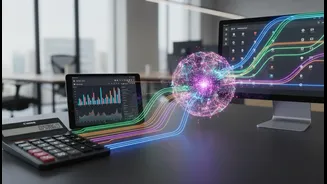



Decoding the New AI Jargon
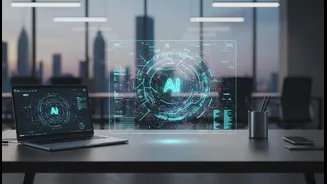
You’ve probably heard of AI chatbots, but 'Claude Cowork' and 'Office Agents' represent the next significant leap. An AI office agent is a system designed to perform complex, multi-step tasks autonomously within a business environment. Think of it less
as a tool you command and more as a digital team member you delegate to. Anthropic's Claude Cowork is a prime example. It's not just a chat window; it's an AI that can work directly with your files, folders, and applications on your computer. It can read documents, organize folders, synthesize research from multiple sources, and produce finished work like spreadsheets or presentations, all based on a single, high-level goal you provide. The key difference is its ability to plan and execute a series of steps without constant supervision.
Your New AI Teammate has Arrived
So, what can these agents actually do? Imagine assigning a task like: "Review the last quarter's sales data, compare it with client feedback from these emails, and create a presentation summarizing the key trends." Instead of you doing each step, an agent like Claude Cowork can perform the entire workflow. This includes reading the spreadsheet, analyzing the emails, identifying correlations, writing the summary text, and even creating the slides. These agents are powered by models like Claude 3.5 Sonnet, which excel at reasoning, coding, and understanding visual data like charts and graphs. For coders, it can write, edit, and troubleshoot code across an entire project. For non-technical roles, it can handle tedious, repeatable work that often gets skipped, leading to better-informed decisions.
The Impact on the Indian Job Market
The rise of AI agents brings both challenges and opportunities for India. On one hand, there's a real risk of job displacement, especially in entry-level IT and BPO roles that involve repetitive tasks. Some analysts predict that the traditional career path of getting a degree and securing a safe job for life is becoming a 'death trap' in the agentic AI era. However, this is not a simple story of job loss. Reports also project that agentic AI will redefine over 10 million jobs in India by 2030, creating millions of new tech roles in the process. The focus is shifting from AI replacing humans to AI augmenting them. Companies aren't just cutting jobs; they are redeploying their workforce, with a huge majority of HR leaders in India planning to reskill employees to work alongside AI agents.
Skills for the New World of Work
Thriving in this new environment doesn't necessarily mean you have to become a hardcore coder. Instead, the most critical skill is learning how to effectively collaborate with AI. This starts with 'prompt engineering'—the ability to give clear, context-rich instructions to get the best possible output from an agent. Beyond that, young professionals need to develop 'problem shaping' skills, which means turning vague goals into executable tasks that an AI can understand. As AI handles more of the routine 'how', human value will shift towards the 'what' and 'why'. Strategic thinking, creativity, ethical judgment, and complex problem-solving are becoming more important than ever. Soft skills like collaboration and relationship-building will also be critical as we increasingly work in hybrid teams of humans and AI agents.
How to Prepare and Stay Ahead
The most important step is to be proactive, not passive. Start by building your AI literacy. Use free tools like Claude on the web or the mobile app to get a feel for how these models 'think'. Experiment with giving them small but complex tasks. Pay attention to how you can refine your instructions to get better results. Look for opportunities to automate parts of your own study or work. Can you use an AI to summarize long reports, generate ideas for a project, or draft emails? Treat it like learning a new software suite. The goal isn't to become an AI expert overnight, but to become a confident user. Continuous upskilling is the new job security. The young Indians who will succeed are those who see these AI agents not as a threat, but as powerful partners to amplify their own skills and capabilities.