








More Than Just Metal Detectors
For decades, festival security was a largely physical affair: fences, bag checks, and uniformed guards. While these elements remain, the core strategy has shifted from being purely reactive to proactively predictive. Today’s approach is built on a foundation
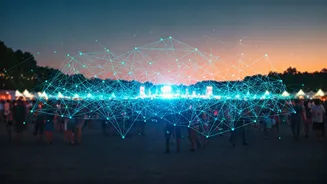
of information. Instead of just watching for trouble, organizers now use technology to anticipate and prevent it. This involves integrating multiple streams of data to get a complete picture of the event in real time. Artificial intelligence and advanced software platforms analyze this information, allowing safety teams to manage complex threats, from crowd surges to sudden weather changes, before they escalate.
Your Wristband Is Watching
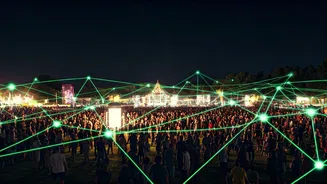
That smart wristband you tap to buy a drink or enter the venue is doing more than just simplifying transactions. Powered by Radio Frequency Identification (RFID) or Near Field Communication (NFC) technology, these wearables are central to modern festival safety. Each wristband is linked to a unique attendee, which makes ticket fraud and unauthorized entry nearly impossible. More importantly, the data they generate gives organizers a live map of the festival grounds. By tracking movement patterns and dwell times, security teams can understand crowd flow, identify potential bottlenecks in real time, and deploy staff where they're needed most. In an emergency, this tracking can even help locate individuals who may need assistance.
The View From Above
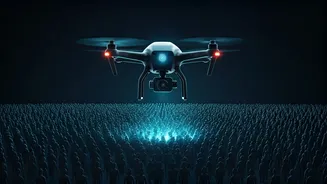
The eyes and ears of festival safety now extend far beyond the ground level. Drones offer a bird's-eye view of vast festival grounds, monitoring everything from perimeter fences to parking lots, providing real-time awareness that fixed cameras cannot match. Back on the ground, a network of CCTV cameras is often enhanced with artificial intelligence. These smart systems can process feeds from hundreds of cameras simultaneously, a task impossible for human eyes. The AI is trained to detect signs of trouble, such as dangerously high crowd density, aggressive behavior, or even abandoned bags, and can automatically alert security teams to potential threats. This allows for intervention before a situation becomes critical, like stopping a show to ask the crowd to step back if a crush risk is detected.
An App for Your Safety
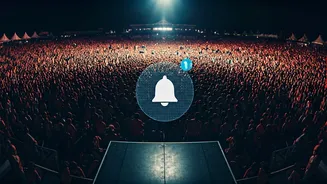
The official festival app has evolved from a simple digital schedule into a crucial safety tool. These apps now provide attendees with interactive maps, emergency information, and a direct line to report incidents or request help. Organizers can use the app to send out instant alerts about severe weather, schedule changes, or other urgent updates. This direct channel of communication is vital for managing large crowds, allowing teams to direct people away from overcrowded areas or guide them to the nearest exit during an evacuation. Some apps even use AI to offer personalized artist suggestions based on listening habits, which can help distribute crowds more evenly across different stages.
Convenience vs. Privacy
This new era of data-driven safety does not come without questions. The same technologies that keep attendees safe—CCTV, facial recognition, and data tracking from wristbands and apps—also represent a significant expansion of surveillance. Privacy advocates and some festival-goers express concern about how this personal data is collected, used, and stored. There are debates about the potential for data misuse, and whether temporary security measures could become permanent fixtures. In response to these concerns, many festival organizers are now required to be transparent about what data they collect and why, and some have publicly pledged not to use more invasive technologies like facial recognition without consent. This creates a delicate balance: providing a safe and seamless experience while respecting the privacy of every individual in the crowd.