




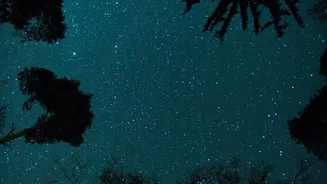
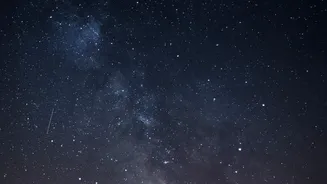
Hanle, Ladakh: India’s Official Dark Sky Sanctuary
Topping any list of Indian stargazing sites is Hanle in Ladakh, home to India's first-ever Dark Sky Reserve. Located in the remote Changthang region at an altitude of over 4,500 metres, this is where serious astronomy happens. The air is incredibly dry
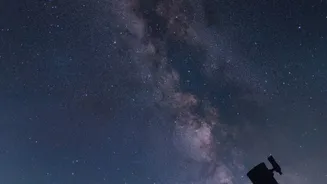
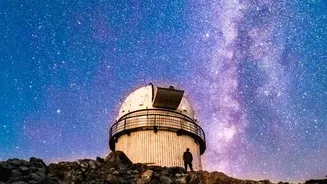
and thin, meaning there's less atmosphere to obscure the view. The result is a pristine, Bortle Class 1 sky—the darkest possible rating—where the Milky Way is so clear it can cast a faint shadow. The reserve, managed by the Indian Institute of Astrophysics, strictly controls light pollution in a 22-kilometre radius around the Indian Astronomical Observatory. While here, you can also visit the observatory and interact with local guides trained in astronomy. The best time to visit for clear skies is from May to October, but be sure to acclimatise properly in Leh for a couple of days due to the extreme altitude.
Spiti Valley, Himachal Pradesh: A High-Altitude Desert for Stars
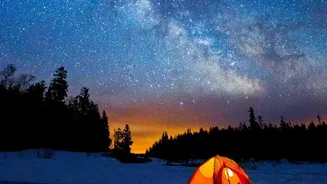
Spiti Valley is a cold desert high in the Himalayas, and its remote location, high altitude, and lack of pollution make it a stargazer's paradise. The dry mountain air ensures crystal-clear nights, especially from May to October. Several villages in Spiti are renowned for their dark skies. Langza, with its iconic Buddha statue, provides a stunning foreground for Milky Way photography. Komic, one of the highest motorable villages in the world, offers an unobstructed panorama of the heavens. Kibber and the uninhabited Chandratal Lake ('Moon Lake') are other prime spots, so dark that you can often see the Andromeda Galaxy with the naked eye. The best viewing happens around the new moon when the sky is at its darkest.
Coorg, Karnataka: The Best of the South
You don't have to travel to the Himalayas to find dark skies. The misty hills of Coorg (Kodagu) in the Western Ghats offer one of Southern India's best stargazing experiences. Far from major city lights, many coffee plantations and homestays provide clear views of the cosmos, especially in areas around Madikeri and Virajpet. The region boasts Bortle Class 2 and 3 skies in its more remote parts, which is dark enough to see the structure of the Milky Way. While the monsoon season from June to September brings clouds, the window from October through May offers excellent viewing conditions. Tadiandamol, the highest peak in Coorg, is a popular spot for an unobstructed celestial view.
Rann of Kutch, Gujarat: Stars Over a Salt Desert
For a truly surreal stargazing experience, head to the Great Rann of Kutch. This vast expanse of white salt desert offers an almost perfectly flat horizon and is far from any significant light pollution. During the cooler winter months, particularly from November to February, the dry air provides exceptionally clear skies. On a moonless night, the sheer number of stars visible is breathtaking, and the landscape itself seems otherworldly. The Rann Utsav festival season is a popular time to visit, combining cultural tourism with the astronomical spectacle.
Tips for Your Stargazing Trip
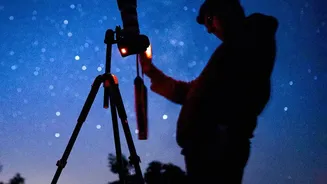
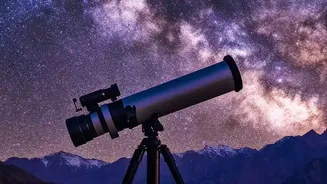
To make the most of your celestial adventure, a little planning goes a long way. Always aim for dates around the new moon, as a full moon will wash out all but the brightest stars. The core of our Milky Way is best viewed in the Northern Hemisphere between March and October. You don’t need expensive equipment to start; a good pair of binoculars can reveal star clusters and nebulae. If you're trying astrophotography, a basic DSLR on a sturdy tripod with a wide-angle lens is sufficient. Use settings like a 20–30 second shutter speed, a wide aperture (like f/2.8), and an ISO of 1600 or higher to capture the faint light of the stars. Most importantly, allow your eyes at least 20 minutes to adapt to the darkness to see the sky in its full glory.