






An Uneven Monsoon Picture
The 2026 southwest monsoon has been a story of contrasts. While some regions have received heavy downpours, vast agricultural belts are experiencing a worrying dry spell. The India Meteorological Department (IMD) had forecasted a 'below normal' monsoon for August,
influenced by developing El Niño conditions. Although July brought some relief, the overall distribution has been uneven, and as of early August, the country faced a cumulative rainfall deficit. This patchiness is critical; it's not just the total amount of rain that matters, but when and where it falls. Even with recent low-pressure systems bringing rain to eastern and central states, many northern and southern areas remain dry.
Why the Kharif Season is Crucial
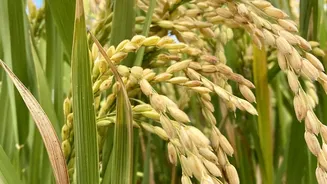
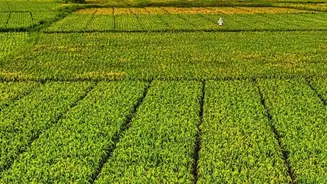
The Kharif season, which depends on the summer monsoon, is the backbone of India's food security. These summer-sown crops account for roughly half of the country's annual food grain production. Key staples like rice, pulses (like arhar and moong), coarse cereals (like maize and bajra), oilseeds (like soybean and groundnut), and cotton are all planted during this period. Because almost half of India's farmland lacks access to irrigation, these crops are overwhelmingly dependent on monsoon rains. A successful Kharif harvest is essential for stocking food reserves, keeping prices stable, and supporting the livelihoods of millions of farmers.
Sowing Under a Dry Spell
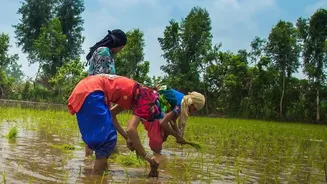
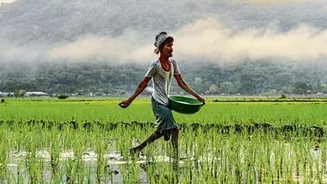
The erratic rainfall has directly impacted planting activities. According to data as of August 14, 2026, the total area sown under Kharif crops was trailing last year's figures by about 2%. The sowing of rice, a water-intensive crop, has seen a decline of over 3.5%. While some crops like urad and sunflower have seen an increase in acreage, major crops like maize and soybean have declined. This lag in sowing is a direct consequence of insufficient soil moisture in many rain-fed areas. Farmers often delay planting in the hope of more rain, but this shortens the growing window and can ultimately reduce crop yields.
The Ripple Effect on the Economy
A weak Kharif season sends ripples far beyond the farm. Lower agricultural output can quickly translate into higher food inflation, pinching household budgets across the country. This is a major concern for economic policymakers, as food prices are a significant driver of overall inflation. Furthermore, reduced crop yields mean lower incomes for a vast rural population, which in turn dampens demand for everything from tractors and two-wheelers to everyday consumer goods. This slowdown in rural consumption can act as a drag on India's overall economic growth.
Dwindling Water Reserves
The impact of a poor monsoon extends below the ground and into the country's reservoirs. As of early August 2026, water storage in India's major reservoirs was significantly below last year's levels and the ten-year average in many regions, particularly in the South, North, and Central parts of the country. For example, reservoirs in Tamil Nadu were only at 37% capacity as of mid-August, a stark contrast to the previous year. These reservoirs are vital not only for providing irrigation during dry spells in the Kharif season but also for the subsequent Rabi (winter) crop, hydroelectric power generation, and drinking water supplies through the year.