
The Fierce Battle and the Fateful Fall
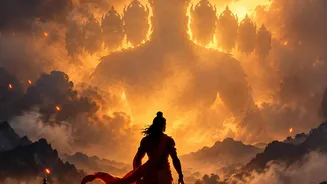
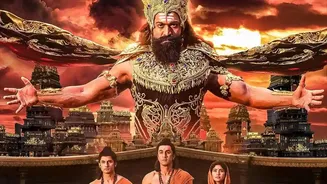
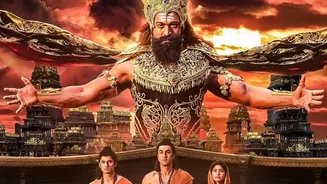
In the Aranya Kanda of the Ramayana, the great vulture-king Jatayu confronts the demon king Ravana as he abducts Sita. Though old, Jatayu fights valiantly but is ultimately defeated, with Ravana clipping his wings. The wounded Jatayu falls to earth, living
just long enough to inform Rama of Sita's abduction and Ravana's southern path. This act of supreme courage and loyalty is immortalised in the landscape of India, with several places claiming a connection to this epic moment. While historians note that these different sites reflect the epic's deep cultural impact rather than a single proven location, each offers a unique window into the living legend. For the spiritual traveller, the journey is one of personal connection, and this guide explores the most significant destinations on that path.
Jatayu Earth's Center, Kerala
Perhaps the most dramatic tribute to Jatayu is found in Chadayamangalam, Kerala. According to local tradition, this is where the wounded Jatayu fell. The name itself is believed to derive from 'Jatayu Mangalam'. Dominating the skyline is the Jatayu Earth's Center, a 65-acre eco-tourism park featuring the world's largest bird sculpture. Measuring 200 feet long, 150 feet wide, and 70 feet tall, the colossal concrete statue depicts Jatayu lying on his back, grievously wounded. Visitors can take a cable car to the hilltop and even enter the sculpture, which houses a museum and a theatre presenting the story of Jatayu. The site is not just a monument but a hub for adventure sports like rock climbing and zip-lining, blending mythology with modern tourism.
Lepakshi, Andhra Pradesh
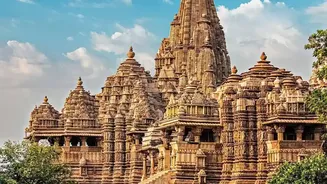
Another prominent site claiming to be where Jatayu fell is Lepakshi in Andhra Pradesh. Local lore holds that when Rama found the dying bird, he uttered the words 'Le Pakshi'—Telugu for 'Rise, bird'—granting him moksha and giving the village its name. A large footprint in the area is revered by some as belonging to Sita. The 16th-century Veerabhadra temple, a masterpiece of Vijayanagara architecture, is the main attraction here, famous for its hanging pillar and monolithic Nandi statue. A modern, upright statue of Jatayu has also been installed on a nearby hillock, creating another powerful visual link to the epic tale for pilgrims and tourists visiting this historic village.
The Final Rites in Tamil Nadu
The story continues in Tamil Nadu, where multiple temples are associated with Jatayu's final rites performed by Rama himself. The Vijayaraghava Perumal Temple in Thiruputkuli is revered as a 'Jatayu Moksha Sthalam'. The name 'Thiruputkuli' is said to mean 'sacred bird pit', referring to the cremation site. The temple features a sacred water tank called Jatayu Theertham, where the bird is believed to have fallen, and the main deity is depicted with Jatayu on his lap. Similarly, the Thirupullabhoothangudi Temple near Thanjavur is another site where Rama is believed to have performed the last rites. Here, the main idol of Rama is seen without Sita, but with Bhooma Devi (Mother Earth), who is said to have appeared to be by his side during the solemn ceremony.
Jatayu's Homeland in Maharashtra
The region around Nashik in Maharashtra, including Panchavati, is deeply intertwined with the Ramayana as the site of Rama, Sita, and Lakshmana's exile. According to some traditions, this area, specifically Janasthana, was Jatayu's ancestral home. This proximity explains how he was able to quickly intercept Ravana's flying chariot. In the nearby village of Taked, a temple is dedicated to Jatayu. Local belief states that after being wounded, Jatayu fell here, and to quench his thirst, Rama shot an arrow into the ground, creating a pond. This sacred spot, with its Sarvatirth Jatayu Mandir, marks another point on this mythological map for devotees.