




Our Current Agricultural Scorecard
When we talk about a successful harvest, we almost always talk about yield. Agricultural productivity has traditionally been measured as a ratio of outputs (the crops harvested) to inputs (the land, labour, water, and fertilisers used). This model, known
as Total Factor Productivity, has driven agricultural policy and practice for generations. The goal was straightforward: get more out of the land with every cycle. This approach fuelled the Green Revolution and has been central to ensuring India’s food security. Farmers are incentivised to maximise their output, and the entire system, from seed companies to government policies, is often built around this single, powerful metric. While logical on the surface, this narrow focus is like judging a student's success on one exam score alone, ignoring their overall health and well-being.
The Hidden Costs of a Narrow Focus
Focusing solely on yield is a short-term strategy with long-term consequences. In the relentless pursuit of higher output, the very foundation of agriculture—the soil—is often degraded. Continuous cultivation of single crops, or monocultures, depletes specific nutrients, forcing a greater reliance on synthetic fertilisers. Over time, the soil loses its structure, becoming compacted and less able to absorb water. This leads to increased water runoff during heavy rains, causing soil erosion, and makes farms more vulnerable during droughts. The rich ecosystem of microbes within the soil, essential for nutrient cycling and plant health, is diminished. This degradation forces farmers to spend more on inputs like fertilisers and water just to maintain the same output, squeezing their profits and creating a cycle of dependency that is unsustainable for both their livelihoods and the environment.
Defining Cropland Health
So, what does a ‘healthy’ cropland look like? It’s not just dirt; it’s a living, breathing ecosystem. Healthy soil has a good structure, rich in organic matter, which acts like a sponge, holding water and nutrients. It is teeming with a diverse community of microorganisms—bacteria, fungi, and more—that break down organic material and make nutrients available to plants. Key signs of healthy soil include good water infiltration (to prevent flooding and runoff), stable aggregates (soil particles that cling together, resisting erosion), and a high level of biological activity. Think of it as the soil’s immune system. When the soil is healthy, it can better support robust plant growth, fight off diseases, and withstand environmental stresses like dry spells or intense rainfall.
A New Set of Vital Signs
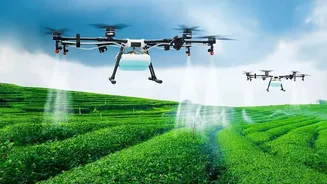
If we are to take cropland health seriously, we must start measuring it systematically. This doesn't mean abandoning yield as a metric, but rather supplementing it with a new set of 'vital signs' for our soil. Experts suggest a few core, practical indicators. One is measuring soil organic carbon, a direct indicator of the soil's fertility and water-holding capacity. Another is assessing 'aggregate stability'—how well the soil holds together when exposed to water, which shows its resistance to erosion. We can also measure the soil's biological activity, for instance, by testing its 'carbon mineralisation potential'. Modern technology offers new tools, from advanced soil testing kits to remote sensing via satellites that can monitor vegetation health (using metrics like NDVI) across vast areas, giving clues about the underlying soil conditions. By tracking these metrics, we create a more holistic dashboard for farm performance.
The Widespread Benefits of a Broader View
Adopting a health-focused approach offers a win-win-win scenario. For farmers, healthy soil means greater resilience and lower costs. Better water retention means less irrigation is needed, and active nutrient cycling reduces the dependency on expensive chemical fertilisers. This leads to more stable and sustainable profitability. For consumers, crops grown in nutrient-rich soil can be more nutritious. For the environment, the benefits are immense. Healthy soil acts as a massive carbon sink, pulling carbon from the atmosphere and storing it underground, helping to mitigate climate change. It also prevents soil erosion and nutrient runoff, which protects our rivers and groundwater from pollution. In essence, managing for soil health is one of the most effective ways to build a resilient, profitable, and environmentally friendly agricultural system.