

Meet the 'Sub-Neptunes'
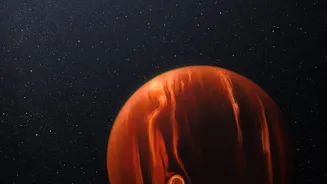
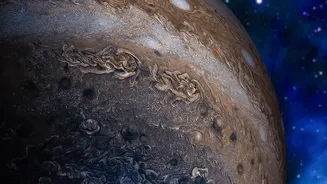
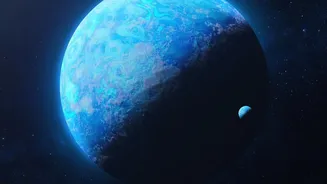
Our solar system has a curious gap in its planetary lineup. We have small, rocky worlds like Earth and Mars, and we have gas giants like Jupiter and ice giants like Neptune. But we don't have anything in between. Out in the galaxy, however, these intermediate
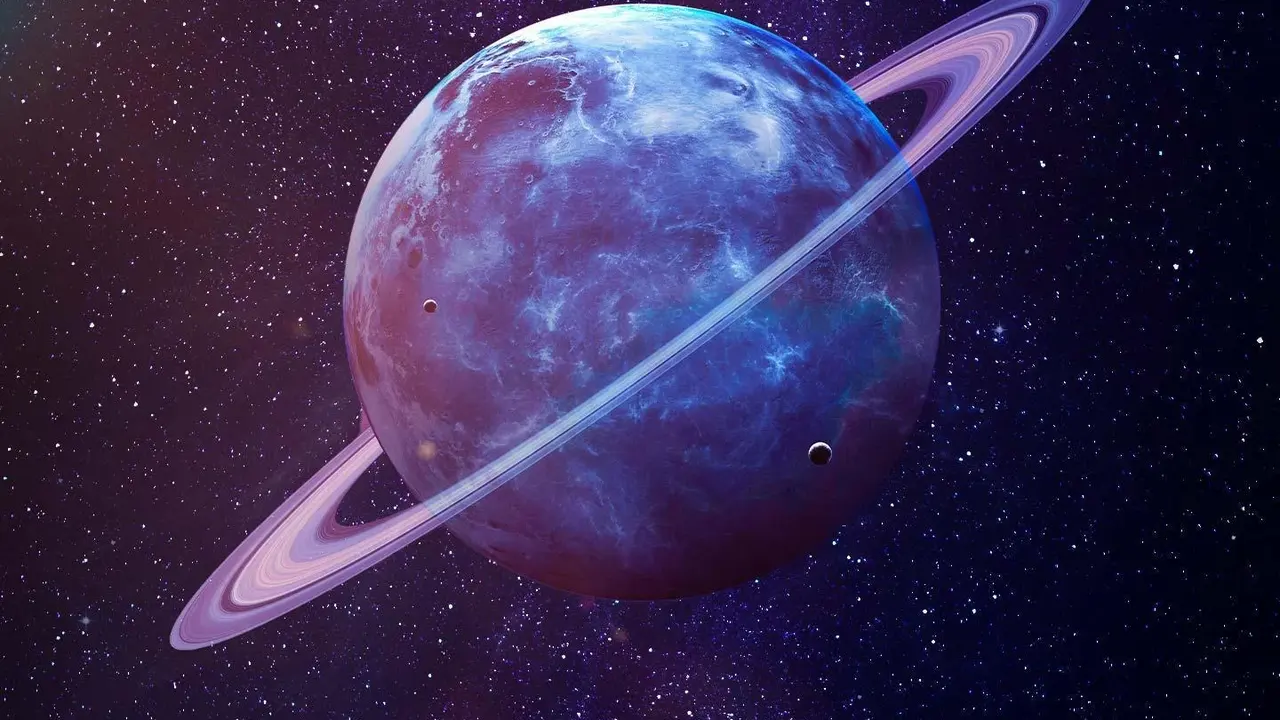
planets, often called 'sub-Neptunes' or 'mini-Neptunes,' are incredibly common. These worlds are larger than Earth but smaller than Neptune and represent a fascinating, and poorly understood, class of planet. Their composition is a subject of intense scientific debate: are they simply oversized rocky planets, or are they more like Neptune, with a thick, hydrogen-rich atmosphere? This question is central to the search for life, as a planet's atmosphere is the key to its potential habitability.
Introducing 'Hycean' Worlds
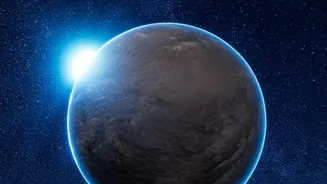
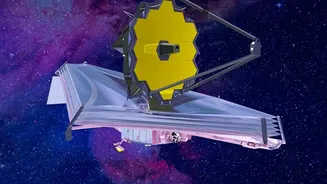
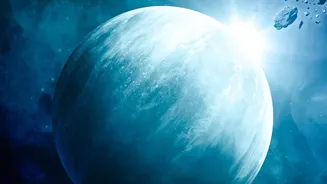
One exciting possibility is a new class of planet that scientists have dubbed 'Hycean' worlds—a portmanteau of 'hydrogen' and 'ocean'. These are theoretical planets covered by a deep, global water ocean, lying beneath a vast hydrogen-rich atmosphere. Unlike the traditional 'Goldilocks Zone' which requires a planet to be a specific distance from its star, Hycean worlds could be habitable across a much wider range of conditions. Some could be tidally locked, with a permanent day side and a permanent, potentially habitable, night side. Their larger size and puffy atmospheres make them ideal targets for atmospheric observation with instruments like the James Webb Space Telescope (JWST), significantly more so than smaller, Earth-like rocky planets.
Reading an Alien Atmosphere
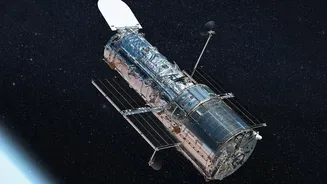
So how do scientists study the air of a planet over 100 light-years away? They use a technique called transit spectroscopy. When an exoplanet passes, or 'transits,' in front of its parent star from our point of view, a tiny fraction of the starlight filters through the planet's atmosphere. The James Webb Space Telescope is exquisitely sensitive to this light. Different gases in the atmosphere absorb light at specific, unique wavelengths. By analysing the starlight that reaches the telescope, astronomers can see which wavelengths are missing and deduce the chemical composition of the atmosphere, creating a 'fingerprint' of the gases present. This powerful technique allows us to identify molecules like water vapour, carbon dioxide, and methane from across the vastness of space.
Methane: A Tantalising Clue for Life
Methane (CH4) is a particularly interesting molecule. On Earth, the vast majority of methane in the atmosphere is produced by living organisms, from microbes in wetlands to cows. Because methane is quickly broken down by photochemical reactions in an atmosphere like ours, its continued presence implies a massive, constant source is replenishing it. This makes it a potential 'biosignature'—a sign of life. However, methane can also be produced by non-biological, or abiotic, processes like volcanic activity or reactions in a planet's interior. The key, therefore, is context. Astronomers don't just look for methane; they look for it in combination with other gases. A world rich in methane and carbon dioxide, but low in carbon monoxide, is difficult to explain through geology alone and could point towards a biological origin.
The Case of K2-18 b
A prime example of this research in action is the exoplanet K2-18 b, located about 120 light-years from Earth. It's 8.6 times the mass of Earth and orbits its star within the habitable zone. Observations by the JWST have confirmed the presence of both methane and carbon dioxide in its atmosphere. This composition, along with a lack of ammonia, supports the hypothesis that K2-18 b could be a Hycean world, with a water ocean beneath its hydrogen-rich atmosphere. Intriguingly, initial observations also hinted at the possible presence of dimethyl sulfide (DMS), a gas that, on Earth, is produced exclusively by life, primarily marine phytoplankton. While the DMS detection is still tentative and requires more data to confirm, it makes K2-18 b one of the most compelling targets in the search for habitable worlds.