
A Reality Check for Habitable Worlds
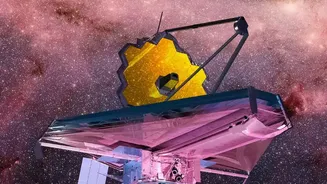
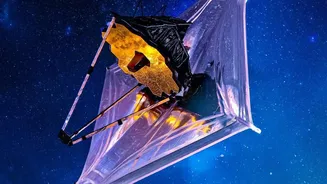
The dream of finding Earth-like planets has long centered on the "habitable zone," the orbital band around a star where temperatures could allow liquid water. Yet, recent data from the James Webb Space Telescope (JWST) confirms a long-held theory: location
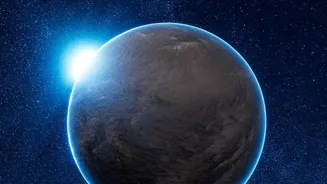
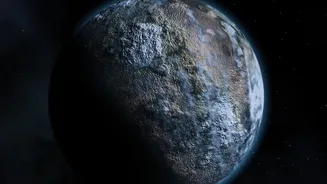
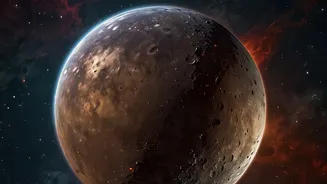
isn't everything. Many rocky worlds, even those perfectly placed, are being stripped of their atmospheres. This process, known as atmospheric loss, presents a significant barrier to habitability, suggesting that a planet needs more than just the right temperature to support life. The telescope's observations of systems like TRAPPIST-1 show that some Earth-sized planets lack the substantial atmospheres needed to maintain stable surface conditions, effectively turning potential havens into barren rocks.
The Prime Suspect: Volatile Stars
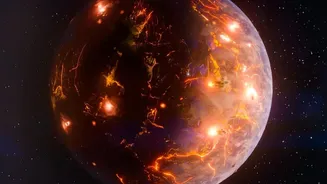
The primary culprits behind this atmospheric theft are often the parent stars themselves, particularly red dwarfs. These stars are the most common in our galaxy, and they frequently host rocky planets in close orbits, making them prime targets for study. However, red dwarfs are notoriously tempestuous, especially in their youth. They unleash powerful stellar winds and blasts of high-energy X-ray and ultraviolet radiation. For a planet orbiting nearby, this stellar onslaught can be relentless. The energetic particles and radiation can heat a planet's upper atmosphere, giving gas molecules the energy they need to escape the planet's gravity and bleed into space.
How Webb Detects a Missing Atmosphere
So, how does JWST see something that isn't there? The technique is called transmission spectroscopy. When an exoplanet passes in front of its star from our perspective, a tiny fraction of starlight filters through its atmosphere. By analyzing this light, astronomers can detect the chemical fingerprints of different gases. If a planet has a thick, rich atmosphere, certain wavelengths of light will be absorbed by gases like carbon dioxide, methane, or water vapor. However, for several rocky planets, including some in the TRAPPIST-1 system, JWST has found a featureless spectrum. This indicates that either there is no atmosphere to filter the starlight, or the atmosphere is incredibly thin—far too sparse to protect a surface from harsh radiation or maintain liquid water.
Redefining the Search for 'Earth 2.0'
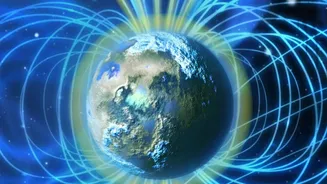
These findings are forcing a re-evaluation of what makes a planet truly habitable. The classic concept of the habitable zone is no longer sufficient. Scientists now understand that a planet's ability to retain its atmosphere is just as critical. Key factors include the planet's mass and density—a more massive world has stronger gravity to hold onto its air—and whether it has a protective global magnetic field. A magnetic field, like Earth's, can act as a shield, deflecting the most damaging particles from the stellar wind. Planets without this shield are far more vulnerable to atmospheric erosion over billions of years.
Not All Hope Is Lost
While this news might seem discouraging, it is far from a dead end in the search for extraterrestrial life. Instead, it represents a crucial refinement. By understanding the processes of atmospheric loss, astronomers can now better identify which planets are the most promising candidates for follow-up observation. This knowledge helps scientists narrow their focus away from worlds orbiting the most volatile stars and toward those with more favorable conditions. This could mean prioritizing planets around more stable, Sun-like stars, or larger, denser rocky planets ("super-Earths") that are better equipped to withstand the stellar onslaught. The recent detection of a potential atmosphere around LHS 1140 b, a rocky world orbiting a less active M-dwarf, shows that atmospheres can survive under the right conditions.