





What Exactly is Agrivoltaics?
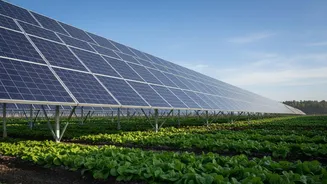
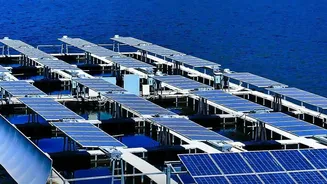
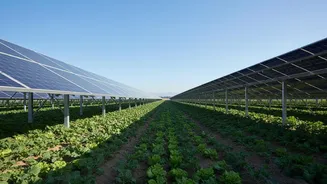
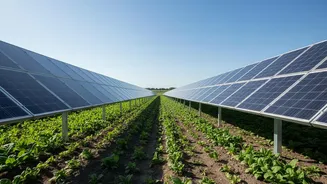
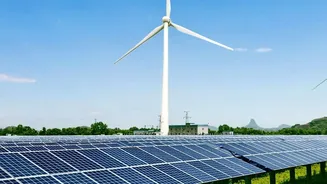
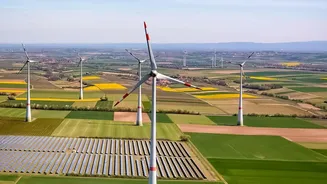
At its core, agrivoltaics is the practice of using the same piece of land for both agriculture and solar power generation. Instead of choosing between a farm and a solar park, this approach combines them. Solar panels are installed on tall structures,
raised high enough to allow crops to be cultivated underneath or between the rows of panels. This dual-use model aims to tackle land-use conflicts, a growing concern as India pushes for more large-scale solar projects. The idea is to create a symbiotic relationship: the land produces both food and clean energy, potentially increasing its overall productivity.
Beyond Kilowatts: The Power of Shade
The most obvious output of a solar panel is electricity, but in agrivoltaics, what it blocks is just as important as what it captures. The partial shade cast by the panels creates a unique microclimate on the ground below. For many parts of India that suffer from intense heat and sun, this shading effect is a significant advantage. It protects plants from heat stress, scorching, and hail damage. Research and pilot projects have shown that many crops, particularly leafy greens and certain vegetables and spices, don't need full, direct sunlight all day. In fact, for some, the cooler, more stable conditions under the panels can lead to higher yields. Studies have indicated crop yield can increase by over 30% in some cases.
A Hidden Dividend: Saving Precious Water
Perhaps the most critical benefit for a water-stressed country like India is water conservation. The shade from the solar panels reduces the temperature of the soil and the plants, which in turn lowers the rate of evaporation and transpiration. This means the soil retains moisture for much longer. Studies have shown that this effect can reduce the need for irrigation by up to 30%, a game-changing figure for farmers in arid and semi-arid regions. Pioneering work at the Central Arid Zone Research Institute (CAZRI) in Jodhpur has specifically focused on this. The CAZRI model not only grows crops under panels but also includes systems to harvest rainwater from the panel surfaces, channeling it for later use and further boosting water security.
The Indian Context: A Perfect Match?
With its vast agricultural lands, high solar radiation, and pressing water issues, India appears to be an ideal candidate for large-scale agrivoltaics adoption. Projects like the one at CAZRI in Jodhpur have demonstrated success with native crops like moth bean, cluster bean, and cumin. The government's PM-KUSUM scheme, which aims to help farmers install solar power plants, already has provisions that support agrivoltaic setups by encouraging installations on raised structures. This dual-income stream—from selling crops and selling electricity—offers farmers a buffer against crop failures and volatile market prices, enhancing their financial stability. The approach also helps prevent the conversion of fertile agricultural land into single-use solar parks.
Challenges on the Ground
Despite the promise, scaling up agrivoltaics in India is not without hurdles. The primary barrier is the high initial cost of installing raised solar structures compared to conventional ground-mounted systems. The design must be carefully engineered to balance sunlight for crops and energy generation, a calculation that changes with crop type, season, and location. There is also a need for more region-specific research to identify the most suitable crops and farming techniques for different agro-climatic zones. While several pilot projects are underway, India still lacks a comprehensive national policy framework specifically for agrivoltaics, which can create uncertainty for farmers and developers.