


A Year of Strategic Ambition
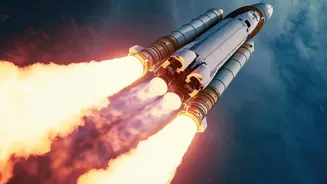
This isn't just about sending rockets into the sky; it's a clear statement of intent. The current fiscal year, running from April 2026 to March 2027, is packed with missions that are crucial for science, commerce, and national pride. ISRO Chairman V Narayanan
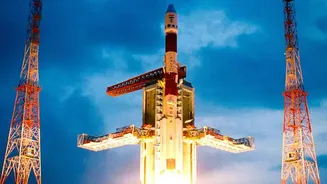
confirmed plans for at least seven launches, highlighting a packed schedule that includes everything from critical human spaceflight tests to important satellite deployments. This accelerated pace signifies ISRO's transition from a space agency known for cost-effective reliability to a global powerhouse pushing the boundaries of exploration. The variety of missions demonstrates a multi-faceted strategy: securing India's place in the human spaceflight club, enhancing earth observation capabilities, and continuing its journey into the solar system.
Gaganyaan: The Human Frontier
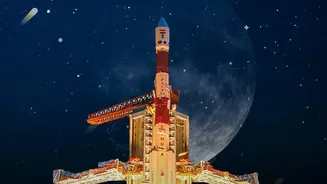
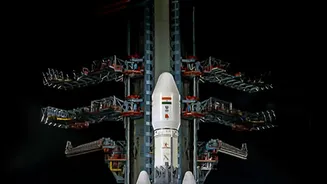
At the forefront of public imagination is the Gaganyaan programme, India’s quest to send its own astronauts—or 'Gaganauts'—into orbit. This fiscal year is pivotal, with several key tests planned. The schedule includes uncrewed orbital flights, such as the G1 mission, which are essential for validating every system before humans are on board. These missions will test the human-rated LVM3 rocket, the crew module's life support systems, re-entry procedures, and recovery operations. Every successful test brings India closer to joining the elite group of nations with independent human spaceflight capability, a goal that requires immense technological precision and a zero-tolerance approach to risk. The uncrewed Gaganyaan-1 mission is one of the most anticipated launches of the year.
Eyes on Earth and Beyond
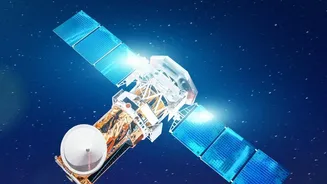
While Gaganyaan captures headlines, ISRO's bread-and-butter work of satellite launches remains vital. This year’s manifest includes several Earth Observation Satellites (EOS). For instance, a satellite like GISAT-1A (EOS-05) is designed to provide near real-time imaging of the Indian subcontinent, which is invaluable for disaster management during cyclones and floods, as well as for monitoring agriculture and national borders. Another key mission is the NASA-ISRO Synthetic Aperture Radar (NISAR) satellite, a landmark collaboration. Launched in mid-2025, its operational data is becoming crucial this year, offering unprecedented insights into climate change, melting glaciers, and land deformation by scanning nearly all of Earth's land and ice surfaces.
Workhorses and Commercial Ventures
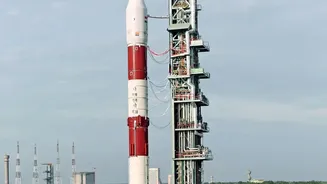
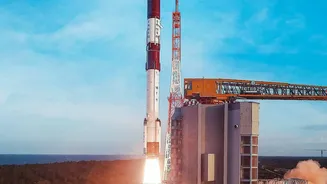
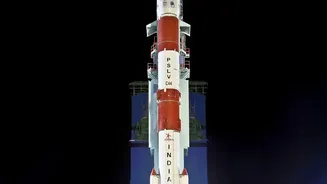
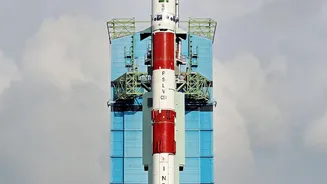
The reliable Polar Satellite Launch Vehicle (PSLV) and its heavier counterpart, the Geosynchronous Satellite Launch Vehicle (GSLV), will be busy. These rockets are tasked with deploying a mix of satellites. This includes communication satellites like GSAT-32, designed to enhance India's broadband and digital infrastructure, and navigation satellites to bolster the NavIC constellation. Furthermore, ISRO is increasingly catering to the global market. Several launches will be purely commercial, carrying satellites for international clients and reinforcing India’s position as a competitive and reliable launch service provider. This commercial wing not only generates revenue but also strengthens diplomatic and business ties.
Paving the Way for Future Exploration
The missions of 2026-27 are also stepping stones for even grander ambitions. The experience gained from the Gaganyaan tests will directly inform the first crewed flight targeted for the near future. Similarly, the data and technological expertise from missions like NISAR feed into future scientific endeavours. ISRO has already set its sights on long-term projects, including a follow-up mission to Mars, a Venus Orbiter Mission (Shukrayaan), and even a lunar sample return mission, Chandrayaan-4. Each launch this year, whether a test flight or a satellite deployment, builds the technical foundation and confidence needed to tackle these complex interplanetary journeys.