





Blueprints for a Better Medicine
Proteins are the microscopic machinery that drives nearly every process in our bodies. When they malfunction, diseases like cancer, Alzheimer's, or muscular dystrophy can occur. To design effective drugs, scientists need a precise 3D blueprint of the target
protein, much like an architect needs a detailed plan to construct a building. This blueprint is created through a process called X-ray crystallography. Scientists grow a pure crystal of the protein and then shoot X-rays at it. The way the rays diffract reveals the protein's intricate structure, down to the atomic level. A clearer, more detailed blueprint allows for the design of more effective drugs that fit into the protein perfectly—like a key into a lock—with fewer side effects. However, growing a perfect protein crystal on Earth is notoriously difficult.
Gravity's Heavy Hand
On Earth, gravity constantly interferes with the delicate process of crystal formation. As protein molecules in a solution begin to assemble into a crystal, they leave behind a less dense area of liquid around them. Because of gravity, this lighter liquid rises, and denser, protein-rich liquid flows in to take its place. This process, known as convection, creates microscopic currents that jostle the growing crystal. Furthermore, as the crystal becomes heavier than the surrounding solution, it begins to sink, a process called sedimentation. These two forces—convection and sedimentation—disturb the crystal's growth, introducing defects and impurities into its structure. This results in smaller, less-ordered crystals that produce blurry, lower-resolution blueprints, hindering the drug design process.
The Zero-G Advantage
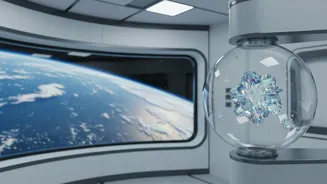
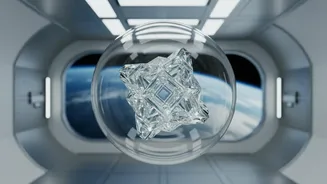
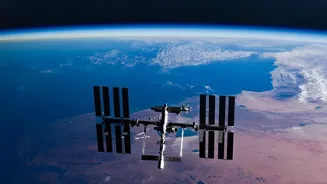
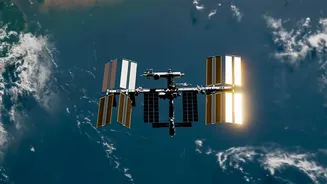
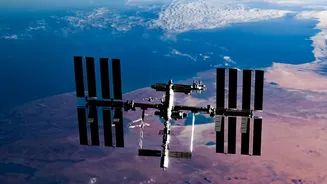
In the microgravity environment of an orbiting space station, these problems disappear. With gravity's influence almost entirely removed, there is no sedimentation to make crystals fall and no convection to stir the solution. Protein molecules move only through the slow, gentle process of diffusion. This calm environment allows the molecules to arrange themselves into the crystal lattice slowly and methodically. The result is larger, more uniform, and more structurally perfect crystals. Studies have repeatedly shown that crystals grown in space are of higher quality, with fewer defects and a more ordered internal structure. In some cases, crystals grown on the International Space Station (ISS) have provided diffraction data at significantly higher resolutions than their Earth-grown counterparts.
From Flawed to Flawless Data
The practical benefit of these superior space-grown crystals is better data. A crystal with a more perfect internal structure (lower mosaicity) produces a sharper, more detailed diffraction pattern when hit with X-rays. This allows scientists to map the protein's structure with incredible precision, identifying the exact location of active sites where a drug needs to bind. Research on drugs like Merck's Keytruda, an antibody used in cancer treatment, has demonstrated that microgravity-grown crystals were larger and more uniform, enabling more detailed analysis. This level of detail is crucial for structure-based drug design, a method that accelerates the development of new therapies and can lead to more potent medicines with fewer unintended consequences.
The New Commercial Space Race
For decades, this research has largely been the domain of government agencies like NASA and JAXA aboard the ISS. Now, a new commercial era is dawning. Companies like Axiom Space, Vast, and others are developing private space stations with dedicated laboratory facilities. This shift promises to make microgravity research more accessible and affordable for pharmaceutical companies and research institutions. Instead of waiting for a rare spot on a government-funded mission, companies will be able to conduct ongoing experiments in orbit. This burgeoning industry isn't just about building space hotels; it's about creating orbital platforms for manufacturing and research and development, with biopharmaceutical innovation being a key market.