



The Case of the Active Asteroid
Out in the main asteroid belt, a vast cosmic junkyard between Mars and Jupiter, most objects are inert chunks of rock and metal. They are leftovers from the formation of the solar system, quietly orbiting the Sun. Scientists long believed these asteroids
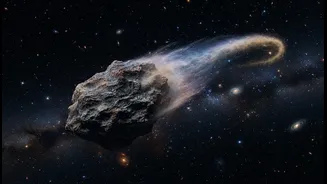
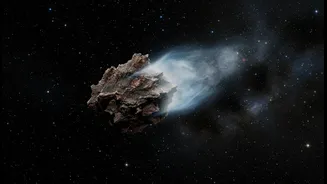
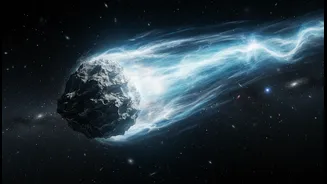
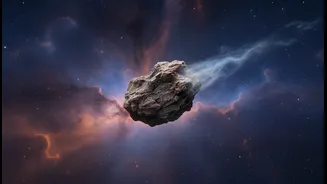
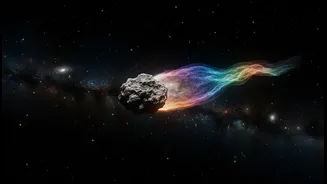
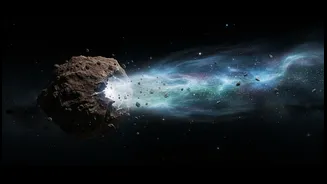
were inactive because any surface ice would have been baked off by the Sun billions of years ago. But then they started finding exceptions. Objects with the orbit of an asteroid began showing signs of comet-like activity, such as a glowing halo (a coma) or a dusty tail. These celestial oddities were dubbed "active asteroids" or "main-belt comets." They challenge the neat line between icy comets from the outer solar system and rocky asteroids from the inner solar system. The discovery was surprising because it meant that somehow, water ice could still exist, buried within these supposedly dry space rocks.
What is 'Dust Activity'?
So, what does it mean for a space rock to be "active"? The key sign is the release of dust and gas. This activity is often driven by sublimation, the process where ice turns directly into gas when warmed by the Sun. This escaping gas carries dust particles off the asteroid's surface, creating a temporary atmosphere, or coma, and a faint tail that streams behind it. This is classic comet behaviour. However, it’s highly unusual for an object in the relatively warm asteroid belt. Other causes for dust activity can include an impact from a smaller object that excavates material, or even the asteroid spinning so fast that it starts to fling pieces of itself into space. Another theory suggests extreme temperature shifts between the sunlit and dark sides of an asteroid can cause thermal fracturing, breaking down its surface into dust. Observing this dust is the first clue that an asteroid is not as dormant as it appears.
Decoding Clues from the Orbit
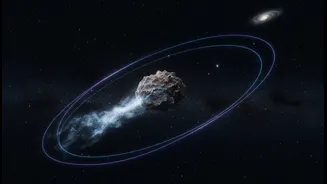
Once scientists spot a dusty asteroid, one of the first things they do is perform an orbit analysis. An object's path around the Sun is like its fingerprint, revealing its history and nature. Most asteroids have stable, nearly circular orbits confined within the main belt. Comets, by contrast, typically have highly elongated orbits that take them far out into the colder reaches of the solar system before they swing in close to the Sun. By precisely plotting the orbit of an active asteroid, astronomers can confirm it truly belongs to the asteroid family and isn't just a comet passing through. This analysis helps answer crucial questions: Is the orbit stable? Does it bring the asteroid closer to the Sun at certain points, which could trigger the sublimation of buried ice? Studying the orbit helps scientists understand if the activity is a recurring event, happening each time the asteroid reaches its closest point to the Sun (perihelion).
Follow-Up Imaging: Getting a Closer Look
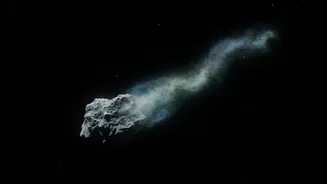
A single blurry image isn't enough. To confirm activity and understand its cause, astronomers conduct follow-up imaging using powerful ground-based and space telescopes. These observations, taken over days, weeks, or even months, show how the dust cloud and tail evolve. This helps distinguish true activity from a simple collision event, which would create a debris field that disperses differently. Telescopes like the Hubble Space Telescope or large survey instruments can capture detailed pictures, revealing the shape and length of the tail. By taking multiple images over time, scientists can create time-lapse sequences that show the asteroid's movement against the background stars, making even faint dust features more apparent. This crucial step provides the visual evidence needed to classify an asteroid as active and begin investigating the physical processes at play.
Why These 'Living' Rocks Matter
The discovery of active asteroids is more than just a cosmic curiosity. These objects are a potential window into the origins of our solar system. Scientists have long hypothesized that asteroids and comets delivered water and organic materials to the early Earth, setting the stage for life. Active asteroids, located much closer to us than distant comets, offer a more accessible way to study water ice in the inner solar system. They suggest that water might be more widespread than previously thought, preserved in subsurface pockets. This has profound implications, not just for understanding Earth's history, but also for future space exploration. These icy asteroids could one day become valuable resource hubs, providing water that could be used for drinking, breathing air, or manufacturing rocket fuel for missions deeper into space.