





A Hero's Second Act
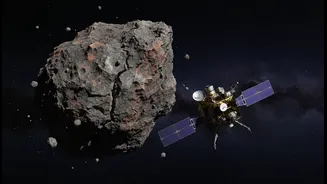
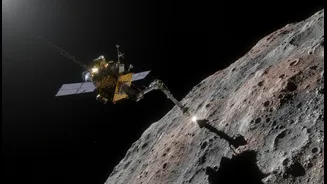
Many will remember the Japan Aerospace Exploration Agency's (JAXA) Hayabusa2 mission for its stunning success in 2020. After rendezvousing with the near-Earth asteroid Ryugu, it deployed rovers, created an artificial crater to collect subsurface material,
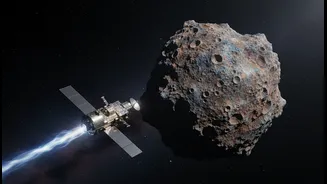
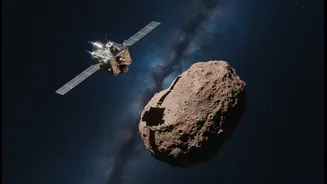
and returned those precious samples to Earth. This triumph provided scientists with a pristine look into the building blocks of our solar system, offering clues about the origin of water and life on our own planet. But with half its xenon fuel remaining, JAXA approved an ambitious extended mission, nicknamed Hayabusa2# (pronounced 'sharp'). This new phase pushes the veteran spacecraft to its limits, sending it on a decade-long journey to explore two more asteroids and test technologies crucial for our future in space.
Target One: The 'Ship of the Gods'
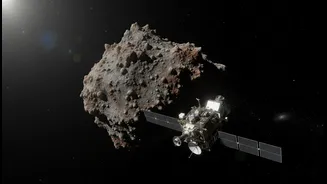
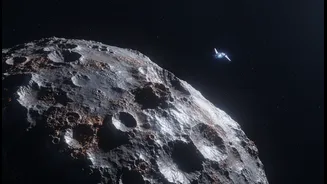
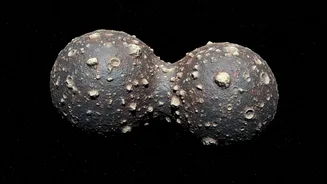
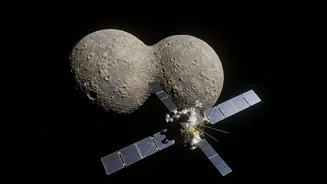
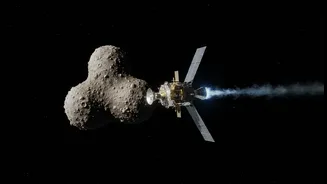
The first major objective of this extended mission was the flyby of asteroid (98943) Torifune, which occurred in early July 2026. The name, selected through a public contest in Japan, refers to a divine ship in Japanese mythology known for its speed and stability. The target is an S-type near-Earth asteroid about 450 meters long and shaped like two distinct lobes connected together. The flyby was a high-stakes encounter, with Hayabusa2 screaming past at a relative speed of over 18,000 kilometers per hour. Because of the asteroid's small size and low reflectivity, the spacecraft's navigation team had to make last-minute adjustments just days before the encounter to ensure it passed as close as possible without a collision.
A Test for Planetary Defense
This high-speed flyby wasn't just for sightseeing. It served as a critical technology demonstration for planetary defense. An asteroid the size of Torifune is large enough to cause significant damage if it were to strike Earth, and such impacts are projected to happen every 100 to 1,000 years. Being able to rapidly intercept and characterize a potentially hazardous object is a key goal for scientists. The Torifune encounter was a rehearsal for this exact scenario, testing JAXA's ability to perform high-precision guidance toward a small, dark object detected only days before arrival. The skills honed here are fundamental for future missions that might need to deflect an asteroid on a collision course with Earth, perhaps by striking it with a spacecraft.
Next Stop: A Tiny, Whirling Enigma
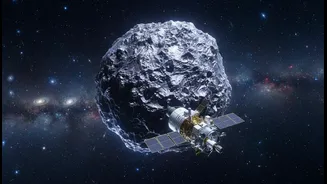
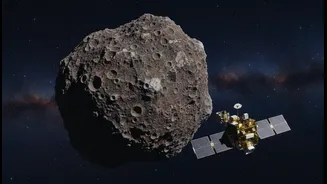
The Torifune flyby is a stepping stone to an even more audacious goal. In July 2031, Hayabusa2 is scheduled to rendezvous with 1998 KY26, a truly bizarre and fascinating object. At only about 11 meters in diameter, it will be the smallest asteroid ever visited by a spacecraft. What makes it so scientifically compelling is its astonishing rotation speed. It spins once every 5.35 minutes. Most asteroids are loose collections of debris, or "rubble piles," that would fly apart if they spun this fast. This suggests 1998 KY26 may be a single, solid piece of rock—a monolith—which would provide invaluable insight into the internal strength and composition of asteroids. Understanding how such a small body holds itself together while spinning so rapidly is a major puzzle in planetary science.
Why Students and Scientists Are Watching
For students, Hayabusa2's extended mission is a real-time lesson in engineering, physics, and discovery. It showcases how a single mission can be repurposed to maximize scientific return, pushing the boundaries of what is possible. For planetary scientists, the data from Torifune and 1998 KY26 will be a treasure trove. It will help refine models of asteroid populations, improve our understanding of how our solar system evolved, and provide crucial, close-up data on the kinds of objects that could one day pose a threat to Earth. This mission is not just about visiting rocks in space; it's about answering fundamental questions about our origins and ensuring our future safety.