



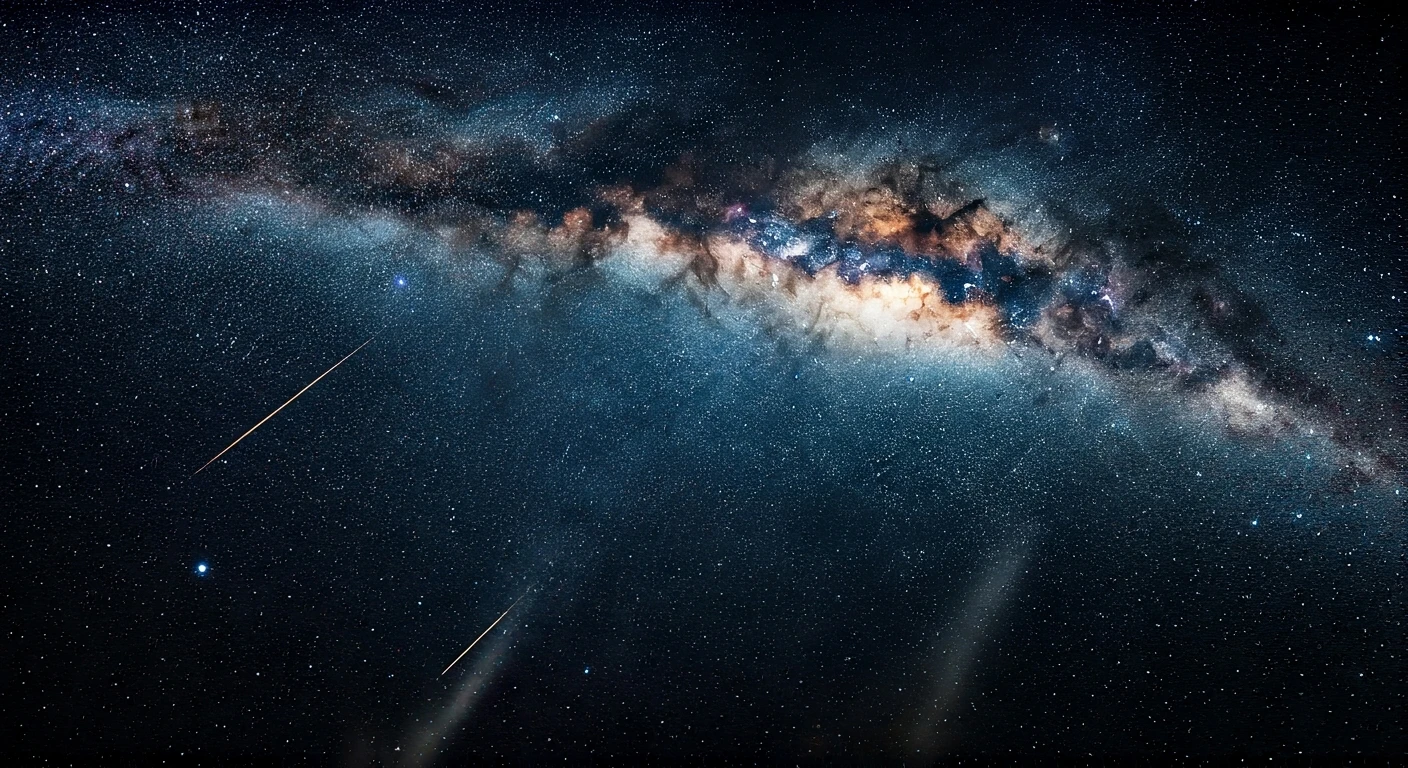


The Universe’s Ultimate Speed Limit
The magic behind this cosmic time travel is all down to one simple, fundamental rule of the universe: the speed of light. Light is incredibly fast—the fastest thing that exists. It travels at an astounding 299,792 kilometres per second. In the time it
takes you to blink, a beam of light could circle the Earth more than seven times. But here’s the catch: space is unimaginably vast. Even at this blistering pace, light takes time to travel from one point to another. When you switch on a lamp in your room, the light seems to fill the space instantly. That’s because the distance is tiny. But when the source is a star trillions of kilometres away, that journey is anything but instant. The light you see has been travelling for years, decades, or even millennia to reach your eyes. Essentially, every star you see is a postcard from the past.
Decoding the 'Light-Year'
Astronomers use a special unit to measure these epic distances: the light-year. It’s a common point of confusion, but a light-year is a measure of distance, not time. It's the distance that light travels in one year. To put that in perspective, one light-year is about 9.46 trillion kilometres. Saying a star is 10 light-years away means the light from that star has been travelling for 10 years to reach us. We are seeing that star not as it is today, but as it was a decade ago.
Think of it like receiving a letter that was sent years ago. The information inside—the light—tells you what was happening when it was sent, not what is happening now. For all we know, the sender has moved, or something dramatic has changed. The same is true for the stars.
A Historical Tour of Your Night Sky
Let’s make this real. The next time you spot some of the brightest objects in the sky, consider their 'age'.
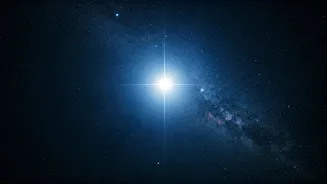
Sirius, the brightest star in our night sky, is relatively close at about 8.6 light-years away. The light you see from Sirius tonight left the star around late 2015. It’s a fairly current picture, cosmically speaking.
Now, look for Polaris, the North Star. It’s about 433 light-years away. This means the light from Polaris that is reaching us tonight began its journey around the year 1591, when the Mughal emperor Akbar was still ruling much of India. That single point of light is a relic from a different historical era.
What about Betelgeuse, the bright reddish star in the Orion constellation? It's roughly 640 light-years away. Its light started travelling towards Earth around the time the Delhi Sultanate was in its final decades, long before the first Mughal emperor was even born. In fact, astronomers know Betelgeuse is a star nearing the end of its life, and it could go supernova. For all we know, it might have already exploded centuries ago, and we are just waiting for the news—the light from the explosion—to finally reach us.
Galaxies: Peering into Deep Time
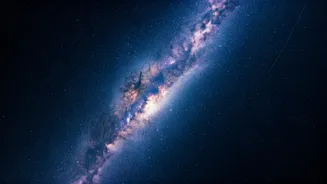
The concept gets even more mind-bending when we look beyond the stars in our own galaxy. On a very dark, clear night, you might be able to spot a faint, fuzzy patch in the sky. This is the Andromeda Galaxy, our nearest major galactic neighbour. That faint smudge is 2.5 million light-years away. The photons hitting your retina from Andromeda tonight began their journey when early human ancestors, like Homo habilis, were first walking the Earth. You are literally looking at light that is older than our entire species.