







From Sugarcane to Sweetener: A Tale of Two Processes
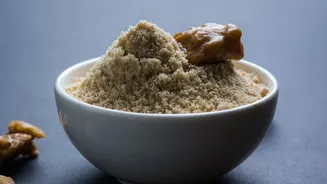
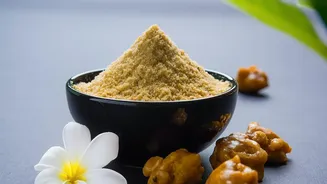
Both jaggery (gur) and white sugar begin their journey as juice extracted from sugarcane. However, their paths diverge dramatically from there. Jaggery production is a simpler, less intensive process. The sugarcane juice is boiled in large, open pans
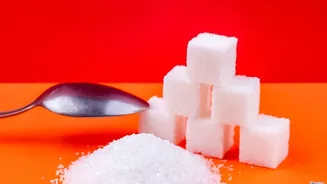
until it thickens and solidifies. This minimal processing means that jaggery retains molasses, the dark, syrupy component of sugarcane juice that is rich in minerals. White sugar, on the other hand, undergoes extensive industrial refining. The process involves multiple stages of boiling, clarification, crystallization, and bleaching to strip away the molasses and all other 'impurities', resulting in pure, white sucrose crystals. This difference in processing is the primary reason for their contrasting colours, flavours, and nutritional profiles.
The Nutritional Showdown: Is Jaggery Truly Healthier?
Because it retains molasses, jaggery contains trace amounts of minerals that are completely absent in refined sugar. It has measurable quantities of iron, potassium, and magnesium. For instance, 100 grams of jaggery can contain a significant amount of iron, around 11 mg, which is about 61% of the recommended daily intake. White sugar provides what experts call 'empty calories'—energy with virtually no other nutritional value. However, it's crucial to look at this in the context of portion sizes. A typical serving of jaggery in a cup of tea or a sweet is about 10-15 grams, not 100. At this amount, the mineral contribution is quite small and shouldn't be relied upon to meet your daily needs. Calorie-wise, they are nearly identical: jaggery has about 383 calories per 100 grams, while sugar has about 387. So, swapping sugar for jaggery will not result in significant calorie savings.
The Glycemic Index Surprise
One of the most common beliefs is that jaggery is safer for blood sugar levels. However, this is a significant misconception. The Glycemic Index (GI), a measure of how quickly a food raises blood glucose, reveals a surprising fact. Sugarcane jaggery has a high GI, often reported to be around 84, which is actually higher than that of white sugar (around 65). This means that regular jaggery can cause a faster and sharper spike in blood sugar than its refined counterpart. Therefore, neither is a safe option for individuals with diabetes, who should limit all forms of concentrated sugar. While some other types, like palm jaggery, have a lower GI, the commonly used sugarcane variety does not offer a blood sugar advantage.
Jaggery's Traditional Role in Winter Wellness
The preference for jaggery in winter is deeply rooted in Ayurvedic tradition. In Ayurveda, jaggery is considered to have a 'warming' potency (Ushna Virya), making it ideal for consumption during cold months to help maintain body temperature. It is traditionally believed to aid digestion, which can become sluggish in colder weather. Many winter sweets like gajak and chikki are made with jaggery and sesame seeds for this reason. Furthermore, jaggery is often used in home remedies for coughs and colds, as its properties are thought to help clear the respiratory tract. These traditional beliefs contribute to its popularity as a winter staple, offering comfort and perceived wellness benefits beyond its basic nutritional value.
The Final Verdict: An Informed Choice
So, should you make the switch? Jaggery is marginally superior to white sugar because it is less processed and contains a small profile of minerals like iron and magnesium, whereas sugar offers none. However, it is not a 'health food'. Both are concentrated sweeteners with a high calorie count and a significant impact on blood sugar levels. The choice isn't between a 'bad' food and a 'good' food, but between a highly refined sugar and a slightly less refined one. If you enjoy the rich, caramel-like flavour of jaggery and appreciate its traditional context, using it in place of sugar is a reasonable choice. The most beneficial health decision, however, is to reduce the overall intake of added sugars in your diet, regardless of the source. Moderation remains the most important principle.