






The End of an Era
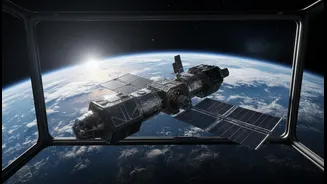
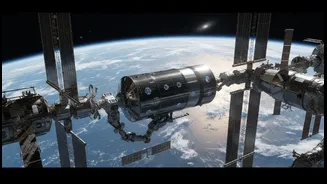
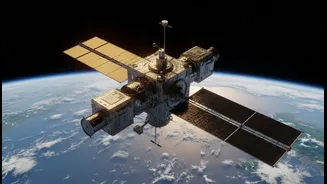
The International Space Station, a symbol of global cooperation and a testament to human ingenuity, has been continuously inhabited since November 2000. It has served as a unique laboratory, hosting thousands of experiments in its microgravity environment.
But all incredible journeys have an end. NASA and its international partners are planning for a controlled deorbit of the aging station around 2030, guiding it to a final resting place in a remote part of the Pacific Ocean. The decision marks the end of a chapter, but also forces a critical question: what comes next for humanity in low-Earth orbit (LEO)? Instead of building another government-funded successor, NASA is betting on the private sector.
NASA's Pivot to Commercial Partner
To avoid a gap in American presence in LEO, NASA has shifted its strategy from being a landlord to a tenant. Through its Commercial LEO Destinations (CLD) program, the agency is actively funding and providing technical expertise to several private companies to develop their own space stations. This model mirrors the success of its Commercial Crew and Cargo programs, which leveraged companies like SpaceX to service the ISS, saving the agency billions and stimulating a new market. NASA's goal is to become just one of many customers, purchasing services like research time and astronaut hosting from these new commercial outposts. This approach frees up NASA to focus its resources on more ambitious deep-space exploration goals, like the Artemis missions to the Moon and Mars, while ensuring a vibrant ecosystem remains in Earth's backyard.
Meet the New Landlords of LEO
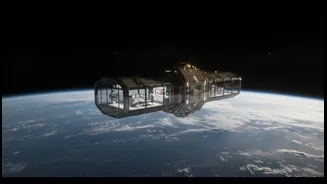
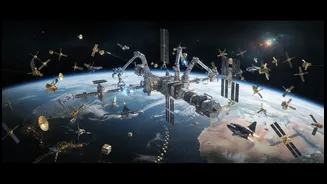
A handful of ambitious companies are now at the forefront, racing to build the next generation of orbital habitats. Axiom Space has a unique strategy, planning to first attach its own modules to the ISS starting as early as 2027. Before the ISS is retired, these modules are designed to detach and become a free-flying commercial station. Meanwhile, companies like Vast are developing standalone stations like Haven-1, targeting a launch in 2027 with plans to host crews for short missions. Another major contender is Starlab, a joint venture between Voyager Space and Airbus, which aims to launch a single large station by 2029. Then there is Orbital Reef, a concept from Blue Origin and Sierra Space envisioned as a "mixed-use business park" in space, designed to accommodate science, tourism, and manufacturing.
What's the Business Model?
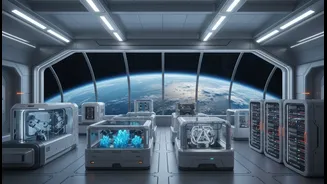
For these private stations to be viable, they need a sustainable business case beyond just leasing space to NASA. The potential revenue streams are diverse and futuristic. Space tourism for private astronauts is a major, high-profile market, with companies like Axiom already flying multiple private missions to the ISS. Beyond tourism, these stations will serve as platforms for sovereign astronaut programs from countries without their own space infrastructure. A significant market is also expected from commercial research and development, allowing pharmaceutical, materials science, and technology companies to conduct experiments in the unique microgravity environment. In-space manufacturing of high-value products like specialized fiber optics or 3D-printed human organs is another long-term goal that could become a cornerstone of the LEO economy.
The Final Frontier for Business
The transition from a single, government-run station to a competitive marketplace of commercial destinations is one of the most significant shifts in the history of spaceflight. It represents a fundamental belief that a robust economy can be built in low-Earth orbit. However, the challenges are as immense as the opportunities. These companies face staggering development costs, complex technical hurdles, and the need to ensure the highest levels of safety and reliability for their future inhabitants. The recent turbulence in NASA's own strategy for the CLD program, with debates over funding and architecture, highlights the uncertainty in this transition. Despite the risks, the push continues, driven by a vision of an orbital future where living and working in space is not just for a select few government astronauts, but a routine part of human enterprise.