







First, What Is the PMI?
Before diving into the details, let's clarify what the Purchasing Managers' Index (PMI) is. Compiled by S&P Global, the HSBC Flash India PMI is a key economic health indicator. It surveys business managers across both the services and manufacturing sectors
on variables like new orders, output, employment, and prices. A reading above 50 indicates expansion in business activity compared to the previous month, while a reading below 50 signals a contraction. Because it’s released quickly, it provides one of the first snapshots of how the private sector is performing each month.
Services Sector: The Engine of August's Growth
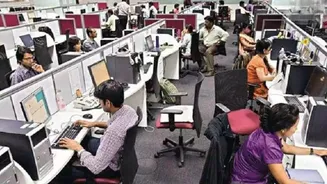
The big story for August was the resurgence in the services sector. The Services PMI jumped to 54.5 from a 53-month low of 53.3 in July. This rebound was the primary driver that pushed the overall Composite PMI, which blends services and manufacturing, slightly higher to 54.6 from 54.3. The stronger performance was underpinned by a pick-up in new orders and a significant boost in hiring, with services firms adding staff at the fastest rate in 15 months. This suggests that despite some recent softness, domestic demand for services remains robust, and companies are confident enough to expand their workforce to meet it.
Manufacturing Cools to a Five-Year Low
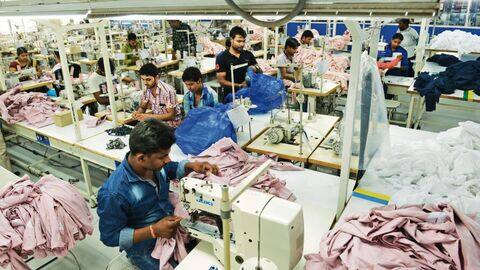
In stark contrast, the manufacturing sector continued its recent slowdown. The Manufacturing PMI fell for the third straight month, dropping to 52.9 in August from 53.5 in July. This marks the weakest improvement in factory conditions since August 2021. Both factory output and new orders grew at their slowest pace in five years. Adding to the concern, manufacturing employment saw a decline for the first time in two and a half years. Companies pointed to challenging market conditions and increased competition as factors constraining growth. This slowdown indicates that the industrial side of the economy is facing significant headwinds.
Why the Divergence Between Sectors?
The split between a booming services sector and a slowing manufacturing industry points to different pressures acting on the economy. The services sector is often more insulated and driven by domestic consumption, which appears to remain resilient. In contrast, manufacturing can be more sensitive to global demand trends, input cost fluctuations, and competitive pressures. While overall export orders grew, the pace of that growth slowed in August for both sectors. Furthermore, some analysts have pointed to higher raw material costs in recent quarters as a factor weighing on manufacturing profits, even when production volumes are up.
The Big Picture for India's Economy
This dual-track performance paints a mixed but cautiously optimistic picture. The strong services rebound shows that the core domestic economy has underlying strength. However, the manufacturing slowdown is a clear warning sign that cannot be ignored, especially given the sector's importance for job creation. On the inflation front, input costs eased to a seven-month low, but companies increased their selling prices at the fastest rate since April to pass on previous cost hikes. Pranjul Bhandari, Chief India Economist at HSBC, noted that while services helped keep overall output growth steady, the weakening manufacturing activity and slower new order growth point to a more subdued expansion compared to earlier in the year.