


Stockholm’s Gamla Stan
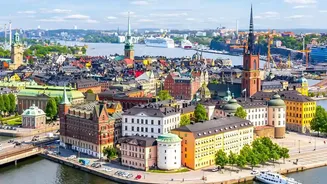
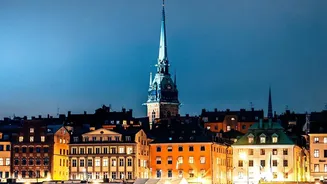
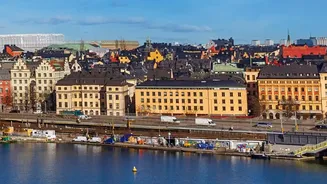
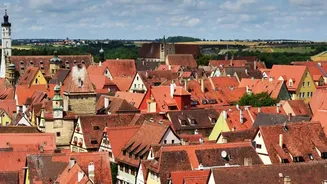
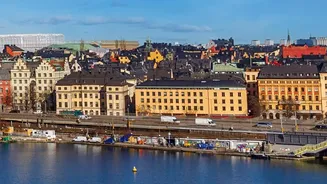
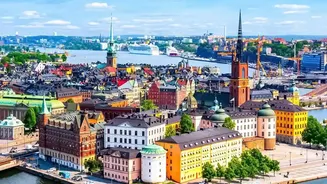
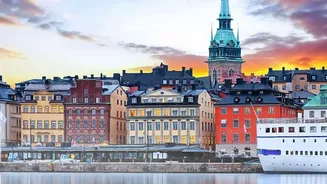
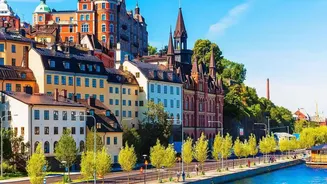
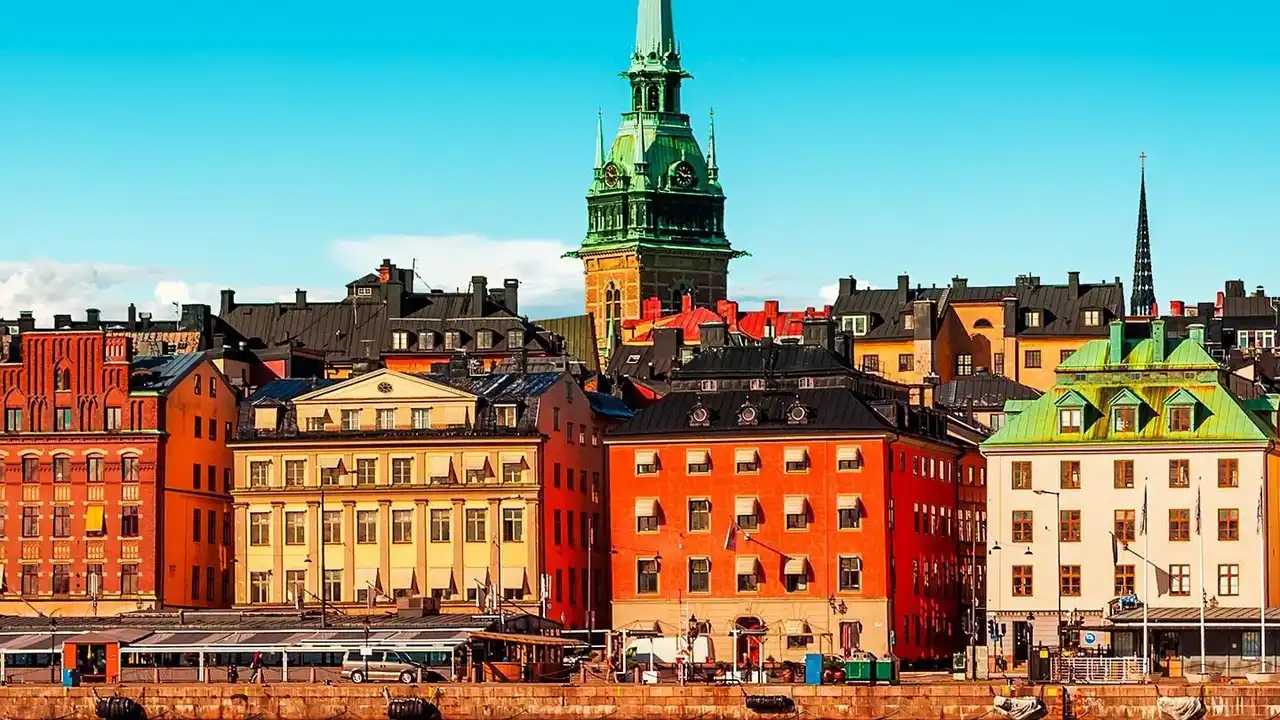
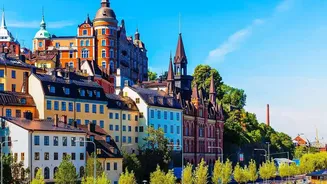
No journey into Sweden's past is complete without a visit to Gamla Stan, Stockholm’s Old Town. Founded in the 13th century, this island neighbourhood is a living museum. Its narrow, winding streets, like Mårten Trotzigs Gränd—the city's tightest alley
at less than a metre wide—are paved with weathered cobblestones that have been smoothed by centuries of footsteps. The tall, narrow buildings are painted in warm shades of ochre, terracotta, and mustard, leaning against each other and creating a storybook atmosphere. While many of the buildings date from the 16th and 17th centuries, the medieval layout remains perfectly preserved. Here, you'll find the Royal Palace, the Nobel Prize Museum, and Stortorget, the main square, which was the site of the infamous Stockholm Bloodbath in 1520.
Visby, Gotland
Often called the 'pearl of the Baltic', Visby on the island of Gotland is arguably Scandinavia's best-preserved medieval town and a UNESCO World Heritage site. The town is encircled by an impressive 3.4-kilometre-long stone wall, the 'Ringmuren', built in the 13th century and still featuring many of its original towers. Inside the walls, a labyrinth of cobblestone streets winds past merchant houses, ancient church ruins, and blooming rose bushes, earning Visby the nickname 'the town of roses and ruins'. As a former Hanseatic trading hub, Visby’s architecture reflects its prosperous past, with over 200 medieval buildings and structures creating an atmosphere that feels truly frozen in time. During the summer, the city's history comes alive with its famous Medieval Week, a festival with markets, jousting, and costumed reenactments.
Sigtuna, Lake Mälaren
Just north of Stockholm lies Sigtuna, celebrated as Sweden's very first town, founded around 980 AD by Viking King Erik the Victorious. Its main thoroughfare, Stora Gatan, is considered the country's oldest street, retaining its original route from over a thousand years ago. Sigtuna is dotted with traditional wooden houses, some dating back to the 17th century, creating a cozy and historic ambiance. As an early Christian centre, the town is rich with medieval church ruins, like those of Saint Peter and Saint Olaf. It also boasts the highest concentration of Viking runestones in the world, silent memorials that connect the present directly to its ancient past. Its charming setting on the shores of Lake Mälaren only adds to its picturesque appeal.
Ystad, Skåne
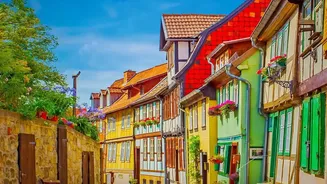
Located on the southern coast in the beautiful Skåne region, Ystad offers a different but equally captivating medieval experience. The town is famous for its hundreds of well-preserved half-timbered houses, with their characteristic exposed wooden beams and colourful plaster. Strolling through the old town feels like walking onto a film set—which it often is, as the setting for the popular 'Wallander' crime dramas. Beyond its charming streets, Ystad’s medieval heritage is anchored by significant landmarks like the 13th-century Greyfriars Abbey (Klostret i Ystad) and the imposing St. Mary's Church (Sankta Maria Kyrka). The combination of rustic timber architecture and the nearby Baltic Sea gives Ystad a unique and tranquil atmosphere.
Lund, Skåne
Founded around 990, Lund is one of Sweden's oldest cities and was a major ecclesiastical centre for all of Scandinavia during the Middle Ages. While it is now a bustling university town, its medieval street plan remains largely intact. The city's crowning glory is the magnificent Lund Cathedral, a grand Romanesque structure consecrated in 1145, whose imposing twin towers dominate the skyline. Scattered throughout the city centre are historic buildings, including the 16th-century Lundagårdshuset and charming houses tucked away on quiet, cobbled lanes. Exploring the area around the cathedral reveals a blend of academic energy and deep-rooted history, where ancient stones and timbered structures stand alongside vibrant modern life.