


The One-Channel Nation
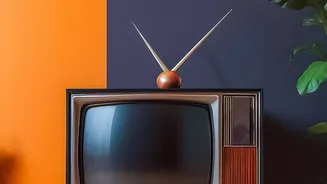
For decades, home entertainment in India had one name: Doordarshan. Television began as a limited experiment in 1959, but the 1980s cemented its place in the national consciousness. The introduction of colour television for the 1982 Asian Games in New
Delhi was a major turning point. This era was defined by community viewing. Entire neighbourhoods would often gather around a single television set to watch mythological epics like 'Ramayan' and 'Mahabharat', which brought the country to a standstill. Shows like 'Hum Log' and 'Buniyaad' offered relatable family stories, while 'Chitrahaar' was the weekly window to Bollywood music. It was a time of a single, shared cultural experience, curated by one national broadcaster.
The Satellite Television Explosion
The early 1990s changed everything. Following economic liberalisation in 1991, India's skies opened up to private and foreign satellite channels. The arrival of broadcasters like STAR TV and the launch of domestic channels like Zee TV in 1992 marked the end of the Doordarshan monopoly. Suddenly, viewers had choices. Cable operators, often local entrepreneurs, wired up neighbourhoods, offering a dizzying array of content. From international music on MTV to new Hindi-language serials, the remote control became a symbol of a new era. This period saw the rise of more contemporary, urban dramas like 'Tara' and 'Hasratein', reflecting a modernising India.
The Reign of the 'Saas-Bahu' Soaps
By the early 2000s, a new formula had taken over primetime: the 'saas-bahu' saga. Shows like 'Kyunki Saas Bhi Kabhi Bahu Thi' and 'Kahaani Ghar Ghar Kii' dominated viewership charts, creating a new kind of television star and shaping cultural conversations. These daily soaps, often featuring opulent joint families and endless domestic intrigue, became a staple in households across the country. While critics pointed to their regressive portrayal of women, their popularity was undeniable, reflecting and sometimes reinforcing traditional family dynamics. This era also saw the rise of reality television, with shows like 'Kaun Banega Crorepati' and 'Indian Idol' offering a new flavour of unscripted drama and audience participation.
The Digital Disruption and the 'Jio Effect'
The next great shift was not in content, but in delivery. The launch of Direct-to-Home (DTH) services in the early 2000s offered more channels and better quality, but the real revolution started around 2016. The launch of the Jio 4G network by Reliance Industries triggered what is now called the 'Jio effect'. By offering free, and later extremely cheap, high-speed mobile data, Jio fundamentally changed how Indians accessed the internet. Data consumption skyrocketed, with the average user going from using under 1GB per month to over 11GB. This sudden affordability of data created a massive new audience for online content and laid the perfect groundwork for the rise of streaming services.
The Age of Web Originals
With cheap data and widespread smartphone penetration, Over-The-Top (OTT) platforms like Hotstar, Netflix, and Amazon Prime Video found a massive, ready market in India. While the first Indian OTT platform, BIGFlix, launched in 2008, the post-Jio boom supercharged the industry. This gave rise to 'web originals' – high-budget series made exclusively for streaming. Shows like 'Sacred Games' and 'Mirzapur' offered a kind of gritty, nuanced, and mature storytelling that was impossible on broadcast television. This new medium allowed creators to explore complex themes and cater to niche tastes, moving away from the one-size-fits-all approach of cable soaps. Today, India is one of the fastest-growing OTT markets in the world, with content now being created for global audiences.