



A Divine Culinary Tradition
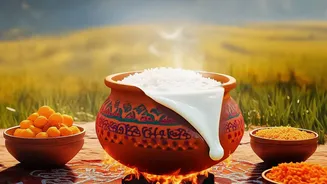
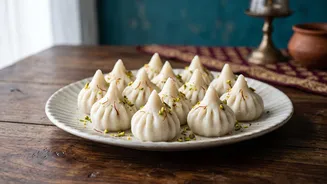
At the heart of the Ganpati festival lies a rich culinary landscape, with one sweet reigning supreme: the modak. This steamed dumpling, with its delicate rice-flour shell and a sweet filling of jaggery and coconut, is considered Ganesha's favourite food.
Offering modaks is a key ritual, symbolising wisdom and the sweet rewards of a devout life. But the feasting extends far beyond this single delicacy. Kitchens across Maharashtra and other states come alive with the preparation of elaborate meals. Puran poli, a sweet flatbread stuffed with lentils and jaggery, is another festive staple, representing abundance and wholesomeness. Savoury dishes also play a crucial role, from simple potato preparations known as 'batata bhaji' to spiced chickpea salads called 'kala chana sundal', creating a balanced offering for the deity and a feast for family and friends. This tradition of preparing and sharing food, known as 'prasada' after being offered to the deity, is a core part of the community celebration.
The Community's Cultural Stage
The ten days of Ganeshotsav transform neighbourhoods into vibrant cultural hubs. Public pandals, or temporary stages, are erected to house the beautifully crafted idols of Ganesha, becoming the focal point for community gatherings. These are not just places of worship but also venues for a wide array of cultural events. Many pandals host daily activities including music concerts, traditional dance performances, and theatrical plays, drawing crowds and fostering a spirit of togetherness. For many communities, this is a time to showcase local talent and pass down traditions to the next generation through storytelling sessions and workshops. These cultural programmes turn the religious observance into a broader celebration of arts and community spirit, bringing people from all walks of life together in a shared experience of joy and devotion.
Mumbai’s Unmatched Spectacle
When it comes to the sheer scale and energy of Ganesh Visarjan, Mumbai is in a league of its own. The city's celebrations are legendary, culminating in a massive spectacle on Anant Chaturdashi, the final day of immersion. Processions for iconic idols like the Lalbaugcha Raja can take the better part of a day to wind through the crowded streets towards immersion points like Girgaon Chowpatty. The city’s connection to the Arabian Sea shapes its celebration, allowing for the creation of larger-than-life idols that are a sight to behold. The streets fill with millions of devotees, dancing to the beats of percussion bands and chanting farewell to their beloved deity. The atmosphere is electric, a mix of devotional fervour and street-party energy that captures the unique spirit of Mumbai.
Pune's Reverence for Tradition
If Mumbai's celebration is defined by its grand scale, Pune's is marked by its deep reverence for history and tradition. As the city where Lokmanya Tilak popularized the public Ganeshotsav, Pune celebrates with a sense of disciplined decorum. The city is famous for its 'Manache Ganpati', the five most honoured idols that hold historical significance and lead the immersion procession. These include the Kasba Ganpati, considered the deity of the city, and the Kesari Wada Ganpati, established by Tilak himself. Pune's processions are also renowned for their 'dhol-tasha pathaks', or percussion troupes, where thousands of young men and women play traditional drums and cymbals in perfect synchronisation, creating a powerful and rhythmic soundscape.
Celebrations Across the Nation
While Maharashtra remains the epicentre, the spirit of Ganeshotsav has spread across India, with each region adding its unique cultural flavour. In Hyderabad, the festival is known for the colossal Khairatabad Ganesh, an idol that often stands over 60 feet tall. A key tradition here is the offering of a giant laddoo, sometimes weighing thousands of kilograms, which is later distributed among devotees. The immersion ceremony at Hussain Sagar Lake is a massive logistical undertaking, often requiring industrial cranes. In Goa, the festival, known as 'Chovoth', is a more family-oriented affair, centered around ancestral homes. A unique Goan tradition is the 'matoli', a wooden canopy decorated with local, seasonal fruits and vegetables that is hung above the Ganesha idol, celebrating nature's bounty.