



The Life-or-Death Problem of CO2
In the sealed environment of a spacecraft, the air doesn't just need to be supplied; it needs to be constantly cleaned. Every breath an astronaut takes releases carbon dioxide (CO2). Without a robust removal system, CO2 levels would quickly become toxic,
leading to impaired judgment, illness, and eventually death. For decades, space missions have relied on expendable filters, like lithium hydroxide canisters, to scrub CO2 from the air. While effective for shorter trips, this method is unsustainable for the multi-month or multi-year journeys planned for the Artemis program. The sheer volume of replacement canisters required would be prohibitively heavy and expensive to launch. This creates enormous logistical waste, taking up precious mass and volume that could be used for science or other critical supplies.
A Regenerative Revolution: The Four-Bed Scrubber
Enter the next generation of life support, a key technology being proven for Artemis missions. Instead of throwing away used filters, NASA is implementing regenerative systems that clean and reuse their core components. One such breakthrough is the Four-Bed Carbon Dioxide Scrubber, or FBCO2. This system, tested on the International Space Station (ISS), marks a significant leap forward from previous technologies like the shuttle-era scrubbers. The core idea is to move from a disposable model to a circular one. By regenerating the filters, the system dramatically reduces the mass of consumables needed for a mission, directly addressing the problem of logistical waste.
How It Works: A Cycle of Capture and Release
The Four-Bed CO2 Scrubber uses a clever, continuous cycle. It contains beds of adsorbent materials called zeolites, which are porous minerals that act like molecular sieves. The system operates in pairs: while one set of beds is actively scrubbing the cabin air, another set is being regenerated. First, air passes through a desiccant bed to remove moisture, which is crucial for the CO2 capture process to work efficiently. The now-dry air then flows into a zeolite bed that traps CO2 molecules. The clean, breathable air is then returned to the cabin. The key innovation is what happens next. The beds saturated with water and CO2 are heated and exposed to the vacuum of space. This process forces the trapped molecules to be released and vented overboard, effectively cleaning, or 'regenerating,' the zeolite material so it can be used in the next cycle. This closed-loop system is far more efficient and reliable for long journeys.
Eliminating Waste Beyond Just CO2
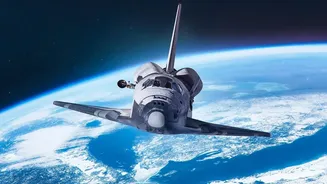
The headline's claim of 'eliminating waste' refers less to the CO2 itself—which is vented—and more to the elimination of physical, logistical waste. On the space shuttle, the CO2 removal system's expendable chemicals took up the volume of about 143 basketballs. Orion's regenerative system takes up the space of only 16 basketballs and is significantly lighter. This mass and volume savings is critical. Every kilogram saved on life support is a kilogram that can be allocated to fuel, scientific instruments, or longer-lasting supplies. This technology also reduces the 'waste' of astronaut time, requiring less maintenance than older systems. With a more reliable blower using magnetic bearings instead of wear-prone air bearings, the system is designed for longevity and reduced crew intervention.
From the Moon to Mars and Back to Earth
This regenerative air revitalization technology is more than just an upgrade; it's a fundamental enabler for humanity's future in deep space. For a sustained presence on the Moon and the eventual crewed missions to Mars—journeys that could last up to three years—relying on resupply from Earth is not an option. Systems like the Four-Bed CO2 Scrubber are a critical step toward the fully closed-loop life support systems that will be necessary, where every resource, including water and oxygen, is recycled. In fact, downstream systems like the Sabatier can even take the captured CO2 and react it with hydrogen to produce water and methane, further closing the loop. The innovations driven by these extreme requirements often find their way back to Earth, potentially leading to more efficient carbon capture technologies for use in buildings, submarines, or industrial applications.