







A Predictable Environmental Cycle
The arrival of winter pollution is an annual, unwelcome guest in urban India. During the monsoon, frequent rains wash away particulate matter and other pollutants from the atmosphere, leading to a period of relatively clean air. However, this relief is temporary.
As soon as the rains cease, the combination of ongoing emissions and changing weather patterns causes pollution levels to rebound, often rapidly. Studies show that even during the monsoon, baseline emissions from traffic and industry are so high that air quality can deteriorate within 48 hours of a dry spell. The end of the season simply removes the natural cleaning mechanism, setting the stage for the accumulation of smog.
The Perfect Storm for Bad Air
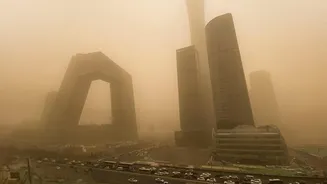
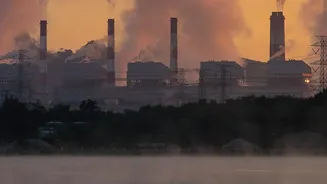
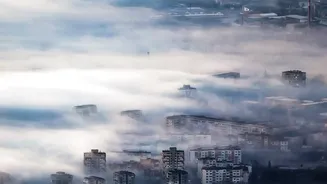
Several factors converge in October to create a perfect storm for severe air pollution. Meteorologically, cooler air and lower wind speeds play a major role. Dropping temperatures can lead to thermal inversion, a phenomenon where a layer of warm air traps cooler, denser air—and the pollutants within it—close to the ground. This atmospheric lid prevents pollutants from dispersing. Compounding this are major man-made emission sources that peak during this period. The burning of crop residue, or stubble burning, in states like Punjab and Haryana, begins in October and contributes significantly to the smog that blankets the Indo-Gangetic Plain. This is layered on top of the year-round pollution from vehicles, industrial activity, and construction dust that plagues cities.
Understanding the Pollutants
The haze is not just one substance; it is a toxic cocktail. The most dangerous components are fine particulate matter known as PM2.5 and PM10. These microscopic particles, much smaller than the width of a human hair, come from sources like vehicle exhaust, industrial emissions, and burning biomass. Because of their tiny size, PM2.5 particles can penetrate deep into the lungs and even enter the bloodstream, causing a range of health problems. Other harmful pollutants that become prominent include nitrogen oxides (NOx) from vehicle emissions and ground-level ozone, which forms when other pollutants react in the presence of sunlight.
More Than Just a Cough: The Health Risks
Exposure to high levels of air pollution is a serious public health threat. Short-term effects include irritation of the eyes, nose, and throat, coughing, and shortness of breath. For vulnerable populations, such as children, the elderly, and those with pre-existing conditions, these effects can be severe, triggering asthma attacks and worsening heart and lung disease. Long-term exposure is linked to an increased risk of chronic respiratory diseases like COPD, cardiovascular problems, stroke, and even cancer. The World Health Organization has classified air pollution as a carcinogen, and studies show it can reduce overall life expectancy.
The Official Response: GRAP and Other Measures
Authorities in regions like Delhi-NCR implement a set of emergency measures known as the Graded Response Action Plan (GRAP). This plan is triggered in stages as the Air Quality Index (AQI) worsens. Measures can range from banning diesel generators and enforcing vehicle emission norms in the initial stages, to halting construction activities and implementing restrictions on certain types of vehicles in more severe stages. For 2026, the framework has been revised to be more proactive, including curbs on older BS-III petrol and BS-IV diesel vehicles under Stage III of GRAP in Delhi and several surrounding districts.
How to Protect Yourself and Your Family
While systemic change is necessary, individuals can take steps to reduce their exposure. The most effective advice is to monitor the daily AQI in your area and stay indoors as much as possible when levels are high. If you must go outside, wear a well-fitting N95 or KN95 mask, which can filter out fine particulate matter. Avoid strenuous outdoor exercise, such as jogging or cycling, as this increases the volume of polluted air you inhale. At home, keep windows and doors closed and consider investing in an air purifier with a HEPA filter to improve indoor air quality.