


Our Microbial Shadow
Every human is a walking ecosystem. A patch of skin the size of a pencil eraser can host around a million bacteria. We shed these microbes constantly, leaving a biological footprint wherever we go. For space missions, this is an unavoidable reality. Despite
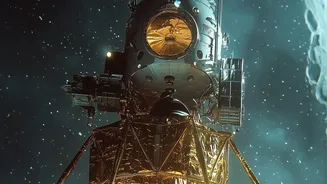
rigorous sterilization procedures for equipment, it is impossible to create a completely sterile environment for crewed missions. Astronauts, their spacesuits, and their habitats will inevitably release some of our planet's hardiest microorganisms onto the lunar landscape. This isn't a new concern, but with plans for a more permanent human presence on the Moon, the stakes are higher than ever.
Can They Survive the Trip?
The Moon is an incredibly hostile environment. With no protective atmosphere, its surface is bombarded with intense ultraviolet (UV) and cosmic radiation. Temperatures swing wildly, from scorching highs of over 120°C in sunlight to frigid lows of -173°C in darkness. For decades, scientists believed these conditions were a death sentence for any stowaway microbes. However, recent studies led by NASA have revealed a more complex picture. Research now shows that certain rugged microbes, known as extremophiles, could potentially survive the journey and persist on the Moon. Organisms like the fungus Aspergillus niger, commonly found in our own homes, have shown a surprising resilience to simulated lunar conditions.
A New Home in a Lunar Shadow
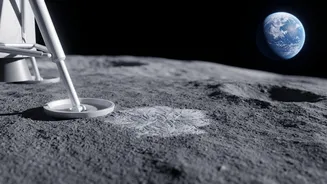
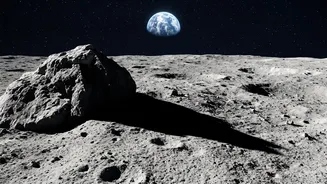
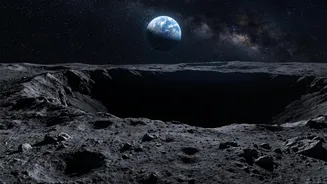
The key to survival isn't the exposed lunar surface, but its hidden corners. NASA's upcoming Artemis missions are targeting the Moon's south pole, a region of great scientific interest. Due to the Moon's slight axial tilt, the sun never rises high in the sky at the poles. This creates permanently shadowed regions inside deep craters, where temperatures remain stable and extremely cold, and where there is little to no UV radiation. Recent modeling shows that these shadowed areas, some as small as an astronaut's bootprint, could act as 'survivable niches' for Earth microbes. Here, they wouldn't thrive or reproduce but could enter a dormant, freeze-dried state known as cryptobiosis, potentially remaining viable for days, weeks, or even longer.
The Risk: Contaminating Science
The primary concern isn't that Earth microbes will colonize the Moon. There is no evidence that the Moon provides the necessary conditions, like liquid water, for microbes to grow and replicate. The real risk is scientific contamination. Scientists are eager to study the Moon's pristine chemistry, including ice deposits in polar craters that may hold clues about the history of our solar system. If these areas become contaminated with terrestrial microbes—or even their dead, dormant cells—it could become incredibly difficult to distinguish between what is truly lunar and what we brought with us. Their chemical and protein signatures could show up in samples, muddying the data and compromising billions of dollars worth of scientific investigation. This makes it crucial to understand what was there before we arrived.
Protecting the Moon for the Future
This challenge is governed by a principle called 'planetary protection', an international agreement to prevent biological contamination during space missions. For years, the Moon was considered a low-risk body, requiring few precautions. However, the discovery of water ice and the new potential for microbial survival has led to an update in these policies. Missions to the lunar poles now require more careful documentation of all organic materials on board. While we can't stop every microbe from catching a ride, understanding where they might survive allows NASA and other space agencies to develop smarter protocols. The goal is to ensure that as we explore the Moon, we also preserve its unique scientific value for generations of researchers to come.