
Grains of the Desert
Rajasthan’s arid landscape and dry climate mean that rice and fresh vegetables are not abundant. The cuisine, therefore, leans heavily on hardy grains that can thrive in these conditions. Millets like bajra (pearl millet) and jowar (sorghum), along with
wheat and maize, form the carbohydrate foundation of the meal. These are not just filler; their nutty, earthy flavours are central to the experience. The most iconic example is the 'baati', a hard, unleavened bread roll made from wheat flour. Traditionally baked in the embers of a dung fire, the baati is dense and dry on its own. Its purpose is to act as a perfect vessel for soaking up gravies and, most importantly, ghee. Other breads like bajra roti provide a rustic, wholesome texture that pairs beautifully with the fiery curries, offering a taste of the land itself.
The Soul of Spice
The spiciness of Rajasthani food is legendary, but it’s not just for show. In a hot climate, spicy food induces perspiration, which helps cool the body down. Spices also acted as natural preservatives in an era before refrigeration. While staples like turmeric, cumin, and coriander are used, the star is often the fiery red chilli. The regional Mathania chilli, in particular, is prized for its vibrant colour and potent heat, forming the base of famous dishes like 'Laal Maas'. Another key ingredient is asafoetida (hing), which provides a pungent, savoury depth to lentil dishes. Spices are not an afterthought; they are the primary flavouring agents that transform simple ingredients like lentils and gram flour ('besan') into unforgettable preparations like 'Dal Panchmel' (a mix of five lentils) and 'Gatte ki Sabzi' (gram flour dumplings in a spicy yoghurt curry).
The Golden Elixir of Ghee
To truly understand Rajasthani cuisine, one must understand the role of ghee (clarified butter). It is far more than just a cooking medium; it is a flavour enhancer, a preservative, and a source of essential energy and moisture in a dry land. The region’s pastoral heritage and abundance of cattle and camel milk made ghee a readily available, high-calorie food source. Its application is generous and purposeful. Baatis are famously cracked open and submerged in a bowl of melted ghee before being eaten. This act not only softens the hard bread but also imparts a rich, nutty aroma and flavour that defines the dish. It coats the palate, balancing the intense heat of the spices and adding a luxurious finish to every bite. Without ghee, the Rajasthani thali would lose its signature richness and soul.
A Symphony in a Thali
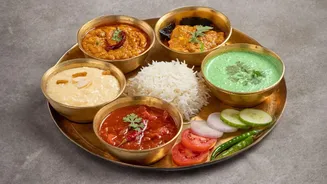
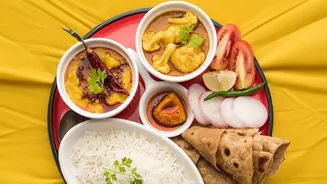
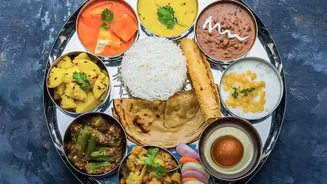
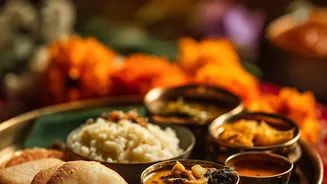
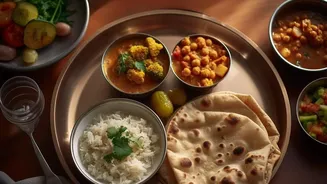
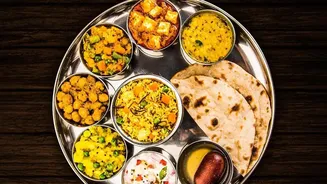
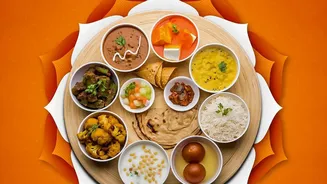
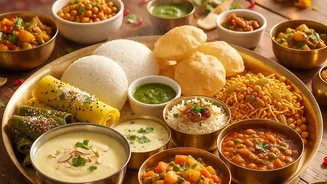
These three elements—grains, spices, and ghee—come together in a perfect symphony on the thali. They are supported by other key local ingredients, such as desert beans and berries ('ker sangri') that grow wild and require little water. Dairy, in the form of cool buttermilk ('chaas') or curd, provides a soothing counterpoint to the spice. A complete thali is a masterclass in balance. The dry, crumbly 'churma', made from crushed baati, jaggery, and ghee, provides a touch of sweetness. The fiery dal and gatte ki sabzi bring the heat. And the ghee-soaked baati provides the rich, satisfying base. Each component is designed to be eaten with the others, creating a holistic experience that is both nourishing and deeply flavourful. It’s a cuisine born of necessity, perfected by ingenuity, and served with pride.