


The Challenge of Intermittency
Solar power has long been a cornerstone of the global push toward renewable energy. Its core principle is simple and elegant: convert sunlight directly into electricity using photovoltaic (PV) cells. India, with its ambitious renewable energy targets,
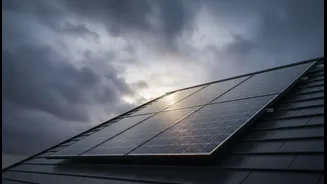
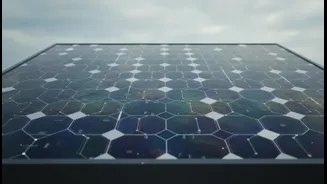
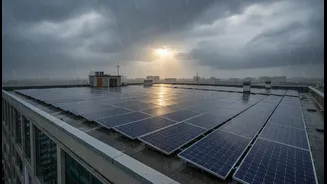
has embraced solar on a massive scale. However, the technology's greatest strength has always been tied to its most significant weakness: its reliance on direct sunlight. When the sun sets, or when thick clouds roll in during the monsoon season, traditional solar panels stop producing power. This intermittency means the grid must depend on other, often fossil-fuel-based, sources to fill the gap, or rely on expensive battery storage systems. While conventional panels can still generate some power on overcast days—typically 10-25% of their peak output—this reduced capacity has remained a major hurdle for achieving a truly 24/7 renewable energy grid.
Powering Through the Clouds
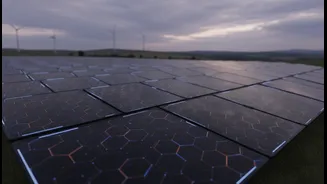
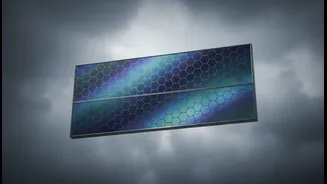
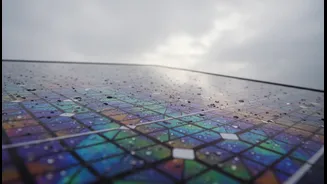
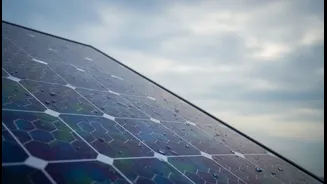
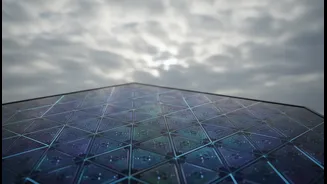
One of the most promising areas of innovation involves making solar cells far more efficient in low-light conditions. Enter perovskite solar cells (PeSCs). Unlike traditional silicon-based panels, these next-generation cells use a unique crystal structure that is exceptionally good at capturing energy from ambient and indirect light. Researchers have developed PeSCs that demonstrate remarkable efficiency indoors and under cloudy skies. Some hybrid designs are even capable of doubling the efficiency of standard silicon cells in low light. This means that on an overcast day, a perovskite-enhanced panel could generate significantly more power than its conventional counterparts. Furthermore, these materials are often flexible and lightweight, opening up possibilities for integrating them into everything from windows to consumer electronics, generating power from any available light source, not just direct sun.
Solar Power in the Dark
Perhaps the most groundbreaking innovation is the development of panels that can generate electricity at night. Often called 'anti-solar panels' or thermoradiative cells, these devices work on a principle that is essentially the reverse of a traditional solar cell. During the day, a solar panel absorbs heat and light from the hot sun. At night, a thermoradiative cell takes advantage of the temperature difference between the relatively warm surface of the Earth and the cold of deep space. The panel radiates heat outwards as infrared light, and this flow of energy can be converted into an electrical current. While the technology is still in its early stages, prototypes have successfully generated a current after sunset. Researchers estimate that under ideal conditions, these nighttime panels could eventually produce up to 25-50 watts per square metre, about a quarter of what a conventional panel generates in daytime.
What This Means for India's Energy Future
For a nation like India, which is rapidly expanding its solar capacity, these innovations could be transformative. The ability to generate power around the clock would dramatically improve grid stability and reduce the reliance on backup power sources. Consistent solar generation, day and night, would make renewable energy a far more reliable baseload power source, accelerating the transition away from coal. Furthermore, technologies like efficient low-light panels are perfectly suited for regions that experience long monsoon seasons or frequent cloud cover, ensuring more consistent energy production throughout the year. For remote, off-grid communities, a solar installation that works 24/7 could provide a continuous and independent power supply without the need for large, costly battery banks.
The Road Ahead
While the science is proven, there are still hurdles to overcome before these advanced solar technologies become a common sight on rooftops. For perovskite cells, the main challenges are durability and stability, as early versions were vulnerable to moisture and heat. For nighttime thermoradiative cells, the primary obstacle is improving power output and efficiency to make them commercially viable. The materials needed, sometimes borrowed from night-vision technology, also need to become more cost-effective for mass production. However, the pace of research is rapid. Scientists are consistently setting new efficiency records and developing more resilient materials. The conceptual leap has been made; now, the focus is on the engineering and scaling required to bring this revolutionary technology into the mainstream.