








The Challenge of Genetic Deafness
Hereditary hearing loss accounts for the majority of congenital deafness, affecting thousands of newborns each year. For many of these children, the world has been silent from birth. One specific cause, responsible for 2 to 8 percent of genetic hearing loss cases,
is a mutation in the OTOF gene. This gene is supposed to produce a protein called otoferlin, which is critical for the hair cells in the inner ear to translate sound vibrations into electrical signals the brain can understand. Without functional otoferlin, the auditory system is structurally sound but unable to transmit information, resulting in profound deafness. Until now, the primary treatment has been cochlear implants, a remarkable technology that bypasses the damaged part of the ear but does not restore natural hearing.
A Groundbreaking Biological Solution
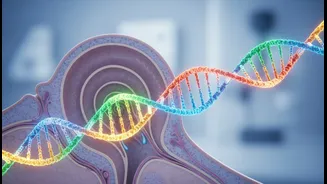
Gene therapy offers a fundamentally different approach: fixing the problem at its biological source. In recent clinical trials, scientists have successfully treated OTOF-related deafness by delivering a functional copy of the OTOF gene directly into the inner ear. The process involves using a modified, harmless adeno-associated virus (AAV) as a delivery vehicle, or vector. This vector carries the correct genetic code to the inner ear's sensory cells. Once there, the cells can begin producing the essential otoferlin protein, effectively switching the hearing mechanism on. Because the OTOF gene is too large to fit into a single viral vector, researchers developed an innovative dual-vector system to deliver the gene in two parts, a key breakthrough that made the therapy possible.
The Human Impact: Astonishing Results
The results from clinical trials led by institutions like Children's Hospital of Philadelphia and Massachusetts Eye and Ear have been nothing short of astonishing. In a recent international study, the largest of its kind, 90% of participants saw their hearing improve after the one-time treatment. Many went from profound deafness to being able to hear whispers and hold conversations within weeks. The improvements have been most dramatic in young children, who are now developing speech and language skills that were previously out of reach. The therapy's effectiveness has been shown to last for at least 2.5 years, and in April 2026, the U.S. Food and Drug Administration (FDA) approved the first gene therapy for this condition, called Otarmeni.
Why This Is a Landmark Moment
While OTOF mutations cause a relatively small fraction of all genetic deafness, the success of this therapy is a monumental proof of concept for the entire field. It demonstrates that gene therapy for hearing loss is not just a theoretical possibility but a clinical reality. Researchers believe the techniques and delivery systems developed for the OTOF gene can be adapted to target other genes responsible for different forms of hereditary deafness. Work is already underway to develop therapies for more common genetic causes, such as mutations in the GJB2 gene. This initial success provides a roadmap and a powerful surge of momentum for developing treatments that could one day help a much broader population.
The Road Ahead: Hope and Hurdles
Despite the excitement, it is crucial to maintain perspective. This therapy is not a universal cure for deafness. It is highly specific to a single gene, and not all participants in the trials responded equally. Furthermore, there are more than 130 known genes associated with deafness, and developing a unique therapy for each one presents a significant scientific and logistical challenge. Researchers are still studying the long-term effectiveness and safety of the treatment and exploring why some patients respond better than others. While the future of gene therapy is incredibly promising, the journey from this first breakthrough to widely available treatments for other forms of hearing loss will be a long and complex one.