


Start With a Solid Foundation
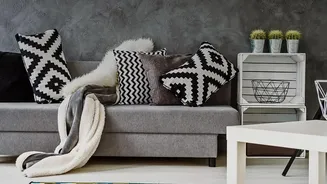
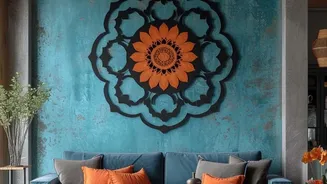
Before you even think about patterns, look at your couch. The easiest canvas for layering bold textiles is a sofa in a solid, neutral colour. Shades of cream, grey, beige, or even a deep navy act as a grounding force, allowing the vibrant Batik prints
to take centre stage without competing. If your couch itself is patterned, the challenge is greater. In that case, you'll need to treat the couch's pattern as your primary print and build your Batik accents around it, ensuring they share a common colour to create harmony.
Choose a Cohesive Colour Palette
To prevent visual chaos, establish a clear and limited colour story. A good rule of thumb is to work with three to five complementary colours. Pull these colours from your main Batik piece—often called the 'hero fabric'. Let’s say your favourite Batik cushion features deep indigo, rust, and cream. Your other cushions and throws should echo these tones. You can introduce different shades and tints within this palette, but sticking to a core family of colours ensures the final look feels deliberate and pulled together, not random. This approach allows patterns to shine without overwhelming the space.
Vary the Scale of Your Patterns
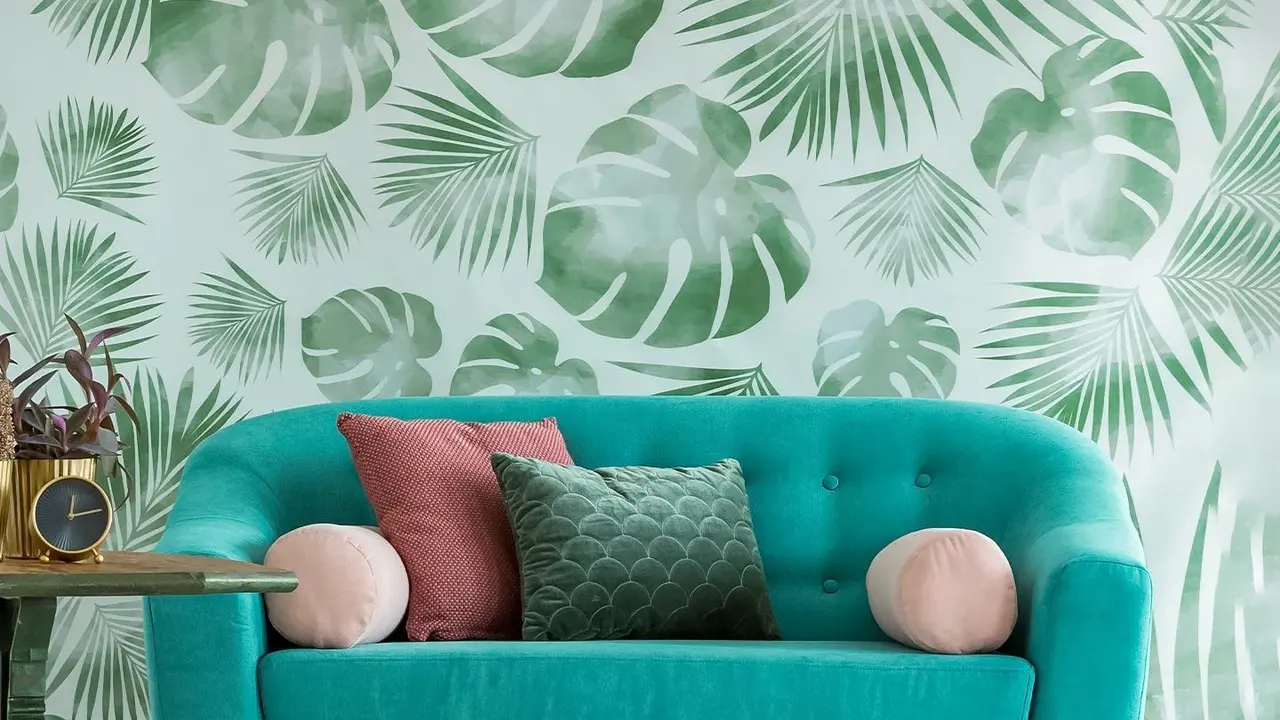
This is the most critical rule in pattern mixing. Layering several patterns of the same size is a common mistake that makes a space feel busy and cluttered. Instead, aim for a dynamic mix of scales. Pair one large-scale Batik pattern (like a bold floral or a wide geometric) with a medium-scale print (perhaps a smaller repeating motif) and a small-scale, subtle design (like a delicate stripe or a simple dot). This variation creates visual hierarchy and depth, allowing the eye to move comfortably from one textile to another instead of being overwhelmed.
Understand Batik’s Visual Language
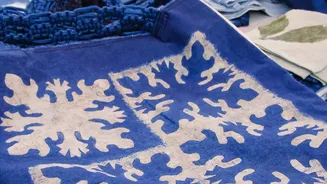
Not all Batik is the same. The ancient craft, recognised by UNESCO, includes everything from intricate hand-drawn 'Batik Tulis' to simpler stamped 'Batik Cap'. Patterns can be organic and flowing, like floral motifs, or structured and geometric, like the classic 'Kawung' design. When layering, try to mix these styles. The clean lines of a geometric pattern can provide a beautiful contrast to the soft curves of a floral one. This interplay adds another layer of interest and sophistication to your couch arrangement. A single, beautifully crafted Batik pillow can serve as a bridge between traditional artistry and modern minimalism.
Introduce Solid Colours and Textures
Patterns need room to breathe. The secret to a successful layered look is breaking up the prints with solid colours and varied textures. For every two patterned cushions, add one solid one in a coordinating colour. Look for interesting textures like velvet, linen, or a chunky knit. These solid pieces provide moments of visual rest, preventing the patterns from clashing and making the entire arrangement feel more inviting and comfortable. This balance of print and plain is what elevates the look from cluttered to curated.
Embrace the Art of Restraint
Finally, know when to stop. It's easy to fall in love with too many beautiful textiles, but overcrowding the sofa will defeat the purpose. Step back and assess the overall balance. Does it feel harmonious or hectic? Sometimes, removing one cushion is the final touch that makes everything click. The goal is to create a space that feels personal and layered, not like a textile showroom. By leaving some 'negative space', or unadorned areas, you allow each carefully chosen piece to be appreciated.