

A Personal, Wearable Spacecraft
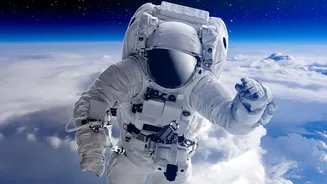
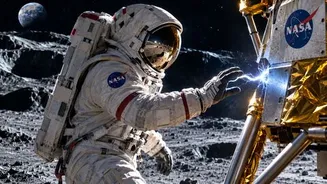
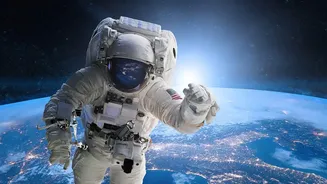
The single most important reason for the high cost is that a spacesuit for extravehicular activity (EVA), or a spacewalk, is a self-contained vehicle. It performs all the life-sustaining functions of a space station but is miniaturised to fit on a person's
back. It provides breathable air, removes carbon dioxide, circulates cooling water, supplies power, and facilitates communication. When an astronaut steps outside, the suit is their entire world, their only barrier against the lethal environment of space. Every component must work flawlessly, as even a minor failure can be catastrophic.
Fighting the Vacuum and Extreme Temperatures
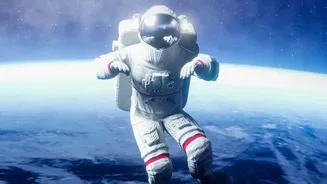
Space is a near-perfect vacuum. Without the suit's internal pressure, an astronaut's bodily fluids would turn to vapour in a process called ebullism. The suit maintains a stable pressure of about 4.3 psi of pure oxygen, enough to keep a person alive and conscious while allowing for some flexibility. It also acts as a shield against extreme temperatures that can swing from a scorching 121°C in direct sunlight to a frigid -157°C in the shade. This is achieved through multiple layers of advanced materials, including a liquid cooling garment with hundreds of feet of tubing, and layers of Mylar insulation that function like a high-tech thermos.
A Shield Against Unseen Dangers
The suit is also an astronaut's primary defence against two invisible threats: radiation and micrometeoroids. The outer layers, a tough fabric blend including Kevlar, Nomex, and Gore-Tex, are designed to protect against tiny particles of space debris travelling at speeds of up to 27,000 kilometres per hour. A single puncture from such an object could depressurise the suit. The helmet’s special gold-coated visor protects the astronaut's eyes from the unfiltered glare of the sun, shielding them from harmful ultraviolet radiation.
The Challenge of Mobility and Dexterity
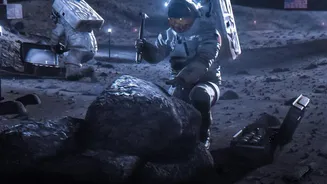
Making a pressurised, balloon-like suit flexible is a massive engineering challenge. Astronauts need to be able to walk, bend, and use tools. This requires complex joints and bearings at the waist, arms, and legs. The gloves are another marvel of engineering, packed with heaters to protect fingers from getting cold while still allowing enough dexterity to handle tools and equipment. Developing materials and systems that offer both protection and mobility contributes significantly to the research and development costs.
Customisation, R&D, and Low Production Volume
Spacesuits are not mass-produced. They are highly specialised, low-volume items often custom-fitted to each astronaut. NASA's current suits were developed in the 1970s, and much of the original manufacturing infrastructure no longer exists. Developing new suits, like NASA's next-generation xEMU (Exploration Extravehicular Mobility Unit) or Axiom Space's commercial version, involves immense research, development, and testing costs, sometimes reaching hundreds of millions or even a billion dollars for a new line of suits. Companies must keep highly specialised equipment and personnel on standby to build just a handful of units.