


A Marathon Pace on the Red Planet
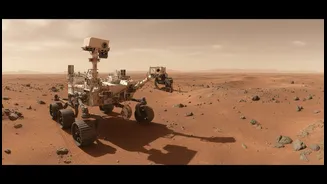
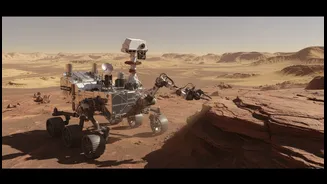
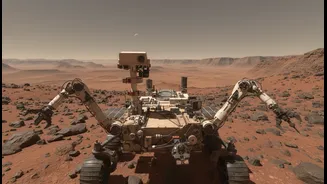
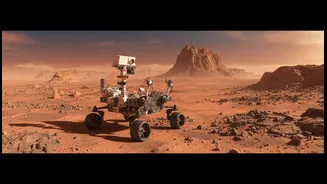
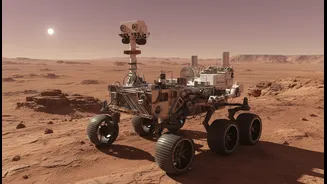
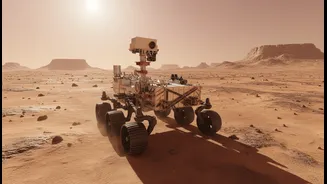
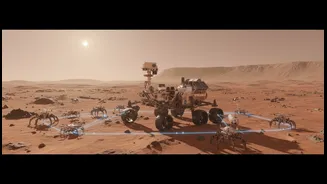
On June 14, 2026, the Perseverance rover officially crossed a symbolic finish line, having travelled 26.2 miles (42.195 kilometers) across the unforgiving terrain of Mars. This makes it only the second robot to accomplish such a feat on another world.
What makes this achievement truly remarkable is the speed. The previous record-holder, the Opportunity rover, took over 11 years to cover the same distance. Perseverance did it in just over five years, demonstrating a dramatic leap in robotic mobility and endurance. This isn't just about breaking records; it's a testament to a new philosophy of planetary exploration, one that is faster, more efficient, and significantly more autonomous.
The Old Way of Driving on Mars
To appreciate the leap Perseverance represents, it helps to understand how its predecessors were operated. Driving rovers like Spirit, Opportunity, and even the early missions of Curiosity was a painstaking process. Engineers at NASA's Jet Propulsion Laboratory (JPL) would spend hours analyzing 3D images sent back from the rover, meticulously planning every single turn of the wheels and movement of the arm. They would plot a short, safe path, bundle the commands, and beam them across millions of miles of space. The rover would then execute those commands and wait for the next set of instructions. Because of the significant time delay for signals to travel between Earth and Mars, real-time joystick control is impossible. This method was safe and reliable, but also incredibly slow, often limiting a day's travel to just tens of meters.
The AutoNav Revolution
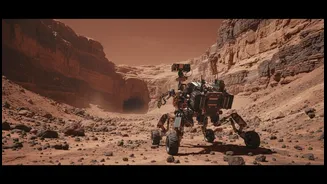
Perseverance changes the game with its highly advanced autonomous navigation system, called AutoNav. While earlier rovers had simpler forms of self-driving, Perseverance’s system is a powerhouse. It uses a dedicated computer to process images from its cameras in real-time, creating a 3D map of the terrain ahead. It can identify hazards like large rocks or treacherous sand traps and plot its own course around them without any input from mission control. This capability is often described as “thinking while driving.” Unlike older systems that had to stop, take images, process them, and then move, Perseverance can perform all these calculations on the fly, allowing it to travel at much higher speeds and for longer distances each day.
The New Planning Question
This newfound autonomy presents rover drivers with a completely different kind of challenge. The core planning question is no longer, “What is the safest sequence of small moves to get from Point A to Point B?” Instead, engineers are now asking, “Where do we want the rover to generally go, and what are the interesting science targets along the way?” They have shifted from being micromanagers to high-level strategists. The team now provides broad objectives and waypoints, trusting the rover's AI to figure out the specific path to get there safely and efficiently. This requires a new level of trust in the machine and a focus on long-term scientific goals rather than the minute-to-minute mechanics of driving. It’s a collaborative partnership between human and machine, where the human sets the destination and the robot handles the journey.
A New Curriculum for Robotics
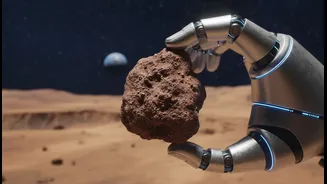
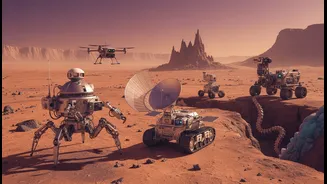
This evolution in space robotics has profound implications for engineers and students. The skills needed to design the next generation of explorers are changing. Instead of focusing solely on low-level programming and direct control systems, the emphasis is shifting towards artificial intelligence, machine learning, and robust decision-making algorithms. Future roboticists will need to create systems that can not only navigate but also make scientific judgments autonomously. Systems like AEGIS, which allows Perseverance to identify and analyze rock targets on its own, are just the beginning. For students in robotics programs, this means learning to build systems that can operate with ambiguity, manage risk, and achieve high-level goals with minimal human intervention. The lessons from Perseverance are shaping a curriculum where the goal is to build a true robotic field geologist, not just a remote-controlled truck.