


What Happened in Nepal?
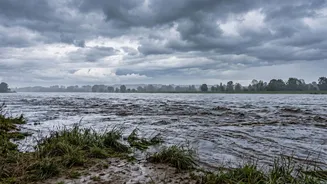
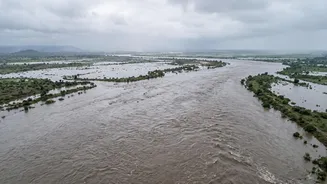
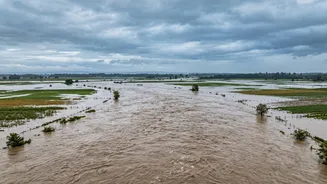
A sudden and powerful flash flood occurred in Nepal's Rasuwa district, near the border with Tibet, on August 26. The event is believed to have been caused by a Glacial Lake Outburst Flood (GLOF) or an ice-rock avalanche, which sent a torrent of water,
sediment, and debris down the Bhote Koshi and Trishuli river systems. This surge caused extensive damage to villages and infrastructure within Nepal and triggered alarms about the downstream consequences. The Trishuli river is a major tributary of the Gandak river, which flows from Nepal into India, creating a direct threat to downstream communities.
Why This Puts Bihar and UP at Risk
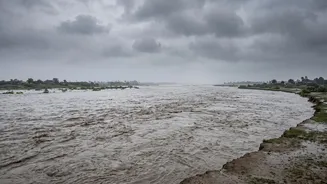
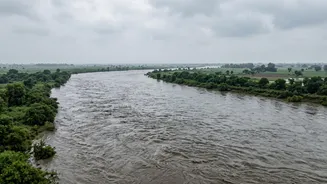
The geography of the region makes North Bihar and eastern Uttar Pradesh highly vulnerable to floods originating in Nepal. Major river systems, including the Gandak, Kosi, and Ghaghara, have their catchments in the Himalayan ranges of Nepal and flow down into the densely populated plains of these Indian states. The flood wave from the current incident is travelling down the Gandak river, posing an immediate threat to districts situated along its banks. The Central Water Commission (CWC) issued an advisory warning that the surge could impact Indian territory, prompting state governments to activate emergency protocols.
Bihar on High Alert
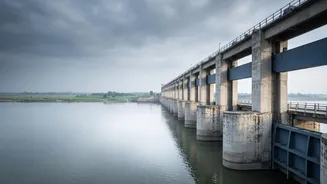
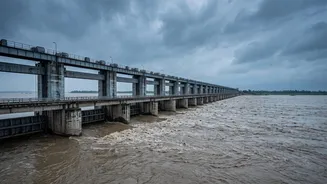
The Bihar government has placed several districts on high alert, including West Champaran, East Champaran, Gopalganj, Muzaffarpur, Saran, and Vaishali. Authorities have been instructed to monitor embankments and water levels continuously. As a precautionary measure, all 36 gates of the Valmikinagar barrage on the Gandak river were opened to manage the expected high discharge of water. Residents in low-lying areas, particularly in West Champaran, have been urged to move to safer locations, and public announcements are being made to keep communities informed. The state's Disaster Management Department is coordinating the response, and leave for all field personnel has been cancelled to ensure readiness.
Uttar Pradesh Braces for Flooding
In Uttar Pradesh, Chief Minister Yogi Adityanath has directed administrations in the bordering districts of Maharajganj and Kushinagar to remain on high alert and ensure all necessary preparations are in place. These districts are particularly vulnerable as the Gandak and Narayani rivers flow through them. Vigilance has been intensified, with officials keeping a close watch on rising water levels. In Kushinagar, the local administration has ordered evacuations from several vulnerable villages near the river.
Centre Coordinates Response Efforts
The central government is actively monitoring the situation. Union Home Minister Amit Shah has spoken with the chief ministers of both Bihar and Uttar Pradesh, assuring them of all possible assistance. Multiple teams from the National Disaster Response Force (NDRF) have been deployed to vulnerable districts in both states to assist with evacuation and potential rescue operations. Nine NDRF teams are deployed in Bihar and eleven in Uttar Pradesh. Ministries of Home Affairs, External Affairs, and Jal Shakti are working in coordination to track the event. While the Central Water Commission has noted that water levels in Nepal's reservoirs are currently declining, the high alert remains in effect as a precautionary measure.