



Beyond the Cartoon Rivalry
The age-old trope of cats and dogs being natural adversaries is deeply ingrained in popular culture. Yet, countless homes tell a different story—one of peaceful coexistence and even deep friendship. The truth is, while their instincts can set them at odds,
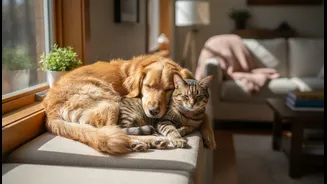
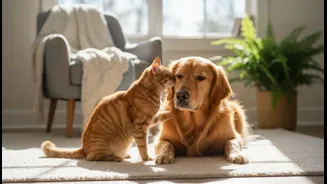
there is no universal rule that says they must be enemies. Research and owner surveys consistently show that in most multi-pet households, cats and dogs get along. One study found that the majority of owners rated their pets' relationship as amicable. The antagonism we see in cartoons is often a misinterpretation of their very different social structures and communication styles, which can be overcome with the right environment and understanding. The key isn't to force a friendship but to recognize that their ability to coexist peacefully depends heavily on context, not on a predetermined animosity.
A Tale of Two Languages
One of the biggest hurdles for cats and dogs is that they speak entirely different languages. A dog's wagging tail is often an invitation to play, but a cat's swishing tail can signal irritation or overstimulation. A dog’s natural desire to chase a fleeing animal is a predatory instinct, while a cat’s first response to a large, boisterous animal is often to run, triggering that very chase. Dogs, as pack animals, are generally more social and direct in their communication. Cats tend to be more solitary and territorial, communicating with subtle shifts in posture, ear position, and vocalization that a dog might miss entirely. These misunderstandings can lead to conflict, but they are not signs of innate hatred. They are simply communication breakdowns that require human intervention and management to translate.
Context is King: The Power of a Good Introduction
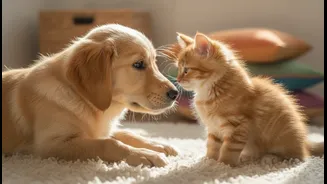
How a cat and dog first meet can set the tone for their entire relationship. Experts agree that a slow, patient, and controlled introduction process is critical. This often begins with separating the animals and allowing them to get used to each other's scent by swapping bedding or feeding them on opposite sides of a closed door. This helps build a positive association before they even see each other. Initial visual meetings should be brief, supervised, and controlled, often with the dog on a leash and the cat given the freedom to approach or retreat as it feels comfortable. Research suggests that the cat’s comfort level is the most crucial factor in the relationship's success. If the cat feels safe and not cornered, the chances of a peaceful union increase dramatically.
Personality Over Pedigree
While some dog breeds are known to be more 'cat-friendly', an animal's individual temperament is often a far more important factor than its species or breed. An elderly, calm dog may get along perfectly with a confident, curious cat, while a high-energy puppy could stress out even the most tolerant feline. Similarly, a cat's prior experiences with dogs can heavily influence its willingness to accept a new canine housemate. Studies have shown that introducing pets to each other at a young age, particularly when the cat is under a year old, leads to more successful relationships. This allows them to grow up together and learn each other’s unique signals and boundaries from the start. Ultimately, success depends less on whether they are a cat and a dog and more on who they are as individuals.
Architecting a Harmonious Home
Once introductions are made, maintaining harmony requires thoughtful environmental management. It's crucial to provide separate resources, such as food and water bowls, to prevent competition. A key element for feline wellbeing is providing vertical space. Cat trees, shelves, or accessible high surfaces give cats a safe place to retreat and observe from a distance, ensuring they never feel trapped by their canine companion. This allows the cat to control the interactions on its own terms. Regular exercise for both pets is also beneficial; a tired dog is less likely to pester a cat for play. By creating an environment that respects the distinct needs of each species, owners can foster a dynamic of mutual tolerance, and sometimes, even genuine affection.