



The Crisp Advantage of Autumn Air
The magic of autumn stargazing begins with the air itself. The warm, humid nights of summer often create atmospheric turbulence, making stars appear to twinkle excessively and blur finer details. As temperatures drop in autumn, the air becomes drier and more
stable. This results in what astronomers call good "seeing," where celestial objects appear sharper and steadier. With less water vapour to scatter light, the sky is more transparent, allowing the faint light from distant stars and galaxies to reach your eyes with greater clarity, making everything appear brighter and more defined.
Earlier Sunsets, Comfortable Nights
One of the most practical benefits of this season is the viewing schedule. Autumn brings earlier sunsets, meaning you don't have to stay up past midnight to enjoy a truly dark sky. The 'observing season' for many astronomers begins in October when the clocks go back, extending the night. Yet, the temperatures are still mild enough to be comfortable, a pleasant compromise between summer's warmth and winter's deep chill. This makes it an ideal time to take the family outside or simply linger longer in your backyard, soaking in the views without freezing.
Jupiter: The Star of the Show
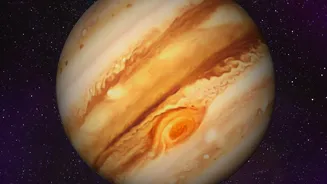
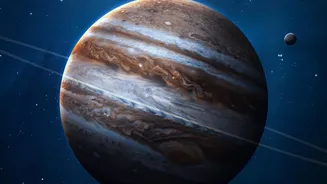
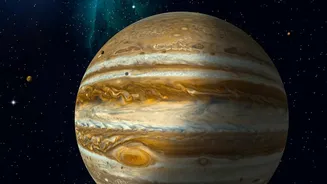
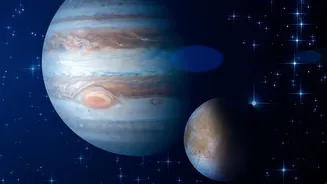
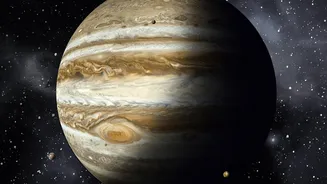
This autumn, the giant planet Jupiter is a showstopper in the pre-dawn sky. Throughout September and October 2026, it will be a brilliant, unblinking point of light, easily visible to the naked eye. On the morning of October 6, 2026, observers across most of North America will even have the chance to see a spectacular event where the waning crescent moon passes directly in front of Jupiter, hiding it from view for a short time. But the real treat for binocular owners is seeing Jupiter not just as a bright star, but as a world with its own companions. With a steady hand or a simple tripod, even standard binoculars can reveal its four largest moons.
How to Glimpse the Galilean Moons
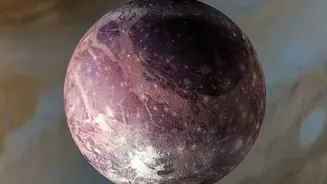
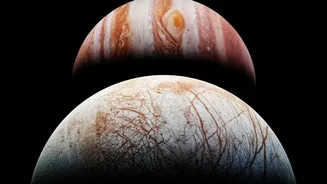
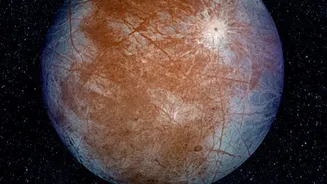
Finding Jupiter's moons is a genuinely thrilling experience that connects you to Galileo's historic discoveries. Through a pair of 7x50 or 10x50 binoculars, they will appear as tiny, star-like pinpricks of light. What distinguishes them from background stars is their perfect alignment in a straight line on either side of the planet. You may see two, three, or all four — Io, Europa, Ganymede, and Callisto. If some are missing, it’s likely because they are hidden behind or passing in front of the giant planet. For the best view, brace your arms against a wall or car roof, or mount your binoculars on a tripod to eliminate the shakiness of your hands.
Beyond Jupiter: Deep Space Delights
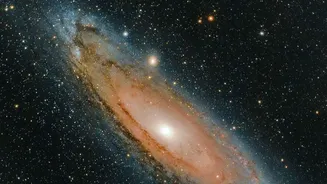
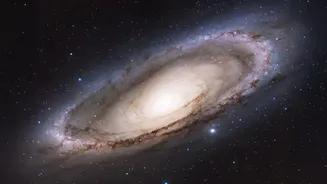
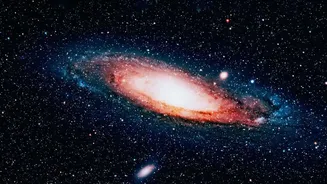
Autumn's clear skies are also perfect for hunting down deep-space objects. The most famous target is the Andromeda Galaxy (M31). Located in the constellation Andromeda, it is the closest major galaxy to our own Milky Way. On a dark, moonless night, it is visible as a faint, fuzzy patch of light to the naked eye, but binoculars reveal its elongated, glowing core. Another beautiful binocular target is the Pleiades star cluster (M45), also known as the Seven Sisters. This brilliant cluster of young, hot blue stars in the constellation Taurus is an unmistakable and breathtaking sight, looking like a tiny, shimmering dipper. The Cassiopeia constellation, which looks like a bright 'W', is also high in the sky and easy to spot.
Choosing Your Window to the Universe
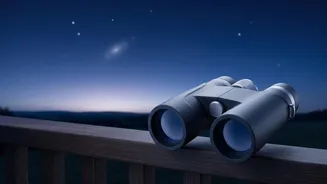
You don't need expensive, high-powered equipment to begin this journey. A good pair of entry-level astronomy binoculars, often labeled as 7x50 or 10x50, is an excellent starting point. The first number indicates the magnification (7x or 10x), while the second is the diameter of the main lenses in millimeters. Larger lenses gather more light, which is crucial for viewing faint objects in the night sky. Models like the Celestron UpClose G2 10x50 or Cometron 7x50 are often recommended as affordable, quality options for beginners.