



The United Nations Secretary-General is often called the world's top diplomat. Yet the method for choosing this leader is a fascinating mix of 21st-century transparency goals and old-school, closed-door power politics. So how does it work?
The Official Rulebook: A Two-Step Process
On paper, the
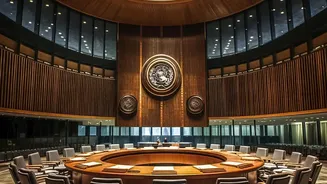
process is straightforward. Article 97 of the UN Charter states that the Secretary-General 'shall be appointed by the General Assembly upon the recommendation of the Security Council'. This creates a two-stage system. First, the 15-member Security Council must agree on a single candidate to recommend. Second, the 193-member General Assembly votes to formally appoint that candidate. While the General Assembly has the final say, it has never rejected a candidate put forward by the Security Council, making the Council's recommendation the decisive moment in the race.
The Real Game: Security Council Power Plays
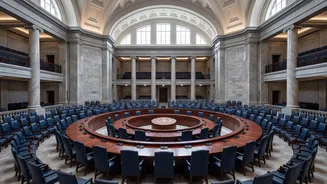
The real contest happens behind the closed doors of the Security Council. Here, the five permanent members (P5)—China, France, Russia, the United Kingdom, and the United States—hold ultimate power. Any of these five nations can veto a candidate, effectively ending their bid. This means any aspiring Secretary-General must be acceptable, or at least not unacceptable, to all five major powers. The selection becomes a delicate geopolitical balancing act, where candidates who might challenge the interests of a P5 nation are unlikely to survive the process. As the 2026 selection process has shown, this can lead to stalemates, with leading candidates facing potential vetoes from major powers, prolonging the search for a consensus choice.
Decoding the 'Straw Polls'
To gauge support and identify potential vetoes without holding a formal vote, the Security Council uses a system of informal secret ballots known as 'straw polls'. In these polls, members vote to 'encourage', 'discourage', or offer 'no opinion' on each candidate. As the process continues, the ballots become 'colour-coded'. The five permanent members vote on red-coloured paper, while the ten elected members use white paper. This instantly reveals if a 'discourage' vote comes from a P5 nation, signalling a likely veto and often prompting candidates to withdraw. This opaque but critical stage is where the field of contenders is truly narrowed down.
A Push for Transparency
In recent years, there has been a significant push to make the selection more open and inclusive. Since the 2016 selection, General Assembly resolutions have introduced new elements of transparency. Candidates are now formally nominated by member states, submit vision statements, and participate in televised town halls and informal dialogues with the entire UN membership. This allows the wider global community to see and hear from the candidates directly for the first time. However, while these reforms have increased public scrutiny and legitimacy, they have not changed the fundamental power structure: the final decision remains with the Security Council and its P5 members.
Unwritten Rules of the Game
Beyond the formal rules and recent reforms, a set of unwritten conventions also influences the choice. One long-standing tradition is regional rotation, where the post is expected to cycle between different geographical areas of the world, though this is often a point of contention. Another unspoken rule is that a national from one of the P5 countries is not eligible for the top job. It is also generally accepted that a Secretary-General serves a maximum of two five-year terms. These informal customs, combined with the hard-power politics of the Security Council, add another layer of complexity to what is arguably the most influential job interview on the planet.