







What Are the Orionids?
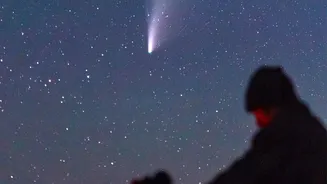
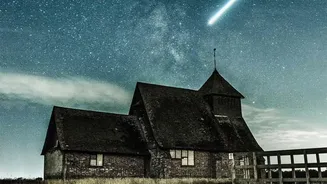
The Orionids are not stars at all, but tiny pieces of cosmic dust and rock left behind by one of the most famous celestial objects: Halley's Comet. Each year in October, Earth's orbit crosses this stream of debris. When these particles, some no bigger
than a grain of sand, hit our atmosphere at immense speeds—around 66 kilometres per second—they burn up, creating the bright, fast streaks of light we call meteors. They are named 'Orionids' because they appear to radiate from a point near the constellation of Orion, the Hunter. Watching them is like seeing tiny, fiery ghosts of a comet that won't return to our skies until 2061.
Best Dates and Times for India
The Orionid meteor shower will be active from early October to early November, but the best time to watch is during its peak. For 2026, the peak is predicted for the night of October 21-22. The ideal viewing window in India will be in the pre-dawn hours, from around 3 a.m. IST until dawn breaks. This timing is crucial for a specific reason: the Moon. On the peak night, there will be a bright, waxing gibbous Moon, which would normally wash out the fainter meteors. However, the Moon is expected to set around 3 a.m. local time, leaving the sky dark for a few hours before sunrise—the perfect window for meteor spotting.
The City Skywatcher's Challenge
Let’s be honest: watching a meteor shower from a city is challenging. The biggest obstacle is light pollution—the glow from streetlights, buildings, and vehicles that creates a bright haze, making it difficult to see all but the brightest stars. Under perfect, dark rural skies, you might see 15 to 25 Orionid meteors per hour. In a suburban area, that number could drop to 5 or 10 per hour, and even fewer from a city centre. But don't let this discourage you. The Orionids are known for producing bright, fast meteors, some of which can leave persistent, glowing trails. This means even from a light-polluted location, you have a good chance of spotting some of the more spectacular ones.
Your Simple Urban Viewing Plan
You don't need a telescope or any fancy equipment. The best tool is your own eyes. Here’s a simple, step-by-step plan: First, find the darkest spot you can access. This could be a rooftop, a balcony facing away from major roads, a quiet park, or the outskirts of your city. Second, give your eyes at least 20-30 minutes to adapt to the dark. This is essential. Avoid looking at your phone screen during this time, as its bright light will ruin your night vision. Third, get comfortable. Lie down on a blanket or a reclining chair so you can look up without straining your neck. Finally, be patient. Meteors often come in spurts. Look generally towards the constellation Orion, but remember that meteors can appear anywhere in the sky.
What to Bring (and What to Leave)
Your city skywatching kit is simple. Pack a comfortable chair or a blanket, some warm clothing as early morning hours can be chilly, and maybe a flask of hot chai or coffee. If you need a light, use a torch with a red filter or one covered in red cellophane. Red light is much less disruptive to your night vision than white or blue light. What should you leave behind? Your telescope and binoculars. Meteor showers are best viewed with the wide field of view that only your naked eyes can provide. Most importantly, try to put your phone away. The goal is to let your eyes adjust and soak in the vastness of the sky, allowing you to catch those fleeting streaks of light.