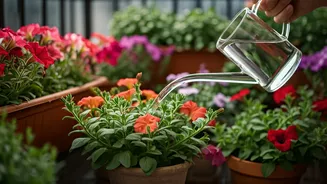








What is Compost Tea?
Think of compost tea as a health tonic for your plants. It’s not a fertiliser in the traditional sense, but rather a liquid extract teeming with beneficial microorganisms—bacteria, fungi, protozoa, and nematodes. When you steep high-quality, finished
compost in water, you are essentially harvesting these microscopic helpers and transferring them into a liquid solution. This brew, when sprayed on leaves or poured into the soil, introduces a vibrant ecosystem that helps plants absorb nutrients more efficiently, improve their overall health, and build stronger natural defences. It’s the difference between just feeding your plants and building a thriving, living environment for them to grow in.
The 'Supercharge' Benefits for Balcony Gardens
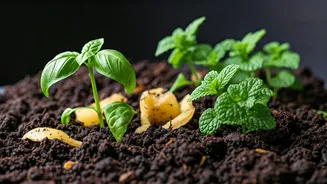
In the confined space of a balcony pot, soil can quickly become depleted and sterile. Compost tea works to reverse this. Its primary benefit is enriching the soil biology, which leads to a cascade of positive effects. The microorganisms help unlock existing nutrients in the soil, making them readily available for your plants to use. This improved nutrient uptake translates into stronger stems, greener leaves, and more prolific blooms on your flowering plants like hibiscus, bougainvillaea, and petunias. Furthermore, a healthy population of beneficial microbes on leaf surfaces can outcompete and suppress many common fungal diseases like powdery mildew, reducing the need for chemical fungicides. It’s a proactive, holistic approach to plant care that fosters resilience from the roots up.
Your Simple Homemade Brew Recipe
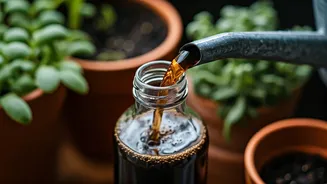
Making compost tea doesn’t require fancy equipment. This simple method is perfect for the home gardener. **You Will Need:** * A 20-litre bucket * 1-2 cups of high-quality, fully finished organic compost (it should smell earthy and sweet, not sour) * A breathable cloth bag (an old stocking, a muslin cloth, or a paint-strainer bag works perfectly) * 15-20 litres of water (preferably rainwater or tap water that has been left to sit out for 24 hours to dechlorinate) * Optional: 1 tablespoon of unsulphured molasses (this feeds the microbes and helps them multiply) **Instructions:** 1. **Prepare the Water:** Fill your bucket with dechlorinated water. Chlorine can kill the very microbes you are trying to cultivate. 2. **Bag the Compost:** Place the 1-2 cups of compost into your cloth bag and tie it securely, creating a 'tea bag'. 3. **Steep the Tea:** Submerge the compost bag in the bucket of water. If you are using it, stir in the molasses until it dissolves. 4. **Let it Brew:** Cover the bucket loosely (to allow air in but keep debris out) and let it steep for 24 to 48 hours. Stir the mixture vigorously a few times a day to incorporate oxygen, which is crucial for breeding beneficial aerobic microbes. 5. **Check for Readiness:** The finished tea should be a light to medium brown colour and have a pleasant, earthy smell. If it smells sour or foul, something has gone wrong, and it should be discarded.
Dilution and Application
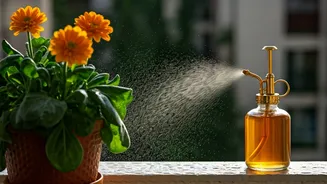
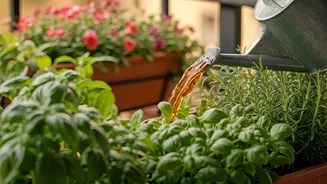
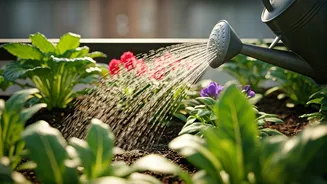
Your homemade compost tea is a concentrate and must be diluted before use to avoid overwhelming your plants. A good rule of thumb is to dilute it with dechlorinated water until it reaches the colour of weak tea, which is typically a 1:5 or 1:10 ratio (one part tea to five or ten parts water). There is no exact science here; a lighter brown solution is always safer. Once diluted, pour the solution into a clean spray bottle. The best way to 'supercharge' your leafy flowers is through a foliar spray. This means spraying the leaves directly, making sure to cover both the top and underside of the foliage. The plant can absorb the nutrients and beneficial microbes directly through its leaves. Any leftover diluted tea can be used as a soil drench by pouring it directly onto the soil around the base of your plants. This feeds the root zone and improves the soil structure over time.
Tips for Maximum Impact
To get the most out of your liquid gold, timing and frequency are key. * **Apply Early or Late:** Spray your plants in the early morning or late evening. The sun's intense midday heat can evaporate the spray too quickly and potentially harm the beneficial microbes. * **Use it Fresh:** Compost tea has a short shelf life as the microbial population will start to die off. Always aim to use your brew within 4-6 hours of it being ready. * **Be Consistent:** For best results, apply compost tea every 2-4 weeks during your plants' active growing season. Regular application maintains a healthy microbial balance in and around your plants. * **Quality In, Quality Out:** The effectiveness of your tea is directly linked to the quality of your compost. Never use compost from diseased plants or material that isn't fully broken down.