



An Ambitious Player on the Global Stage
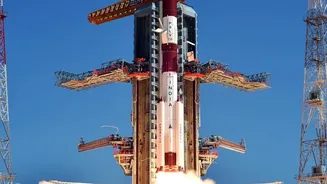
For decades, the Indian Space Research Organisation (ISRO) built a formidable reputation on cost-effective reliability. From sending a mission to Mars for less than the budget of the film "Gravity" to becoming the first nation to land a spacecraft on the Moon's
south pole, India has consistently punched above its weight. But the modern space race is no longer just about getting there; it's about what you can do once you're in orbit. Recognizing this shift, India is moving beyond transportation and into the realm of intelligent, in-space infrastructure. This pivot is critical for competing in a global space economy that increasingly relies on data, connectivity, and strategic capabilities.
What Makes a Satellite “Smart”?
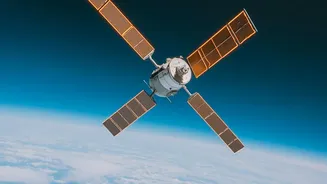
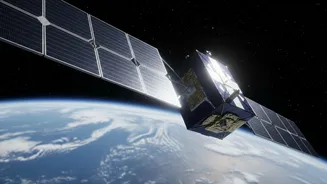
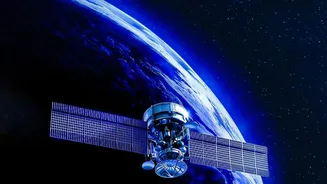
The term “smarter satellite” refers to shifting from a model where spacecraft are simply passive collectors of information to one where they are active, thinking nodes in a network. The key to this is artificial intelligence. Currently, most satellites gather enormous amounts of raw data—like images of weather patterns or changes in land use—and beam it all back to Earth for processing. This creates a bottleneck, consuming time and valuable bandwidth. ISRO’s goal is to embed AI and machine learning directly onto the satellites. This on-board processing, or “edge computing,” would allow a satellite to analyze data in orbit, identify what's important, and send back only the relevant insights. For example, an Earth observation satellite could autonomously detect the initial signs of a flood or wildfire and send an immediate, targeted alert, rather than waiting for analysts on the ground to sift through hours of imagery. This capability is transformative for real-time disaster management, agricultural monitoring, and national security surveillance. AI would also manage the satellite's own health, predicting system failures and making autonomous course corrections to avoid space debris.
The Quantum Leap in Security
While AI gives satellites a brain, quantum tools are intended to give them an unbreakable shield. The primary focus of India's quantum exploration in space is on secure communication. As financial transactions, military communications, and sensitive government data increasingly rely on satellite networks, the risk of cyberattacks and signal interception grows. Quantum Key Distribution (QKD) is a technology that uses the principles of quantum physics to create theoretically un-hackable communication channels. If a third party attempts to eavesdrop on a quantum-secured signal, the very act of observing it disturbs the quantum state, immediately revealing the intruder's presence. ISRO has already successfully demonstrated this technology over short distances and, as part of India's National Quantum Mission, aims to achieve satellite-based QKD over thousands of kilometers. This would create an ultra-secure layer for everything from banking operations to confidential military commands, effectively future-proofing the nation's critical infrastructure.
The Strategic and Commercial Payoff
This technological push is about much more than scientific curiosity; it's a calculated strategic move. By developing these advanced capabilities, India positions itself as a major power in the 21st-century space domain, on par with the U.S. and China. For national security, smarter satellites offer enhanced surveillance and the ability to counter threats like signal spoofing, where false GPS signals are used to mislead navigation systems. Economically, it opens the door to competing in the high-value end of the space market. Instead of just offering launch services, India can provide sophisticated data processing, secure communications, and advanced analytics. This focus on indigenous development also makes India an attractive partner for collaborative missions with other leading agencies like NASA. By creating an environment that encourages private investment and innovation, India is laying the groundwork to become a hub for space technology, not just a participant.