



How Yoga Creates Flexibility
Before jumping into the poses, it helps to understand why yoga is so effective. Flexibility isn't just about stretching muscles. Yoga works on multiple levels to increase your range of motion. Poses held for a duration create lasting length in muscle fibres
and the web-like connective tissue, known as fascia, that wraps around them. This process helps release the 'stickiness' that can build up from a sedentary lifestyle. Furthermore, by linking movement with conscious breathing, yoga helps calm the nervous system. When your body is relaxed, your muscles are less tense and can stretch more effectively and safely. It’s this combination of physical stretching and mental relaxation that makes yoga a powerful tool for developing a more limber, resilient body.
Cat-Cow Stretch (Marjaryasana-Bitilasana)
This gentle, flowing sequence is the perfect starting point to awaken your spine. It improves flexibility in the back, neck, and shoulders, making it ideal for relieving tension after a long day of sitting. To begin, come onto your hands and knees in a tabletop position, with your wrists directly under your shoulders and your knees under your hips. As you inhale, drop your belly towards the mat, lift your chest and tailbone, and gaze forward into Cow Pose. As you exhale, press the floor away, round your spine toward the ceiling, and tuck your chin to your chest into Cat Pose. Continue flowing between these two poses for 5-10 breaths, letting your breath guide the movement.
Downward-Facing Dog (Adho Mukha Svanasana)
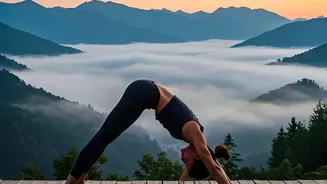
One of the most iconic yoga poses, Downward-Facing Dog provides a full-body stretch, particularly targeting the hamstrings, calves, and spine. From your tabletop position, tuck your toes, and on an exhale, lift your hips up and back, forming an inverted 'V' shape with your body. Spread your fingers wide and press firmly through your palms to distribute your weight evenly. It’s okay if your heels don't touch the floor; gently bending your knees can help you lengthen your spine, which is the main goal. Relax your neck and let your head hang between your upper arms. Hold for 5-8 breaths, feeling the stretch along the entire back of your body.
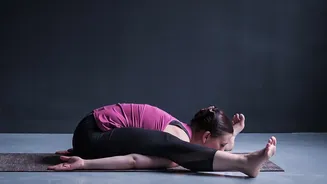
Seated Forward Bend (Paschimottanasana)
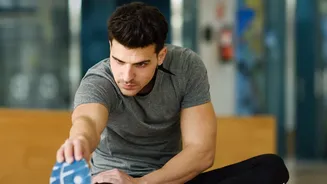
This pose provides a deep stretch for the entire back side of the body, from your heels to your neck. It’s especially effective for tight hamstrings and a stiff lower back. Sit on the floor with your legs extended straight out in front of you. You can sit on the edge of a folded blanket to help tilt your pelvis forward. Inhale to lengthen your spine, and as you exhale, hinge at your hips to fold forward over your legs. If your hamstrings are tight, keep a generous bend in your knees. Rest your hands on your shins, ankles, or feet—wherever they land comfortably. With each exhale, allow your body to soften deeper into the stretch without forcing it. Hold for 30-60 seconds.
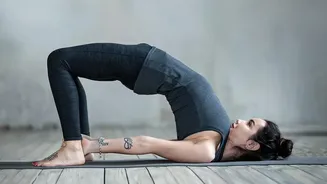
Bridge Pose (Setu Bandhasana)
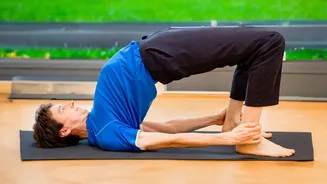
Bridge Pose is a gentle backbend that helps open up the chest and shoulders while strengthening the back and glutes. It counters the effects of slouching and improves spinal mobility. Lie on your back with your knees bent, feet flat on the floor hip-width apart, and close enough that you can just touch your heels with your fingertips. On an inhale, press into your feet and lift your hips off the floor. You can keep your arms flat on the floor or interlace your fingers underneath you, tucking your shoulders under to create more lift in your chest. Keep your thighs parallel and your gaze toward the ceiling. Hold for 5-10 breaths before slowly rolling your spine back down to the mat.
Building a Daily Habit
The key to seeing fast results in flexibility isn't about pushing yourself to the limit in one session, but about consistency. Even 10-15 minutes of gentle stretching each day can make a significant difference. Try practicing these poses every morning to wake up your body or in the evening to unwind. Listen to your body and never push into pain. The goal is a gentle, sustained stretch, not a strain. Over time, you'll notice not just increased flexibility, but also better posture and a greater sense of ease in your daily movements.