


Adjust Your Watering Schedule
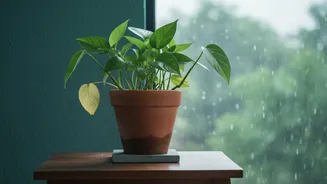
The single biggest mistake during the rainy season is overwatering. High humidity in the air means soil dries out much slower than in summer. Instead of watering on a fixed schedule, adopt the 'finger test'. Push your finger about an inch or two into
the soil; if it feels moist, wait another day or two before watering. For many indoor plants in the Indian monsoon, this could mean watering only once every 10 to 15 days. When you do water, aim for the soil, not the leaves, to reduce the risk of fungal diseases.
Maximise Available Light
Cloudy days significantly reduce the amount of sunlight your plants receive, which is crucial for photosynthesis. To compensate, move your plants closer to windows, preferably those facing east to catch the gentle morning sun. Clean your window panes to let in as much light as possible. Regularly rotating your plants will also ensure that all sides get some exposure, preventing them from becoming lopsided as they reach for the light.
Improve Air Circulation
Stagnant, humid air is a breeding ground for fungal diseases like powdery mildew and root rot. Improve airflow around your plants by not crowding them together. If your room feels particularly stuffy, using a small fan on a low setting for a few hours a day can make a huge difference. This helps keep the foliage dry and discourages fungal spores from settling.
Watch for Pests and Diseases
The damp, warm conditions of the monsoon are ideal for pests like mealybugs, aphids, and fungus gnats. Inspect your plants regularly, paying close attention to the undersides of leaves and the soil surface. If you spot pests, isolate the infected plant immediately to prevent them from spreading. A preventive spray of neem oil solution every 10-15 days can act as a natural repellent and fungicide. For fungal issues like powdery mildew, a dilute solution of baking soda can be effective.
Ensure Proper Drainage
Good drainage is non-negotiable during the monsoon. Ensure every pot has drainage holes and that they aren't clogged. Water must be able to flow freely out of the pot. Never let your plants sit in a saucer full of water, as this is a direct invitation to root rot. If you use decorative outer pots without holes, remember to empty any collected water daily. Elevating pots on stands can also help improve drainage and airflow underneath.
Hold Off on Fertilising
Most indoor plants experience slower growth during the low-light months of the monsoon. Because they aren't actively growing, they don't require as many nutrients. It's best to reduce or even pause your fertilising routine during this time. Fertilising when the soil is already very moist can lead to fertiliser burn and damage the roots. You can resume your regular feeding schedule once the skies clear and you notice new growth.
Prune and Tidy Up
Regularly remove any yellowing or dead leaves and spent flowers from your plants and the soil surface. This decaying organic matter can retain moisture and become a breeding ground for fungus and pests. Light pruning can also help improve air circulation through the plant's foliage. Use clean, sharp scissors or shears to make precise cuts and avoid tearing the plant tissue.