




An AI Lab in Orbit
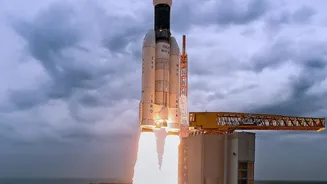
On October 1, a satellite named MOI-1A is scheduled to launch aboard a SpaceX Falcon 9 rocket. Developed by Hyderabad-based startup TakeMe2Space, this isn't a typical government-led ISRO mission, but it marks a pivotal moment for India's space ambitions.
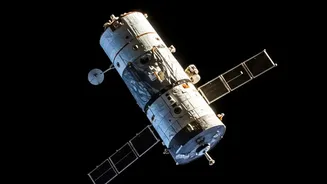
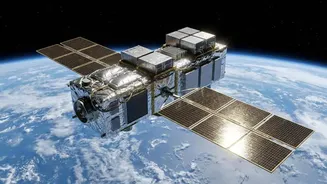
What makes MOI-1A special is its function as an orbital computing platform. Weighing less than 50kg, it carries powerful Nvidia processors designed for edge computing, allowing it to process vast amounts of data in space rather than sending raw information back to Earth for analysis. Think of it less as a camera and more as a flying, autonomous data lab. Instead of beaming down terabytes of images for analysts on the ground to sift through, it can run AI models in orbit, identify what's important, and send back only the finished insights.
The Power of Thinking in Space
The traditional model of space operations involves satellites collecting data and relaying it to ground stations, a process that can be slow and inefficient. This creates a significant bottleneck, especially as the volume of data from space grows exponentially. AI-powered orbital computing flips this script. By analysing data on the spot, an intelligent satellite can offer near real-time insights. For example, instead of downloading a massive image of a coastline to look for a 'dark ship' that has turned off its trackers, the satellite's AI can perform the analysis itself and simply alert ground control to the vessel's location. This ability to make decisions autonomously reduces the reliance on constant human intervention and communication links, which is especially critical for missions venturing far from Earth where signal delays can take minutes or even hours.
Immediate Gains and New Markets
The applications for this technology are immediate and diverse. TakeMe2Space has already signed up 23 customers for its first mission, ranging from mapping firms and educational institutions to businesses in agriculture, mining, and insurance. An agriculture company could run a model to detect crop stress from moisture levels, while an insurer could use it to rapidly assess damage after a natural disaster. The key advantage is speed and efficiency. This move also positions India's private space sector in the burgeoning market for in-orbit data processing. Beyond analysis, the company also plans to offer orbital data storage, providing a secure backup for financial and defence clients looking for an alternative to ground-based cloud services.
A Stepping Stone for Deeper Exploration
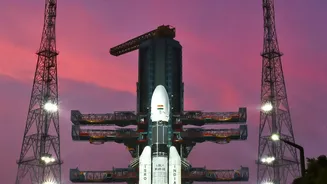
While the immediate applications are commercial, the long-term implications for India's national space program are profound. This technology is a crucial building block for more complex and ambitious future missions. ISRO has already successfully used AI for navigation and landing systems in its Chandrayaan missions. The upcoming Gaganyaan mission, India's first crewed spaceflight, is slated to fly with Vyommitra, an AI-enabled humanoid, to test life support systems before astronauts go up. An orbital satellite with proven AI processing power is the next logical step. For future interplanetary journeys to Mars or Venus, spacecraft will need to be highly autonomous. They must be able to navigate complex environments, identify hazards, and manage onboard systems independently, far from the real-time guidance of mission control. Technologies tested on satellites like MOI-1A provide the foundation for that future, proving that critical decisions can be made in the hostile environment of space.