





Cardiovascular and Heart Health
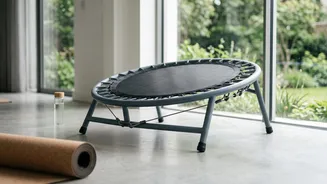
Both aerobics and trampolining, also known as rebounding, are excellent for improving cardiovascular health. Aerobics involves rhythmic, continuous movements that elevate your heart rate, strengthening the heart muscle over time and improving circulation.
Think of it as a steady, sustained challenge for your heart and lungs. Trampolining achieves a similar goal through bursts of activity. The bouncing motion effectively increases heart rate and blood flow, with some research suggesting it can be a highly efficient way to boost aerobic fitness. In fact, a well-known NASA study found that rebounding is significantly more efficient at improving cardiovascular endurance than jogging.
Impact on Your Joints
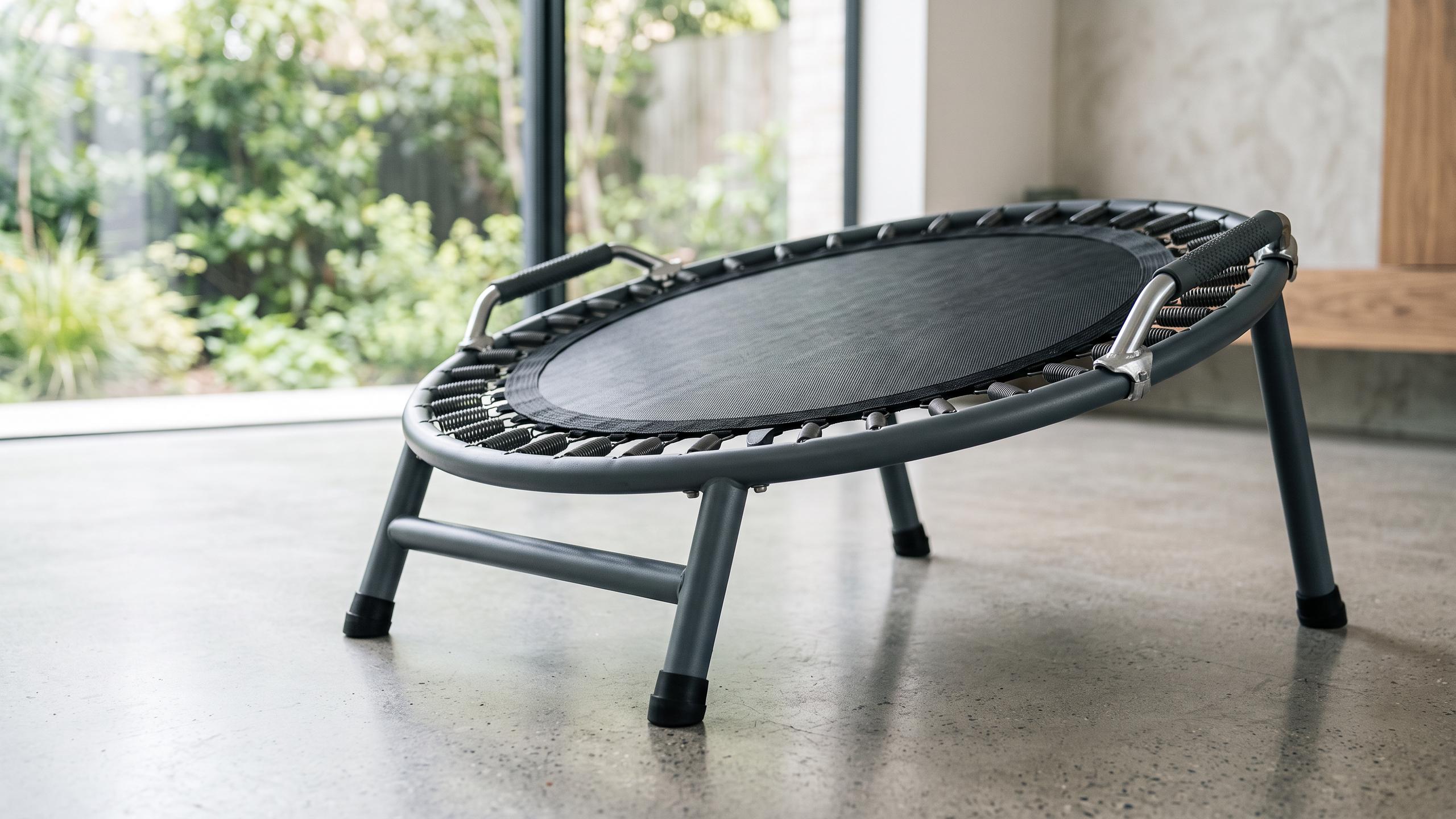
This is where the two activities differ most significantly. Traditional aerobics, especially high-impact variations with lots of jumping and running, can be hard on the joints. For those with sensitive knees, hips, or ankles, this can be a major drawback. Trampolining, on the other hand, is a low-impact exercise. The trampoline mat absorbs the majority of the shock from landing, protecting your joints from repetitive stress. This makes it an excellent choice for individuals with joint pain, those recovering from certain injuries, or anyone looking for a gentler way to exercise.
Calorie Burn and Weight Management
When it comes to burning calories, the best option depends on intensity and duration. Sustained, hour-long aerobics classes are proven calorie-torchers. However, trampolining can be surprisingly effective. Due to its high intensity, you can burn a significant number of calories in a shorter session. Some studies and fitness experts suggest that 10 minutes of intense bouncing can be equivalent to a 30-minute run. While a very intense run on a treadmill might burn more calories in absolute numbers, the fun factor of trampolining often means people are willing to stick with it for longer, leading to better results over time.
Muscle Engagement and Toning
Aerobics classes often incorporate movements that target large muscle groups across the body, providing a well-rounded workout. Trampolining, however, offers a unique form of full-body engagement. The unstable surface of the rebounder forces your core, back, and leg muscles to constantly work to maintain balance. Every bounce engages your glutes, quadriceps, and hamstrings. Beyond the major muscles, rebounding also activates smaller stabilising muscles around your joints and in your deep core, which are often missed in more conventional workouts.
Which is Right for Your Fitness Level?
For Beginners: Trampolining is often more approachable. The low-impact nature is forgiving, and you can start with gentle bounces, gradually increasing intensity as your fitness improves. Many aerobics classes can also be modified for beginners, but it's important to find one that specifically caters to newcomers to avoid injury. For Intermediate Fitness: Both options are excellent. You can challenge yourself in an advanced aerobics class or incorporate more complex moves, higher jumps, and even weights into your trampolining routine. The choice comes down to personal preference and whether you favour a structured class environment or a more playful workout. For Advanced Athletes: High-intensity interval training (HIIT) can be performed with both methods. Advanced aerobics can push your cardiovascular limits, while high-energy trampolining workouts demand incredible core strength, balance, and endurance. The instability of the rebounder adds a layer of difficulty that even seasoned athletes will find challenging.