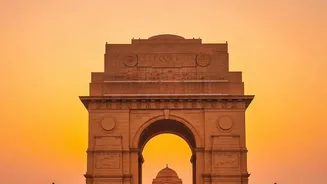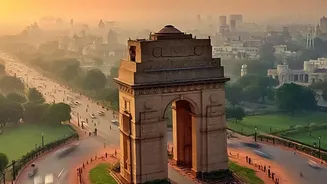





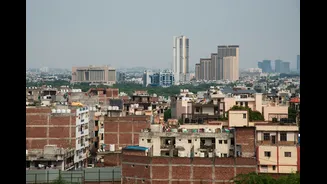
The annual return of a thick, grey smog over Delhi is more than just a headline about alarming AQI numbers. For millions, it's a daily battle for breath, a fight that is particularly harsh for those who have no choice but to be outside.
A City Under a Grey Shroud
As of mid-November
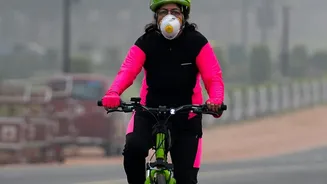
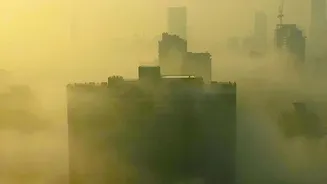
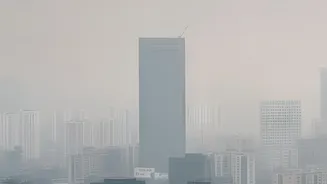
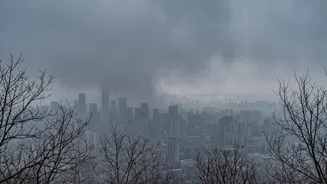
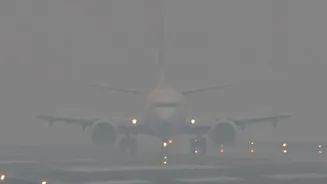
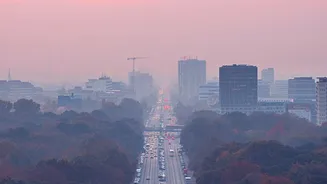
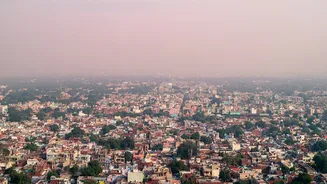
2026, Delhi's air quality continues to hover in the 'very poor' category, with the Air Quality Index (AQI) settling at 323 on November 12. This comes after the city has already experienced days where the AQI neared the 'severe' category, with some monitoring stations recording levels well above 400 following Diwali. A thick haze regularly engulfs the city, drastically reducing visibility and giving the skyline a murky, dystopian appearance. This is not just an atmospheric phenomenon; it is the physical manifestation of a public health crisis, with sources ranging from vehicular emissions and industrial output to seasonal stubble burning in neighbouring states.
The Commuter's Daily Ordeal
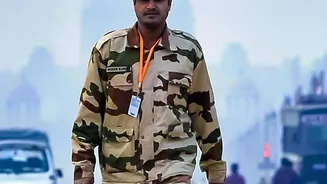
For the lakhs of people who travel across the National Capital Region (NCR) for work, the commute has become a hazardous journey. Those on two-wheelers are directly exposed to a toxic mix of pollutants, while even those in cars are not entirely safe. Autorickshaw drivers, in particular, spend their entire workday enveloped in traffic fumes. Studies have shown they suffer a high incidence of eye redness and irritation. One driver described feeling suffocated and anxious by the end of the day, his face covered in soot. The implementation of measures under the Graded Response Action Plan (GRAP), such as restrictions on certain vehicles, has led to heavy traffic congestion at border points as police conduct checks, further prolonging the time commuters spend in polluted conditions.
No Respite for Outdoor Workers
While many office workers have the option to work from home, a significant portion of Delhi's workforce has no such luxury. Street vendors, construction labourers, sweepers, and delivery personnel spend their days breathing in air that poses a serious threat to their health. Research highlights the severe impact on these groups, with sweepers showing a high rate of lung function impairment due to constant exposure to dust and particulate matter. Many report chronic headaches, weakness, joint pain, and respiratory problems. A survey found that only a small fraction of waste pickers, safai karamcharis, and security guards had normal lung function, with women's lung capacity showing greater deterioration. For them, the choice is often between their health and their livelihood, a grim reality of surviving in the world's most polluted capital.
An Escalating Health and Economic Burden
The pervasive pollution takes a direct toll on health, leading to everything from immediate discomfort like eye irritation and coughing to long_term irreversible lung damage. This translates into a significant economic burden. Increased medical expenses for respiratory ailments, lost wages due to sickness, and a general drop in productivity are all direct consequences. Studies have found a sharp decline in the productivity of outdoor workers during periods of high pollution. The health impact is not limited to lung diseases; it is linked to cardiovascular stress and even cancer. The constant exposure to toxic air means that millions are paying a high price with their health for simply living and working in the city.
Are Emergency Measures Enough?
In response to the crisis, authorities have implemented Stage III of GRAP, which includes a ban on non-'essential construction and demolition activities and restrictions on older vehicles. The government has also encouraged work-'from-'home arrangements for 50% of staff to reduce traffic. However, critics argue these are short-'term,' emergency responses to a year-'round problem. An analysis by the Centre for Science and Environment (CSE) noted that early winter pollution in 2026 was the highest in three years, and emergency traffic curbs did little to ease congestion. Experts have called for a more sustained,' coordinated approach across the NCR that addresses root causes like vehicular and industrial emissions throughout the year,' rather than just during the peak pollution season.