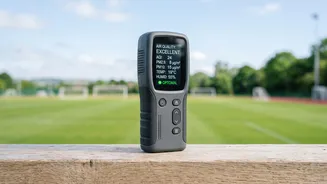







As concerns over air quality grow, ensuring the safety of children during outdoor sports is paramount. This guide provides clear, actionable steps to verify and interpret Air Quality Index (AQI) reports before your child heads to the field.
First, Understand the Air Quality Index (AQI)
The National
Air Quality Index (AQI) is a tool used by government agencies to communicate how polluted the air is. Launched in 2014, it simplifies complex data into a single number, a color, and a category. The index measures eight major pollutants, including PM2.5 and PM10, which are tiny particles that can penetrate deep into the lungs. Children are especially vulnerable because they breathe more air relative to their body weight, and their lungs are still developing. High AQI levels can trigger coughing, chest tightness, and asthma attacks, making it crucial to monitor before any strenuous activity.
Rely on Official Government Sources
For the most reliable data, always start with official government sources. The Central Pollution Control Board (CPCB) provides real-time data through its website and the 'SAMEER' mobile app. Another primary source is SAFAR (System of Air Quality and Weather Forecasting and Research), which offers data and forecasts for major metropolitan areas like Delhi, Mumbai, and Pune. These platforms pull data directly from government-operated monitoring stations, which are considered the benchmark for accuracy. This data is used for official health advisories and policy-making, making it the most trustworthy starting point.
Why Different Apps Show Different Numbers
You may have noticed that various apps, websites, and even your car's dashboard can show conflicting AQI numbers for the same location. This happens for several reasons. Firstly, some apps use data from low-cost private sensors, which may not be as accurate as the government's regulatory-grade monitors. Secondly, apps may use different AQI scales; the US AQI scale, used by many international platforms like IQAir, is stricter at moderate pollution levels than India's National AQI scale. Thirdly, update frequency can vary. Official sources often use 24-hour averages for particulate matter, while some apps provide hourly 'NowCast' data that reflects more immediate changes. This doesn't mean one is 'wrong', but they are measuring differently.
How to Use Third-Party Apps Wisely
While official sources are best, thirdparty apps like Google Maps, AQI.in, and IQAir AirVisual can be useful for their userfriendly interfaces, widgets, and broader hyperlocal coverage. Google Maps, for instance, has an air quality layer that shows readings across a wide area. When using these apps, check their data source if possible. Many blend official data with their own sensors and models. Use them as a convenient first look, but if you see a high reading or have a child with a sensitive condition, crossreference the number with the CPCB's SAMEER or SAFAR app to confirm the local threat level based on official monitors.
Interpreting AQI Levels for Youth Sports
Knowing the number is only half the battle; you must know what to do with it. Based on India's AQI categories, here’s a simple action plan for youth sports:
0–50 (Good): Green. Outdoor activities are safe for all children.
51–100 (Satisfactory): Yellow. Air quality is acceptable. Most children can play normally, but children with respiratory conditions like asthma may experience minor discomfort and should be monitored.
101–150 (Moderate): Orange. Air is unhealthy for sensitive groups. Children with asthma or other lung conditions should reduce prolonged or heavy exertion. For all other children, consider shortening activities or adding more breaks.
151–200 (Poor): Red. Everyone may begin to experience health effects. It is strongly recommended to move all strenuous youth sports and long practices indoors.
* 201+ (Very Poor to Severe): Purple/Maroon. This is a health alert. All outdoor activities for children should be cancelled or moved indoors.
Look Beyond the Numbers
Finally, supplement the data with realworld observation and common sense. If the air looks hazy, you can smell smoke, or visibility is low, it’s wise to be cautious even if an app shows a moderate reading. Conditions can change rapidly, so checking the forecast and the current reading is a good practice. For organised sports, communicate with coaches and league officials to ensure there is a clear, predefined policy for air quality. This policy should name an official data source and set clear thresholds for modifying or cancelling activities. By combining reliable data with practical awareness, you can make the best decisions to protect young athletes.