


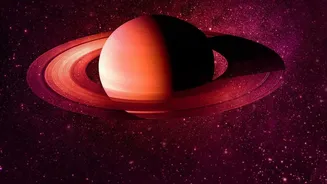


An Excellent Time to Look Up
October 2026 is a fantastic month for spotting Saturn. On October 4th, the planet reached opposition, an event where Earth passes directly between Saturn and the Sun. This alignment means Saturn rises around sunset, stays visible all night long, and is at its
closest and brightest for the year. Throughout the month, it will appear as a bright, creamy-white object in the sky. Unlike stars, which twinkle, Saturn will shine with a steady, unwavering light, making it easier to identify. You'll be able to find it in the constellation Cetus, located below the well-known Great Square of Pegasus.
Choose Your Digital Guide
The secret to finding any celestial object is a good planetarium app. These apps use your phone's GPS and compass to create a real-time map of the sky above you. Many excellent options are available for both iOS and Android, and most offer powerful free versions. Star Walk 2 is often recommended for beginners due to its user-friendly interface and beautiful augmented reality (AR) overlays. Stellarium is another top choice, beloved for its realistic sky depiction and simple search function that guides you to your target. SkyView Lite is also a great option that uses AR to help you identify stars, planets, and constellations simply by pointing your phone at them.
First Steps to a Cosmic Hunt
Once you've downloaded an app, the setup is straightforward. You will need to grant the app location access; this is crucial for it to know what's visible from your specific spot on Earth. Some apps may also ask you to calibrate your phone's compass, which usually involves moving your device in a figure-eight pattern. This ensures the app's pointer is accurate. Before you start searching, take a moment to explore the app's features. Most have a search function (look for a magnifying glass icon), a time-travel feature to see the sky on different dates, and a night mode that turns the screen red to protect your night vision.
Pinpointing the Ringed Wonder
Now for the main event. Open your app and tap the search icon. Type 'Saturn' and select it. The app will then display an arrow or guide on your screen, directing you where to move your phone. Simply point your phone towards the sky and follow the arrow. As you get closer, Saturn will appear on the screen. The app's augmented reality feature will overlay the planet's name and image onto your camera's view of the actual sky. You've found it! To the naked eye, Saturn will look like a bright, yellowish-white star. It won't be as dazzlingly bright as Venus or Jupiter, but it will be distinct.
Enhancing Your Viewing Experience
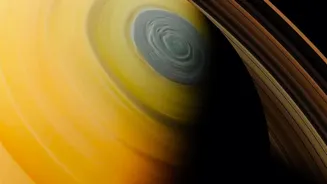
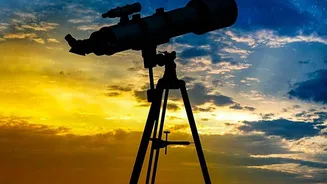
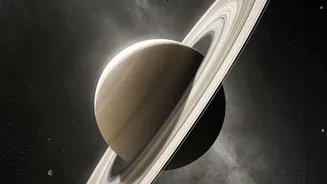
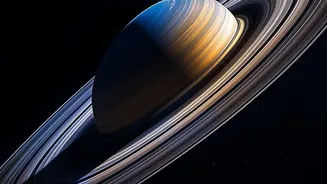
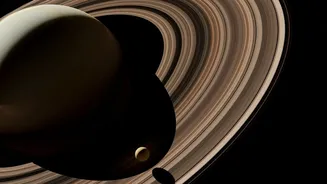
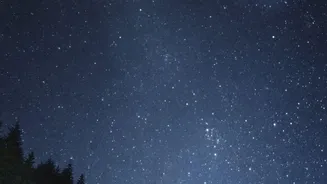
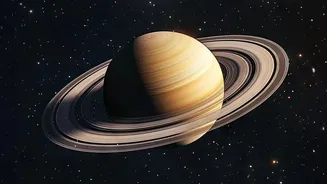
To get the best possible view, a few simple preparations can make a huge difference. First, try to find a location away from bright city lights. Even moving to a darker corner of your backyard can help. Give your eyes at least 15-20 minutes to adjust to the darkness; this will allow you to see much fainter objects. While you will not be able to see Saturn's iconic rings with the naked eye, even a basic pair of binoculars will reveal that the 'star' has an unusual, slightly elongated shape. A small backyard telescope, however, will transform your view, clearly revealing the rings that make Saturn one of the most breathtaking sights in the solar system.