
Peering Inside Cosmic Cradles
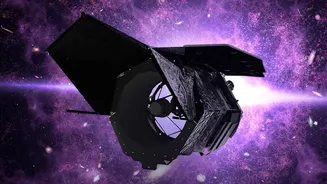
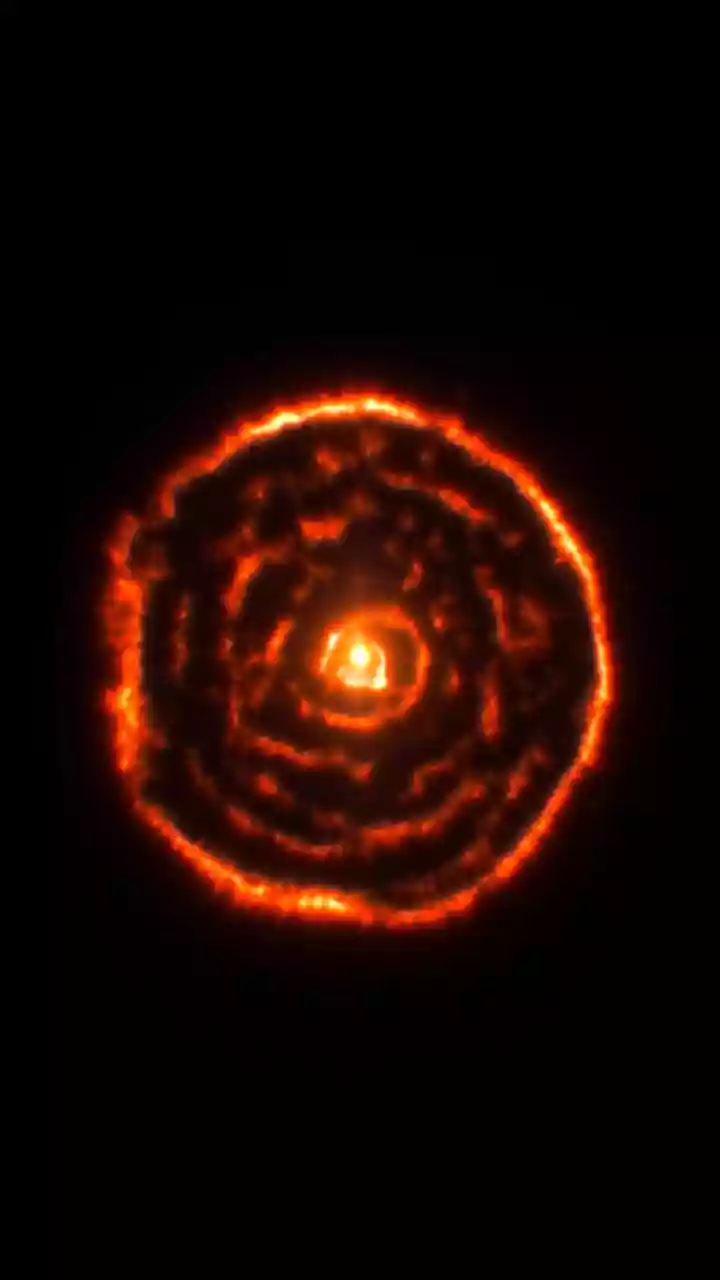
Before the James Webb Space Telescope (JWST), our view of planet formation was often obscured. Young stars are surrounded by vast, spinning platters of gas and dust called protoplanetary disks. These are the literal birthplaces of planets, but the very
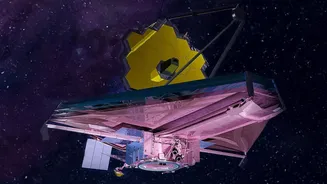
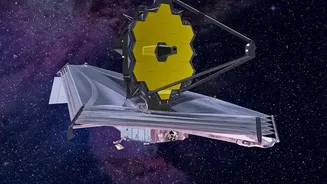
dust that builds them also forms a thick veil that visible-light telescopes cannot penetrate. This is where Webb's genius lies. By observing in infrared light, it peers through these dusty clouds, giving scientists an unprecedented view of the action within. The telescope’s high-resolution instruments can study these disks in massive star-forming regions with a sensitivity never before possible, essentially parting the curtains on the universe's youngest solar systems. This capability allows astronomers to move from static pictures to a dynamic understanding of how these cosmic cradles evolve.
An Ingredient List for Future Planets
One of Webb's most profound contributions is its ability to act as a cosmic chemist. By analysing the light that passes through these protoplanetary disks, scientists can identify the chemical fingerprints of various molecules. Early observations have revealed a stunning chemical diversity. In some disks, JWST has found abundant water, carbon dioxide, and even complex organic molecules like acetylene and benzene. In one instance, a disk was found to be surprisingly rich in carbon dioxide but had very little detectable water, challenging existing models of disk chemistry. These findings are like reading the ingredients list for planets that have yet to form. The composition of a disk determines the composition of the planets and their atmospheres, directly influencing their potential for habitability.
The Crucial Discovery of Water
Among all the chemicals Webb has detected, the discovery of water in the inner regions of these disks is particularly exciting. For years, scientists have debated how rocky planets like Earth acquired their water. One leading theory was that it was delivered later by impacts from icy asteroids and comets. However, JWST has detected significant amounts of hot water vapour in the terrestrial planet-forming zone of disks—the region close to the star where rocky worlds are expected to form. In the PDS 70 system, for example, Webb found water inside the orbit of two known gas giants, in a region analogous to where Earth orbits our Sun. This suggests that rocky planets may be born with a substantial reservoir of water from the very beginning, a finding that dramatically reshapes our understanding of how habitable worlds come to be.
A Race Against Time
Webb's observations also confirm that planet formation is a frantic race against time. The material in protoplanetary disks doesn't just sit there waiting to form planets. Powerful jets and winds from the young star, along with its intense radiation, actively blow the gas and dust away. This process of 'disk dispersal' sets a strict deadline for planet formation. Gas giants like Jupiter must gather their immense atmospheres before the primordial gas is gone. Webb's studies of dozens of young stars show how this process unfolds, with magnetically driven winds dominating early on, followed by the star's radiation clearing out the remaining material. Understanding this timeline is crucial for explaining why some systems form gas giants while others might only form smaller, rocky worlds. It's a cosmic construction zone with a closing date.
Rewriting the Story of Our Origins
Beyond just looking at distant stars, Webb's discoveries are helping us understand our own cosmic history. By studying the composition and structure of these young systems, we get a glimpse of what our own solar system might have looked like over four billion years ago. For instance, Webb confirmed a long-held theory that icy pebbles forming in the cold outer disk drift inward, delivering water and solid materials to the inner regions. This process likely played a key role in building Earth. Furthermore, by studying Trans-Neptunian Objects—icy remnants from our own system's formation—Webb and Hubble are piecing together how these initial building blocks behaved. Each observation of a distant, developing solar system provides another piece of the puzzle, refining the story of how our own planet, and potentially life itself, came into existence.