

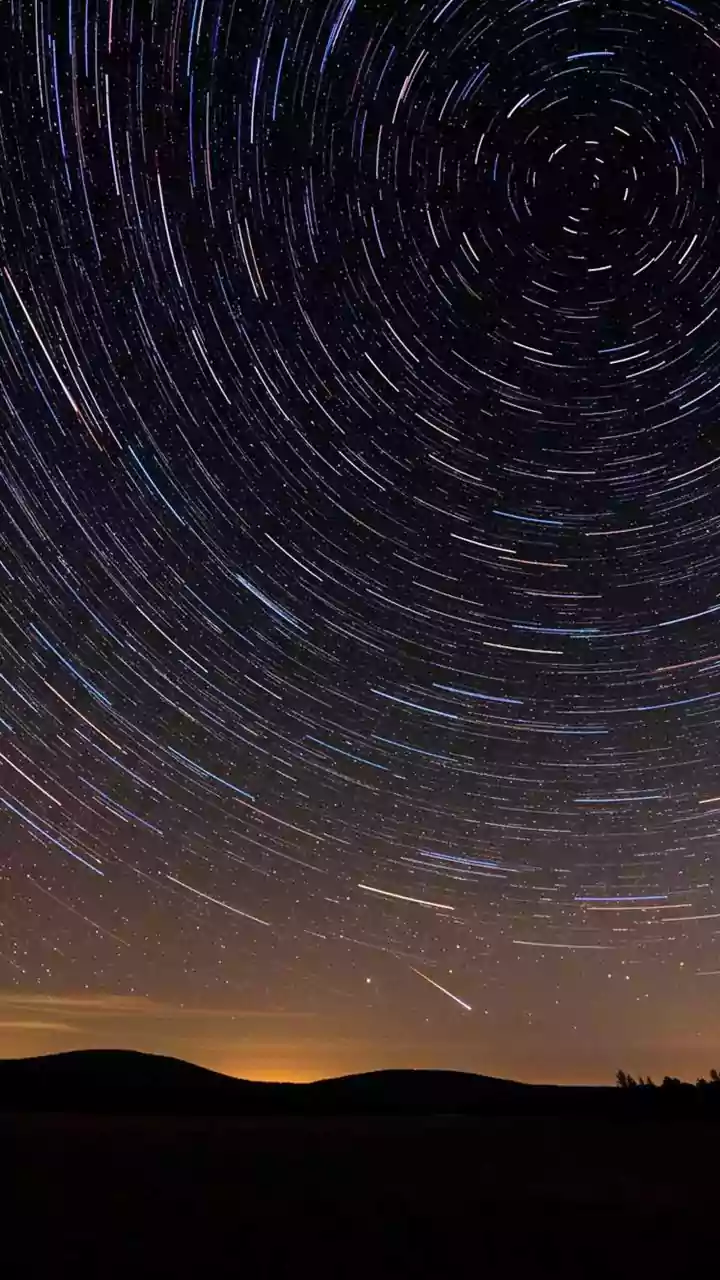



The Prime Time for Viewing
The Orionid meteor shower will be active from October 2 to November 7, but the best time to watch is during its peak on the night of October 21-22, 2026. For viewers in India, the most rewarding period will be in the hours before dawn, after midnight.
This year, a bright waxing gibbous moon will be present for much of the night, which can make it harder to see the fainter meteors. The good news is that the moon will set in the early morning hours, creating a perfect window of darkness between moonset and the start of sunrise. Check the specific moonset time for your city to plan your viewing session for when the sky is at its darkest.
What Are The Orionids?
The Orionids are essentially cosmic leftovers from one of history's most renowned comets: 1P/Halley, or Halley's Comet. As this comet orbits the sun, it leaves a trail of dust and icy debris behind. Every October, Earth passes through this stream of particles. When these tiny grains—many no bigger than sand—hit our atmosphere at tremendous speeds of around 66 kilometres per second, they burn up, creating the brilliant streaks of light we call meteors or 'shooting stars'. These meteors are known for their speed and brightness, and they can sometimes leave glowing trails, called persistent trains, that linger in the sky for a few moments.
Finding the Perfect Spot
The key to a great meteor-watching experience is to get away from city lights. Light pollution from urban areas drastically reduces the number of visible meteors. Find a safe location with a wide, unobstructed view of the sky, such as a park, a rural field, or even a rooftop in a less populated area. It’s essential to give your eyes about 20 to 30 minutes to fully adapt to the darkness; this will allow you to spot the fainter, more numerous meteors. During this adjustment period, avoid looking at bright screens like your mobile phone, as the white light will ruin your night vision.
How and Where to Look
You don't need any special equipment like a telescope or binoculars to watch a meteor shower; your eyes are the best tool for the job. Binoculars and telescopes have a narrow field of view, meaning you'd likely miss the meteors streaking across other parts of the sky. The meteors will appear to radiate from a point in the constellation Orion, which is how the shower gets its name. However, you shouldn't just stare at Orion. For the best views, lie back comfortably and look at a large patch of sky about 45 degrees away from the radiant. Meteors seen further from their radiant point will have longer, more dramatic trails. From India, Orion rises in the east after 10 PM and will be high in the sky in the hours before dawn.
What to Expect (and Bring)
Patience is crucial when watching a meteor shower. Under ideal, dark-sky conditions, the Orionids can produce about 10 to 20 meteors per hour during their peak. However, with the moonlight this year, the actual number might be lower. Remember that meteors often come in spurts, so you might see several in a few minutes and then none for a while. Dress warmly, as even in India, the pre-dawn hours can get chilly, especially when you are sitting still. A reclining chair, a blanket, or a sleeping bag will make your experience much more comfortable. Pack some warm drinks and snacks, and settle in to enjoy the celestial show.