






The Terroir of the Western Ghats
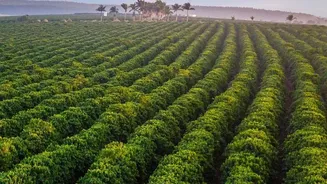
The journey to a chocolatey cup begins with the land itself. Coorg and Chikmagalur, nestled in Karnataka's Western Ghats, provide an ideal home for high-quality Arabica coffee. This region is a biodiversity hotspot, characterized by high altitudes, cool
temperatures, and rich, well-draining soil. Arabica plants thrive at elevations between 1,000 and 1,500 meters, where cooler air slows down the maturation of the coffee cherries. This extended ripening period is crucial; it allows the beans inside the fruit to develop more complex sugars and oils. These compounds are the essential building blocks for the rich flavors that will later emerge during roasting. The consistent rainfall, followed by a dry harvesting season, further concentrates these flavors, preventing a bland or watery taste.
The Shade-Grown Advantage
Unlike mass-produced coffee grown under direct sun, the finest Arabica from Coorg and Chikmagalur is traditionally cultivated under a thick canopy of native trees. This practice, known as agroforestry, is not just better for the environment—it is fundamental to the coffee's flavor. The shade protects the coffee plants from harsh sunlight, slowing their metabolism and forcing them to ripen gradually. Think of it like slow-cooking a meal; patience develops deeper, more nuanced flavors. This slow-growth process results in denser beans packed with the sugars and acids that, when roasted, caramelize to produce notes of dark chocolate, cocoa, and nuts. This method also means farmers use fewer chemical pesticides, as the forest ecosystem provides natural pest control.
Biodiversity in a Cup
The shade trees in these plantations are often interspersed with other crops like pepper, cardamom, vanilla, and oranges. While the direct impact on flavor is debated by experts, this biodiversity contributes to the overall health of the soil and ecosystem. Healthier soil provides better nutrients to the coffee plants, influencing the final quality of the bean. Furthermore, the leaf litter from the diverse canopy creates a rich layer of organic matter, further enriching the soil. This complex environment, teeming with birds and other wildlife, is a sign of a healthy farm—and healthy farms produce superior coffee.
The Chemistry of Chocolate
The chocolatey flavor isn't an additive; it's chemistry. The potential for these notes is developed on the farm, but they are unlocked during roasting. The process involves the Maillard reaction, the same chemical reaction that browns toast and gives roasted meat its savory flavor. When the green coffee beans, rich with the sugars and amino acids developed during their slow maturation, are heated, these compounds interact. This reaction creates hundreds of new aromatic compounds, including pyrazines, which are responsible for nutty and roasted flavors. A skilled roaster can manipulate the temperature and time to specifically highlight these chocolate and cocoa notes, often found in medium to medium-dark roasts.
From the Estate to Your Cup
While both Coorg and Chikmagalur are celebrated for their Arabica, they offer slightly different experiences. Chikmagalur, with its higher altitudes, can produce coffees with brighter, more floral, and citrus-like notes alongside the chocolate. Coorg coffees are often described as fuller-bodied, rounder, and more robustly chocolatey, with hints of spice. When you buy a single-origin coffee from these regions, you are tasting the unique story of that specific place—the soil, the altitude, the shade, and the care taken by the farmer. It’s a flavor profile that has been nurtured from a seedling in the forest to the final, satisfying sip in your mug.