





Why August is a Prime Month for Saturn
While Saturn will reach its official 'opposition' on October 4, 2026, the weeks leading up to this event are a fantastic time for observation. During this period, the Earth is catching up to Saturn in our orbital paths around the Sun. Throughout August,
Saturn will rise progressively earlier each night and grow brighter in our sky. At the beginning of the month, it rises around 11 PM, but by the end of August, you can spot it as early as 9 PM. This increasing proximity and favourable viewing window makes the entire month a perfect opportunity to get acquainted with the gas giant. The planet will be shining brightly in the constellation of Pisces, which doesn't have many bright stars, making Saturn relatively easy to locate.
When and Where to Look from India
For observers in India, Saturn will become visible in the eastern sky as the night deepens. Early in August, you'll need to stay up a bit later, but as the month progresses, the planet will be high enough to clear trees and buildings by mid-evening. Look towards the east after 10 p.m. to find a bright, steady, yellowish point of light. Planets are distinguishable from stars because they don't twinkle as much; their light is a more constant shine. Several stargazing apps can help you pinpoint its exact location using your phone's GPS. For an extra treat, on the night of August 30-31, the waning gibbous Moon will rise alongside Saturn, acting as a convenient and beautiful guidepost to find the planet.
What You Can Expect to See
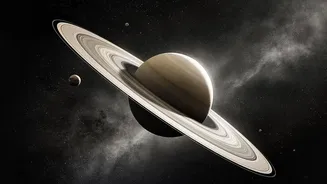
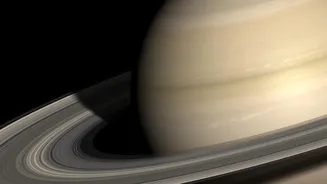
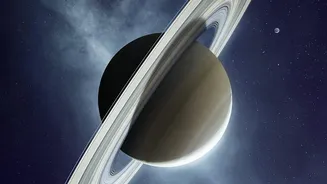
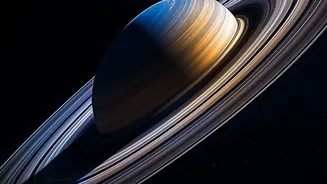
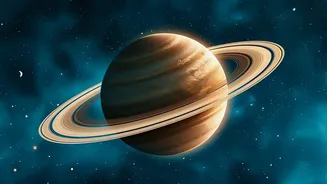
The viewing experience of Saturn changes dramatically depending on the equipment you use. To the naked eye, Saturn is one of five planets you can see without any aid, appearing as a particularly bright 'star'. A good pair of binoculars will reveal that it's not a point of light but a tiny disc, and you might even be able to perceive that it's not perfectly round, hinting at the presence of its famous rings. However, the real magic happens with a telescope. You don't need a massive, expensive instrument. Even a small beginner's telescope with about 25x to 50x magnification is capable of revealing the iconic rings, clearly separated from the planet's body. It's a view that has turned many casual sky-gazers into lifelong astronomy hobbyists. With larger amateur telescopes, you might even spot Saturn's largest moon, Titan, as a tiny star-like point of light nearby.
Tips for the Best Viewing Experience
To make the most of your Saturn-gazing session, a few simple preparations can make a huge difference. First, try to get away from city lights. Light pollution washes out fainter objects in the sky, and finding a darker location like a park or rural area will provide much better contrast. Second, give your eyes time to adapt to the darkness. It takes about 20 to 30 minutes for your eyes to become fully sensitive to low light, allowing you to see far more. Avoid looking at your bright phone screen during this time. If you need a light, use a torch with a red filter, as red light doesn't spoil your night vision. Finally, get comfortable. Stargazing can involve long periods of looking up, so a reclining chair or a blanket on the ground will make the experience more pleasant.