



What Is This Planetary Line Up?
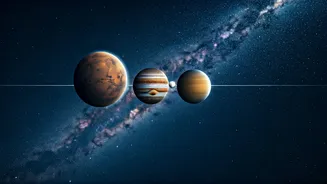
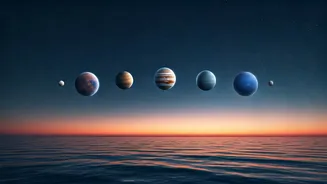
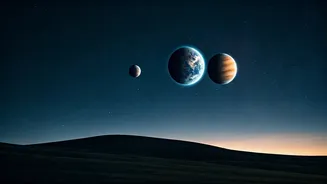
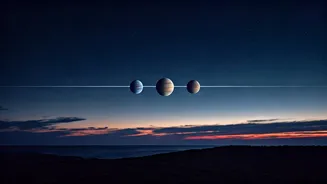
Over the next several mornings, the pre-dawn sky will host a beautiful gathering of three planets: Mars, Jupiter, and Saturn. While they appear close together from our vantage point on Earth, they are, of course, millions of kilometres apart in space.
This type of event is often called an alignment or a conjunction. In simple terms, it’s when the orbits of multiple planets bring them into the same small patch of our night sky. What you’ll see isn't a perfectly straight line, but rather a striking celestial trio clustered together, making them easy to spot even for novice stargazers.
Why This Sighting Is Special
While planetary conjunctions aren't exceedingly rare, a grouping of three bright planets like this is always a noteworthy event. What makes this particular lineup “exceptional” is the cast of characters involved. Jupiter, the largest planet in our solar system, is unmistakable due to its brilliant, steady light. Saturn, famous for its rings (which require a telescope to see), will appear as a distinctly yellowish, bright point of light. And Mars, the Red Planet, will be easy to identify by its rusty hue. Seeing these three distinct worlds in the same field of view of a binocular is a genuine treat. It’s a powerful visual reminder of our solar system’s grand scale and dynamic nature, all visible without special equipment.
When and Where to Look
This is a show for the early birds. The best time to see the planetary trio is in the pre-dawn hour, roughly 45 to 60 minutes before local sunrise. At this time, the sky is dark enough for the planets to shine brightly, but the impending sunrise means they will be climbing higher above the horizon. You’ll want to look towards the east-southeast. The planets will be relatively low, so a clear view of the horizon is essential. Jupiter will be the brightest and likely the easiest to spot first. Once you've found Jupiter, look nearby for the fainter, yellowish dot of Saturn and the reddish tint of Mars. The moon may also be in the vicinity on certain dates, acting as a helpful guidepost.
Tips for the Best Viewing Experience
You don't need a high-powered telescope to enjoy this celestial event. In fact, your naked eyes are perfectly sufficient. However, to enhance the view, follow these simple tips: 1. **Escape Light Pollution:** If possible, find a spot away from bright city lights. A local park, a field, or even a darker suburban street will make a huge difference in what you can see. 2. **Let Your Eyes Adjust:** Give your eyes at least 15 minutes to adapt to the darkness. Avoid looking at your phone screen, as its bright light will ruin your night vision. 3. **Grab Binoculars:** While not necessary, a standard pair of binoculars will elevate the experience. They will make the colours of the planets more distinct and may even give you a glimpse of Jupiter’s four largest moons, which look like tiny stars flanking the planet. 4. **Use a Stargazing App:** Apps like Star Walk, SkyView, or Stellarium can be invaluable. Simply point your phone at the sky, and they will identify the planets and constellations for you, removing any guesswork.
What if I Miss It Tonight?
Don't worry if your morning is cloudy or you oversleep. While the headline says “tonight,” this is not a one-time-only event like an eclipse. This planetary grouping is a slow-motion dance that will be visible for several days and weeks. The planets will slowly shift their positions relative to each other each morning. So, if you miss it on one day, you’ll have plenty of other opportunities. The key is to check the weather and set your alarm for any clear morning in the coming days. The show will go on, offering a slightly different, but equally beautiful, configuration each time.