



A World of Fire and Gas
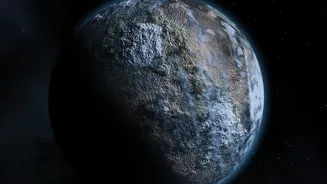
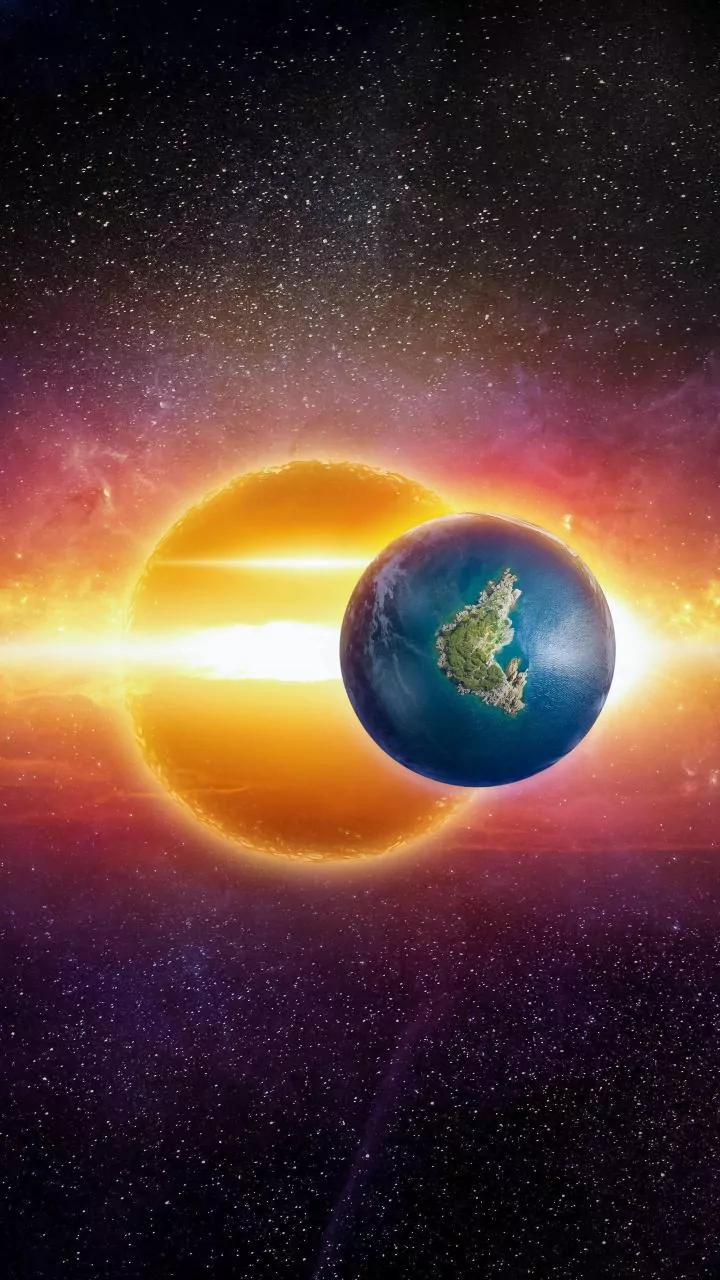
The planet at the center of this discovery is 55 Cancri e, a 'super-Earth' nearly twice the diameter of our own planet. It orbits its star so closely that a year lasts less than 18 hours, creating unimaginably hostile conditions. Surface temperatures
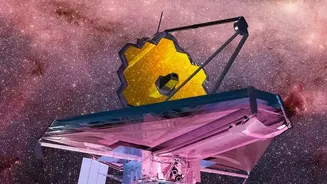
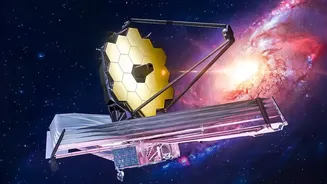
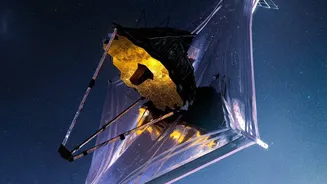
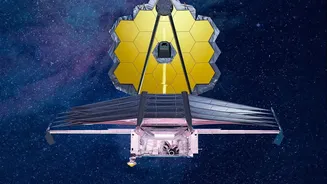
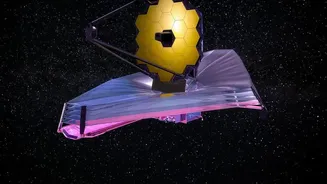
are hot enough to melt rock, leading scientists to believe the planet is covered by a global ocean of magma. For years, astronomers have debated whether such a world could even hold onto an atmosphere, given the intense radiation from its star. Now, thanks to the JWST's powerful infrared instruments, we have the best evidence to date that it does. The telescope's data suggests an atmosphere rich in gases like carbon monoxide and carbon dioxide. This is a monumental finding in the study of planets outside our solar system.
The Telescope's Ghostly Fingerprint
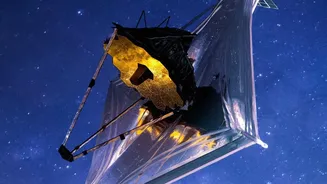
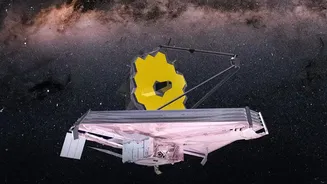
Webb cannot see 55 Cancri e directly as a distinct image. Instead, it uses a brilliant technique called transit and eclipse spectroscopy. As the planet passes in front of its star, starlight is filtered through the edge of its atmosphere. Then, as it passes behind the star, its own light is briefly blocked. By measuring the subtle dimming and changes in the light's spectrum during these events, scientists can isolate the chemical fingerprint of the planet's atmosphere. Molecules in the atmosphere absorb specific wavelengths of light, leaving tell-tale gaps in the spectrum that Webb can detect. This method revealed that 55 Cancri e was cooler than expected for a bare rock world, suggesting a blanket of gas was trapping and circulating heat.
An Atmosphere Born from Rock
This is no ordinary atmosphere. Unlike Earth's, which was present early in its history, the gases around 55 Cancri e are believed to be part of a 'secondary atmosphere'. The planet's original, or primary, atmosphere would have been stripped away long ago by the nearby star's fierce stellar winds. Instead, scientists theorize that the current atmosphere is being continuously replenished from the inside out. The global magma ocean is constantly 'outgassing' — bubbling and releasing dissolved gases from the molten rock, much like a can of soda releases carbon dioxide when opened. While earlier Hubble observations had detected some gases, Webb's new data, hinting at carbon dioxide and possibly water vapour, provides a much clearer picture of this dynamic, volcanic process.
A Stepping Stone, Not a New Earth
It is crucial to understand that 55 Cancri e is not a habitable world. With surface temperatures soaring over 1,500 degrees Celsius, it is a hellish landscape entirely incompatible with life as we know it. The detection of its atmosphere, however, is a watershed moment for a different reason. It proves that a rocky planet, even one in an extreme environment, can maintain a substantial atmosphere. This fundamentally changes the calculus for astronomers. It suggests that countless other rocky planets orbiting other stars might also have atmospheres, dramatically widening the search for potentially habitable worlds. This discovery is less about the specific destination and more about proving the journey is possible.