

A New Kind of World
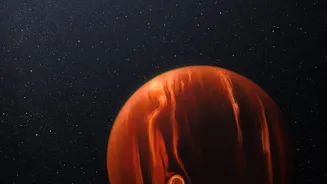
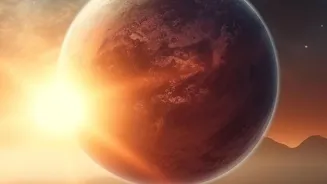
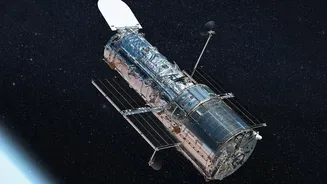
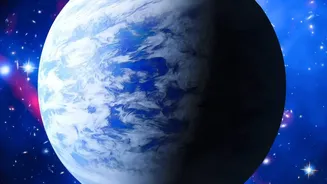
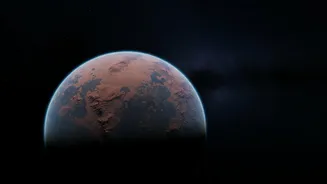
The game-changing discovery centres on an exoplanet named K2-18 b, located 124 light-years away. Using its powerful infrared instruments, the JWST detected the unmistakable signatures of carbon-based molecules, specifically methane and carbon dioxide,
in its atmosphere. This is the first time such a rich carbon chemistry has been identified on a planet residing in its star's 'habitable zone'—the orbital region where temperatures could allow for liquid water. This finding does more than just add to our catalogue of distant worlds; it provides the first concrete evidence for a whole new class of potentially habitable planet, shifting the focus of our cosmic search.
Reading a Distant Atmosphere
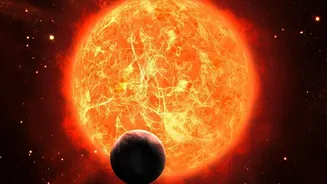
So, how do scientists read the air of a planet over a hundred light-years away? The technique is known as transit spectroscopy. As K2-18 b passes in front of its host star from our perspective, a tiny fraction of the starlight filters through the planet’s atmosphere. The gases present in that atmosphere absorb specific colours, or wavelengths, of light. The JWST acts like a cosmic prism, capturing this filtered light and spreading it into a detailed spectrum—a sort of chemical barcode. By reading which colours are missing, astronomers can definitively identify the molecules responsible, like carbon dioxide and methane. This powerful capability turns the telescope into a remote atmospheric laboratory.
Beyond Earth-Like Planets
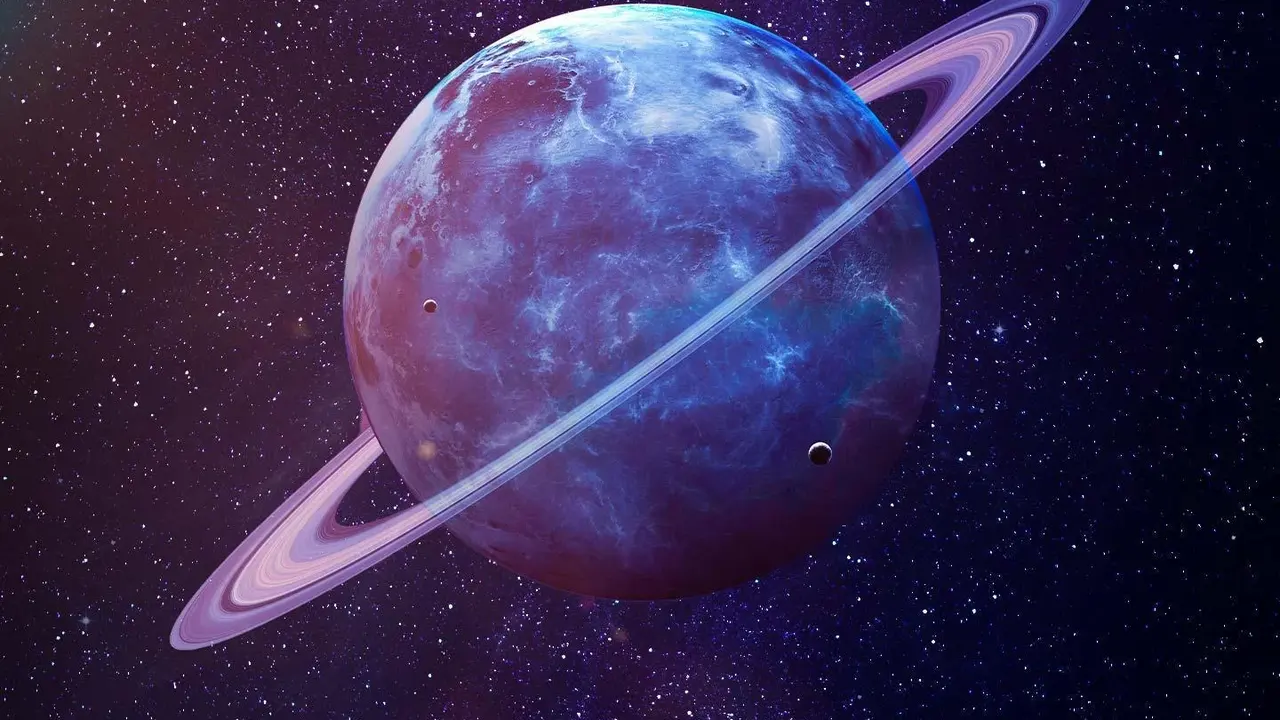
For a long time, the holy grail of planet-hunting was finding an 'Earth 2.0'—a rocky planet of similar size and mass to our own. However, K2-18 b is something different. It’s a 'sub-Neptune', about 8.6 times the mass of Earth, a type of planet that doesn't even exist in our solar system. The detection of carbon-rich molecules here supports a fascinating theory about 'Hycean' worlds. These are hypothetical planets with vast liquid water oceans lying beneath a thick, hydrogen-rich atmosphere. The JWST’s findings suggest K2-18 b could be our first real-world example of a Hycean planet, dramatically broadening the types of worlds scientists can consider candidates for harbouring life. The search is no longer just for Earth’s twin.
The Chemistry of Habitability
Finding carbon dioxide and methane is significant because these molecules are fundamental to life as we know it. But their presence together, along with the absence of other chemicals like ammonia, strongly suggests the existence of a water ocean on K2-18 b. This combination of a carbon-rich atmosphere and a potential water ocean is precisely what astrobiologists look for when assessing habitability. While these gases can be produced by simple geology, they are also considered key biosignatures—substances that provide evidence of past or present life. The JWST's discovery has moved K2-18 b from a point of interest to a prime target in the ongoing investigation into life beyond Earth.
A Tantalising Hint of Life?
In addition to the strong signals of methane and CO2, the telescope picked up a weaker, more tentative signal that could correspond to a molecule called dimethyl sulphide (DMS). This is particularly exciting because, on Earth, DMS is produced almost exclusively by life, primarily by phytoplankton in marine environments. Scientists are quick to caution that this detection is not yet confirmed and requires further validation. However, the mere possibility is a thrilling prospect. If confirmed, it would be a powerful indicator of active biological processes on another world. For now, it serves as a compelling reason to point the JWST back at K2-18 b for longer, more detailed observations.